Drought in savanna areas: A crisis that demands urgent and lasting solutions
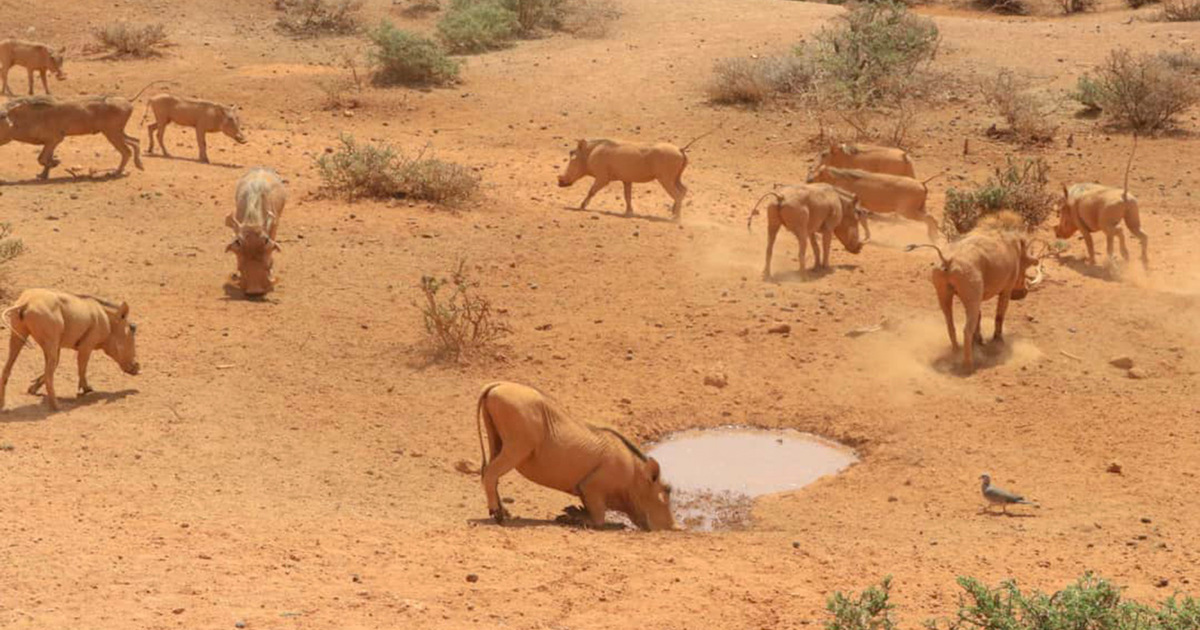
Across Kenya’s arid and semi-arid lands, recurring drought is pushing pastoralist communities to the edge — destroying livelihoods, decimating herds, and deepening poverty in regions that can least afford it.
By Nekwama Logoto
Every few years, the rains fail across Kenya’s vast savanna landscapes, and when they do, the consequences unfold with a cruelty that statistics alone cannot capture. Cattle lie dead along dry riverbeds. Children go hungry. Families that have herded livestock across these plains for generations find themselves with nothing. Drought in savanna areas is not merely a meteorological event. It is a humanitarian crisis that arrives on a predictable cycle and is met, time and again, with inadequate preparation.
Drought, at its most basic, is a prolonged period of below-average rainfall. But in Kenya’s arid and semi-arid lands — which cover roughly 80 per cent of the country’s landmass and are home to millions of pastoralists — the definition feels insufficient. For these communities, drought is the force that determines whether children eat, whether herds survive, and whether families remain intact or are scattered in desperate search of water and pasture. When the rains fail, everything that depends on them fails too.
The most immediate consequence is the death of livestock. Cattle, camels, goats, and sheep are not simply assets in pastoralist communities. They are savings accounts, insurance policies, and sources of nutrition rolled into one. When drought strikes, pastoralists are forced to move — sometimes hundreds of kilometres — in search of green pasture and water. These journeys are gruelling and frequently fatal for animals already weakened by hunger and thirst. Entire herds that represent decades of careful breeding and accumulation can be wiped out in a single severe drought season. The financial loss is devastating and, for many families, permanent.
The land itself suffers alongside the people. As pasture disappears and water sources dry up, the pressure on remaining vegetation intensifies. Pastoralists in desperate circumstances resort to cutting tree branches and stripping leaves to feed their surviving animals, accelerating deforestation in areas already under severe ecological stress. Without tree cover, the soil loses its protection against wind and the sporadic but intense rains that follow drought periods. Erosion sets in. Land that was already marginal becomes degraded to the point where recovery takes years, sometimes decades.
The economic ripple effects extend beyond the pastoralist household. Local markets contract sharply during drought periods as the purchasing power of affected communities collapses. Small traders, transporters, and service providers in towns that serve pastoral areas all feel the impact. Businesses that depend on the spending of herders and farmers find their revenues evaporating at the same pace as the water in the rivers. Regional economies that were already fragile become more so.
There is, too, a conflict dimension that rarely receives sufficient attention. As pasture and water become scarce, competition for what remains intensifies between communities, between ethnic groups, and between pastoralists and settled farmers. Kenya’s history of drought-related conflict in the north and north-east of the country is long and painful. When resources shrink and livelihoods are threatened, the conditions for violence multiply. Drought does not cause conflict, but it consistently creates the conditions in which existing tensions ignite.
Despite the scale and regularity of these crises, the response in Kenya has too often been reactive rather than preventive. Emergency food aid is mobilised, water trucking is organised, and destocking programmes are announced — but these measures address the symptoms of drought rather than its underlying vulnerabilities. Communities that are repeatedly rescued from the consequences of drought but never equipped to withstand it remain permanently exposed.
The solutions exist and are well understood. Pastoralists need support to diversify their livelihoods so that a single drought season does not destroy everything they have. Crop cultivation and the storage of animal fodder during the rainy season can provide a buffer when the dry months extend beyond their usual limits. Communities near rivers and permanent water sources can adopt irrigation techniques to grow crops and establish fodder reserves, reducing their dependence on rainfall alone.
Water harvesting infrastructure — sand dams, water pans, and rainwater collection systems — can extend the availability of water into the dry season and reduce the distances that people and animals must travel. Rangeland management practices that prevent overgrazing and maintain vegetative cover give the land a better chance of recovering between drought episodes. Early warning systems that give communities advance notice of impending drought allow for destocking and movement before the worst damage is done.
These are not new ideas. They have been recommended in government reports and development frameworks for decades. The gap is not knowledge — it is political will, funding, and the consistent institutional commitment required to implement long-term resilience measures in communities that have historically been marginalised in national development planning.
Kenya’s savanna communities have survived drought before and will survive it again. But survival should not be the ceiling of ambition for millions of citizens whose lands, cultures, and livelihoods deserve better than permanent crisis management. The rains will fail again. The question is whether the country will finally be ready.
Similar Posts by The Mt Kenya Times:
- Kenya’s 2027 election: Will political alliances and the fight over transparency decide who wins State House?
- 10 media personalities who never studied journalism
- Yvonne Okwara begins a new chapter at Shuga Global
- No ODM, no State House: Kaluma warns Ruto on 2027 coalition terms
- Raila Odinga Stadium: A political arena in Kenya’s defining election season
About the Author