Border watch tightens as South Africa braces for anti-migrant protests
 The Mt Kenya Times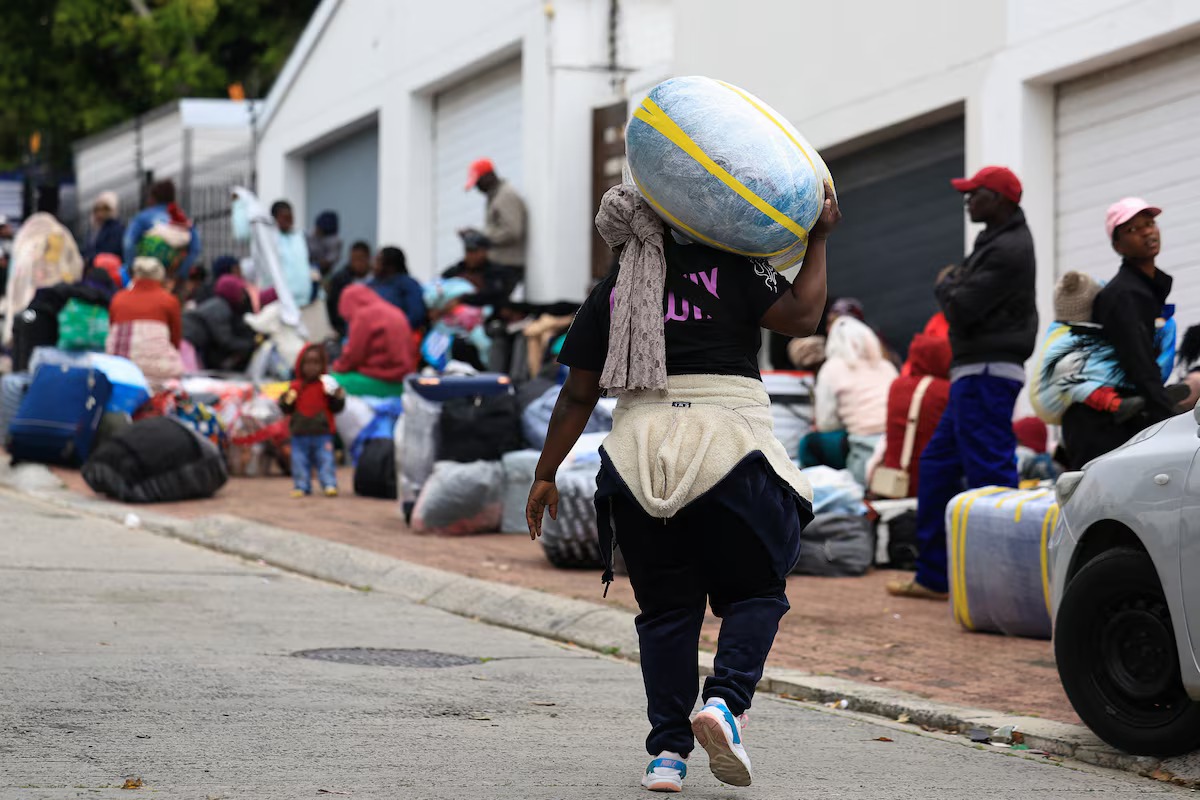
With 30 June looming, mass repatriations, diplomatic tensions and fresh security deployments signal a country on edge
By Norman Mwale
South Africa was on high alert on Sunday as the 30 June deadline set by anti-migrant protest groups drew near, with security agencies intensifying surveillance at Beitbridge and other major ports of entry, diplomatic missions urging nationals to remain indoors, and thousands of foreign nationals already processed for repatriation in what authorities have described as an operation of unprecedented scale.
Between 12 and 24 June, the Border Management Authority processed 8,230 foreign nationals for repatriation through Beitbridge — the country’s busiest land crossing — including 6,709 Malawians transported on 112 buses and 1,521 Zimbabweans on 26 buses. BMA Commissioner Michael Masiapato said the authority was facilitating “lawful and orderly repatriation” in the presence of embassy officials to verify identity, travel documentation and compliance with applicable immigration requirements. On 25 June, 17 buses arrived at the port without the required Emergency Travel Certificates and were redirected to the Musina truck stop area until the necessary documentation was obtained.
The build-up follows weeks of marches led by groups including March and March and Operation Dudula, which have demanded that undocumented migrants leave South Africa by 30 June or face a national disruption. Protests have turned violent in parts of Pretoria, Johannesburg, Durban and Cape Town, with reports of foreign nationals being assaulted, intimidated and displaced. Several hundred nationals from the Democratic Republic of Congo, Rwanda and Somalia sought protection in Durban after residents went door-to-door issuing the deadline warning.
Government officials have consistently stressed that enforcement must remain within the law. Deputy Home Affairs Minister Njabulo Nzuza acknowledged “an irregular immigration problem” but warned that “it should not be that because there is this problem, then we must throw the country into chaos”. Justice Minister Mmamoloko Kubayi, who chairs the Inter-Ministerial Committee on Migration, said the BMA had deployed advanced technologies including drones and body-worn cameras to intercept illegal crossings. Defence Minister Angie Motshekga reiterated that only authorised officials may demand documents from members of the public, after reports emerged of vigilante groups conducting their own identity checks. “Only law enforcement officers have the right and responsibility to be asking for the identities of people,” Motshekga said.
On 7 June, President Cyril Ramaphosa addressed the nation and announced a five-pillar comprehensive approach to tackling illegal immigration, which includes zero tolerance for immigration violations, stronger border security, dedicated immigration courts, a biometric population register and harsher penalties for corruption within the system. The South African Police Service arrested more than 7,400 people for contravening the Immigration Act in the past month alone, and by 21 June, authorities had opened 89 criminal cases linked to public order incidents and incitement, with 164 people arrested on charges including incitement to violence and contravening the Regulation of Gatherings Act.
At Beitbridge, authorities have moved to rebuild infrastructure and deploy amphibious patrol vehicles to monitor the Limpopo River, a route frequently used by undocumented migrants and informal traders. Cross-border trader Bhekimpilo Nyoni said the measures would deepen hardship for those operating on thin margins. “With things already so hard back home, this will only make life worse. We are not criminals, we are trying to survive,” he said.
More than 500 Zimbabweans gathered outside their country’s consulate in Cape Town — a number that grew to over 1,000 by 28 June — seeking government-assisted repatriation ahead of the deadline. Those who spent the night outside the District Six consulate were transferred on Sunday morning to a Home Affairs repatriation facility in Epping, with the City of Cape Town coordinating the move alongside the Department of Home Affairs and the Zimbabwean consulate. The Zimbabwean Embassy has issued multiple advisories urging nationals to remain vigilant, avoid protest hotspots, stay indoors where possible, carry identification at all times and report incidents to police or diplomatic missions. Communities cited as particularly affected include Gugulethu, Khayelitsha and Philippi. Government, with support from the International Organization for Migration and UNICEF, has repatriated 696 citizens since the beginning of June, including 405 adults and 291 children, most from the Western Cape, KwaZulu-Natal and Gauteng.
Diplomatic channels are active at the highest level. Ramaphosa met Zimbabwe’s President Emmerson Mnangagwa to discuss the crisis, while Ghana and Nigeria’s governments responded to the attacks on their nationals, with evacuations undertaken by both countries. Government spokesperson Nomonde Mnukwa said migration laws were under review, border systems were being modernised and the constitution guarantees dignity for all residents regardless of nationality. Ramaphosa stated that there is “no space for xenophobia” in South Africa and warned that groups seeking to exploit legitimate public concerns to destabilise the country would face consequences.
Limpopo Provincial Commissioner Lieutenant General Thembi Hadebe confirmed deployments across the province ahead of planned action, warning that any unauthorised gathering seeking to disrupt public order would be dealt with decisively. With Beitbridge already recording a sharp surge in arrivals this year, officials say the coming days will test both border capacity and the state’s ability to balance firm enforcement with regional stability and human dignity.
Similar Posts by The Mt Kenya Times:
- Mt Kenya Times ePAPER October 1, 2026
- Museveni backs Lamu but keeps Uganda’s money at home
- Sifuna’s party wins its name — and Kenya’s opposition race begins in earnest
- Lamu’s $16B gamble: Africa’s biggest refinery divides the region
- Ruto launches KSh2.2 trillion Lamu refinery in East Africa’s biggest energy bet
About the Author