Two icons photographed by a legend...The Queen met South African President Nelson Mandela in Johannesburg during her visit to South Africa in 1995. Copyright Photo Anwar Hussein.
A NATION IN TEARS RETREATS INTO SOMBRE SILENCE AS IT PREPARES TO BID FAREWELL TO QUEEN ELIZABETH II
By SHAMLAL PURI
Associate Publisher & Senior Editor – UK
shamlalpuri4@gmail.com
Worth Noting:
- The official death announcement came at 6.30 pm on September 8, just around the time, our newspaper’s first editions were set to roll off the presses.
- Newspaper presses were stopped as editors frantically changed their contents to fill special editions and produce eye-catching front pages swatched in black and blue colours.
- Media sources say some 500 pages of national newspapers were devoted to the coverage in words and lavish coloured photos of the Queen’s life and reaction to her death. Each newspaper had an average of 40-45 pages in a single edition devoted to the Queen.
- The last comparable news event was the death of Prince Philip, the Queen’s husband, in April 2021, when newspapers produced some 540 pages of coverage, according to the UK Press Gazette, the magazine of professional journalists.

Preparations are in full swing for the world’s largest State funeral and diplomatic moments seen anywhere for decades when the nonagenarian Queen Elizabeth II is laid to rest with sadness and song on Monday, September 19. That day is declared a public holiday and the country will be shut in respect for the Queen.
Some 500 dignitaries from around the world are travelling to London to bid farewell and pay their last respects to the longest-reigning Monarch in the world.
Life has not been the same in the United Kingdom since last week, Thursday, September 8, when the world received in silent shock the news of the death of Queen Elizabeth II at 96 in the Balmoral Palace in Scotland. She had been gravely ill for months but still tried her best to attend official duties and passed away peacefully surrounded by her immediate family.
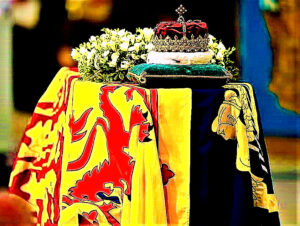
Since that fateful day which changed the UK’s history and events have been moving rapidly. The legendary Queen is gone, and her place is taken by her son, Charles, the Prince of Wales, 73, who lived in
Elizabeth’s shadow is now proclaimed King Charles III. His second wife, Camilla, is the Queen Consort.
The news of the Queen’s death stunned the UK into silence. The British print and electronic media,
known for its reverence for the monarchy (and a small part anti-monarchy), swung into action to report this Century’s biggest British story and pay tribute to the petite lady who had built a polite rapport with the Fourth Estate.
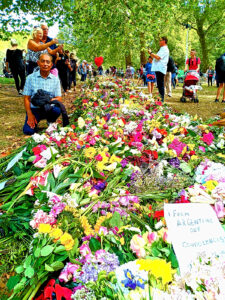
On Friday, bells tolled at Westminster Abbey, and a gun salute was fired at Hyde Park. Charles made a televised
address to the nation paying a touching tribute to his mother and devoting himself to the service of the country.
MPs met at the parliament in a special sitting where they paid their respects to the Queen.
The following day the Secession Council met at St. James Palace to formally proclaim Charles as King.
The official death announcement came at 6.30 pm on September 8, just around the time, our newspaper’s first editions were set to roll off the presses.
Newspaper presses were stopped as editors frantically changed their contents to fill special editions and produce eye-catching front pages swatched in black and blue colours.
Media sources say some 500 pages of national newspapers were devoted to the coverage in words and lavish coloured photos of the Queen’s life and reaction to her death. Each newspaper had an average of 40-45 pages in a single edition devoted to the Queen.

The last comparable news event was the death of Prince Philip, the Queen’s husband, in April 2021, when newspapers produced some 540 pages of coverage, according to the UK Press Gazette, the magazine of professional journalists.
Queen Elizabeth II walked on the world political stage for 70 years.
Many East Africans remember the occasion in the 1950s, when the young Princess Elizabeth visited Kenya with her late husband, Prince Philip.
During her holiday in Kenya, she climbed the iconic Treetops built on the top of trees, a tourist attraction, to stay for the night.
That night, her father, King George VI, passed away on February 6 1952. When the 25-year-old Princess Elizabeth came down the steps of the Treetops Hotel, she was proclaimed the Queen of the UK, succeeding her father, shortly afterwards.
Her coronation took place on June 2, 1953. Since then, it has been marked annually with pomp and pageantry. She celebrated her 70 anniversary barely three months ago. The celebrations were continuing but are now muted with the Monarch’s death.
Seven decades on, she holds a unique position in shaping world history. She knew and met almost all world leaders, past and present. It was considered a privilege for a foreign leader to be invited as the guest of the Queen.
This country is much poorer today without her. The diplomatic umbilical link that connected the UK has been cut with her death. There is a sincere hope that King Charles III will continue to hold that baton and foster the UK’s ties with the Commonwealth of Nations – a grouping of countries that were once British colonies and the rest of the world.
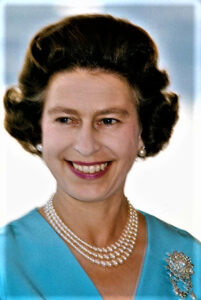
She helped shape British diplomacy into the shape that we see today. She was known for her mutual respect and warm personal friendships. Those who met her often spoke of her humility and one-to-one rapport. Her dignity was outstanding and will forever remain a cornerstone of her rule and British diplomacy.
The Queen’s death brought global friends and foes together to pay tributes. More than 50 countries have sent their condolences representing half the world. They include China, the USA and India.
Even the Russian dictator Vladimir Putin, who considers Britain, his country’s enemy number one (and would not hesitate to nuke London after Britain, in the guise of Boris Johnson, stepped in, taking the lead in imposing sanctions on Russians over the Ukrainian war and arming Kyiv), sent his condolences to the United Kingdom, surprising the diplomatic world.
In the good old days, Putin was the guest of the Queen.
Putin also tweeted a message congratulating King Charles III.

Among the global leaders attending are US President Joe Biden, Japan’s Emperor Naruhito, President Emmanuel Macron of France, Frank-Walter Steinmeier, German President, Italian President Sergio Mattarella, and Finland’s Sauli Niinisto.
Qatar’s Emir Amir Tamim bin Hamad al Thani, New Zealand’s Prime Minister Jacinta Ardern, President Droupadi Murmu of India and South Korea’s President Yun Suk-Yeol are also attending.
Australian President Anthony Albanese, Canadian Presudent Justin Trudeau, and Brazil’s Presudent Jair Bolsonaro have also confirmed their attendance.
European monarchs will join them, including King Felipe and Queen Letizia of Spain, former King and Juan Carlos Queen Sofia (invited), Netherlands King Willem-Alexender and Queen Maxima, Norway’s Harald V and Queen Sonja and Monaco’s Prince Albert II and Princess Charlene alongside rotal family members from Belgium, Denmark, Greece and Sweden.
The Queen’s distant cousins will unite at her funeral.

Thousands of ordinary Britons have descended on London and watched the funeral cortege carrying Queen Elizabeth’s coffin on its way into the city from the sidelines of the streets. It was later taken to lie in state at
Westminster Palace Hall until Monday, when the public will pay respects.
The Queen’s final journey from her Balmoral Palace home started when her coffin was taken on Sunday in a motorcade of 17 vehicles on 175 mile trip to Edinburgh with members of the Royal family in attendance.
It was carried from some 1,000 yards from the Palace of Holyrood and taken to the 12th Century St. Giles Cathedral in Edinburgh, where more than 26,000 mournes queued throughout the night to file past the coffin and pay their respects to the Queen.
After a night there, the Queen was flown from Edinburgh Airport to London, the coffin arriving at the RAF base at Northolt on Tuesday evening.
It was transported by road to Buckingham.
Palace for a one-night stay. Thousands of people lined up the street pavements to watch the hearse wind through the roads until it arrived at the gates of the Palace, where the entire Royal family welcomed her.
The coffin lay in state in Buckingham Palace’s Bow Room, where the Royal family kept an emotional overnight vigil.
On Wednesday, the coffin was taken to the Westminster Palace Hall, which would remain in-state until Monday, September 19. Over a million people were expected to view the casket and pay their respects. Unprecedented long queues of people were seen snaking around the Hall, some two kilometres long, giving a tough time to over 1,000 security personnel deployed and security agencies.
Some mourners were so overwhelmed with grief that they collapsed standing in the queue or after viewing the Queen’s coffin.
The Queen’s State funeral will be held at Westminster Abbey on Monday. Her coffin will be carried on a gun carriage pulled by Royal Navy sailors, followed by senior Royal family members.
The nation will pay a two-minute silence during the service, which will be televised live.
The Queen’s coffin will be taken to St. George’s Chapel on the same day. Later in the evening, there will be a private interment service with senior Royals in attendance.
The Queen’s final resting place will be the King George VI memorial chapel in Windsor, some 10 miles west of London.
She will rest alongside a long line of monarchs who were buried there before her – King George VI (1952), Queen Elizabeth the Queen Mother(who died in 2002 aged 101), Princess Margaret, Countess of Snowdon (Elizabeth II’s sister). She will rest near her husband, Prince Philp, also buried here
Windsor Castle was one of the Queen’s official royal residences in Windsor town, on River Thames. She often spent her weekends there and attended official services in the Chapel.
Many people, including us, journalists and photographers, witnessed the Queen’s humility while covering Royal engagements.
I have photographed the Queen and the Royal family and have fond memories of going to Buckingham Palace on journalistic assignments.
I remember when I founded Fleet Street’s pioneering African affairs news agency Harambee African News Service (later renamed Newslink Africa), I received a letter from Buckingham Palace.
The Queen congratulated me for the initiative to bridge the yawning information the gap between developed and developing countries. She wished me luck with this news agency which lasted for 28 years.
As its publisher and managing editor, this news agency gave me the opportunity to travel the world extensively on journalism assignments.
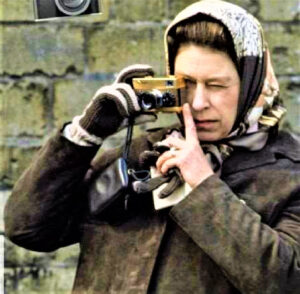
During her 70-year reign, the Queen has walked past the glare of thousands of blazing strobe lights near TV cameras and countless flashlight shots from stills media photographers during her public assignments around the globe.
But one who has caught her admiration is the award-winning diaspora photographer, octogenarian Anwar Hussein.
He is a living photographers legend who has seen the Royals from close quarters. He has photographed the Queen and all the Royals for decades in various parts of the world.
He is particularly known for his exclusive photos of the late Princess Diana, the first wife of King Charles III, whom he divorced before marrying Camilla, the Queen Consort.
His work has been published in the UK national and international press, and he has an extensive library of photos of the Royals and showbiz legends.
The Queen always admired Anwar’s photographs and paid a personal tribute to his expertise and his making his subjects feel at ease while photographing them.
The Royals have used his photographs to produce Buckingham Palace’s Christmas cards. He has authored several books spreading his fame globally.
He is holding an exhibition of his Royal photos in London, drawing a lot of interest.
On hearing of the Queen’s death, Anwar confesses that he cried.
Amiable Anwar, whom I have known for some time, is now in his 80s is active. He is reluctant to hang his camera. He came to the UK from Tanzania as a young boy.
In an interview with LA Times, he said that when he lived in Tanzania, he did not know who the Queen and the Royals were and remembered just seeing her on stamps.
Over the years, however, he became very close to the Royals and earned the rare reputation of being a Royal
Photographer, whom the Royal family sought out. .
I know of one more legendary Nairobi-based cameraman, the late Mohamed Amin, with whom I went to Buckingham Palace to photograph the Queen and the Royal family.
‘Mo’ Amin was an international award-winning still and BBC/Visnews TV cameraman who earned fame covering dangerous and daring assignments in Africa. He often diced with death.
He was famous for covering the deadly 1984 Ethiopian famine in Tigray with BBC’s iconic Michael Buerk, broadcast on BBC TV in the UK and globally, leading to the 1985 Live Aid concert featuring Bob Geldof to raise millions of dollars for relief aid and raise awareness of the tragedy there.
The Queen honoured him with an OBE for his services to the world through his lens.
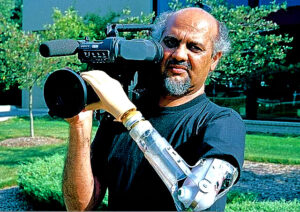
During one of his assignments photographing a blast at an ammunition dump in the Ethiopian capital Addis Ababa in 1991, Amin’s left arm was blown off, which had to be amputated.
It led to the fear that he may never work again with his camera. With his single-minded determination and help from experts. Amin sought treatment and got a prosthetic or a ‘bionic’ arm fitted in the USA.
The news of his accident went around the world was splashed on the front pages of British media and the Queen read it too.
Within a short time, he was back at work with his camera using his bionic arm.
During one of his assignments, after returning to work, Mo was photographing the Queen holding his camera with his prosthetic arm, when the Monarch walking past him stopped to ask him how he was feeling.
So much was the Queen’s humility.
Amin died in November 1996 when his flight Ethiopian Airlines Flight 961 was hijacked by Ethiopian dissidents and crashed into the Indian Ocean near Grande Comoros islands.
The public was always curious to find what the Queen carried in her handbag. They assumed that because her being the wealthiest woman with a wealth of over £385 million, she had thick wads of bank notes in her bag.
Similar Posts by Shamlal Puri:
- BRITAIN PLEDGES ‘ROCK SOLID’ SUPPORT TO UKRAINE
- KENYAN HOCKEY LEGENDS HONOURED IN LONDON
- Tourism bonanza for the Middle East: FOUR DAYS WHEN THE WORLD CAME UNDER ONE ROOF IN DUBAI
- LONDON PACKAGING WEEK WITH TOP GLOBAL BRANDS ATTRACTS THOUSANDS OF VISITORS
- UK’S NATIONAL HEALTH SERVICE IN BIZARRE COLOUR BAR CRISIS
About the Author