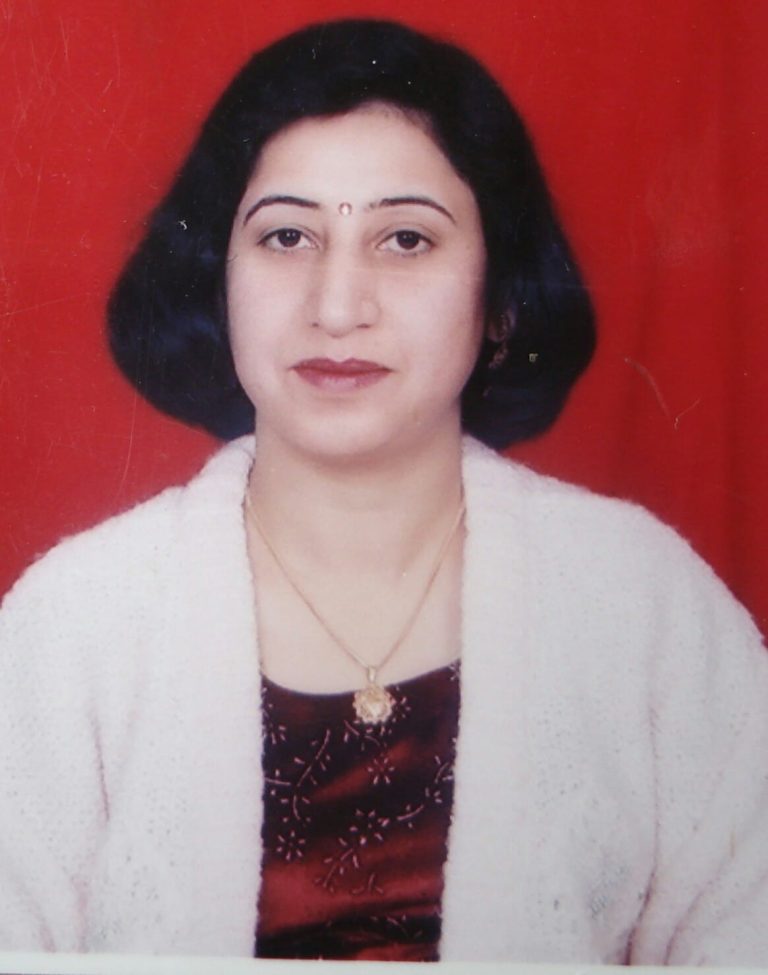
Rakhimbayeva Madina

Abstract: Dewey’s pedagogic concept refers to students’ active rather than passive acquisition of education.
Key words: John Dewey, knowledge, learning, motivation, innovation.
The famous scientist Dewey, who formed the main principles of education that determined the direction of many pedagogical innovations of the 20th century, said that learning and acquiring knowledge should be done on an active basis, not passively. “A child is not a vessel to be filled, but a lamp to be lit.” Dewey considered the principle of democratic participation as a means of introducing a person, whether a child or a teacher, to self-government in a just and prosperous society. There is no doubt that he is critical of group processes that are devoid of pedagogical guidance, involve participation for the sake of participation, and do not pursue any rational goal. Motivation is a very important factor in education. he clearly indicated that the teacher is responsible for pedagogical guidance, and that in order to encourage them, “everyone does what he wants” situations should not be allowed.Dewey understands teaching as the organization of children’s activities related to solving practical problems from everyday life. The basic principles of this theory were considered to be: “There is no need for pre-structured training courses”, “Teaching materials should be taken from the child’s experience”, “The child should determine the quantity as well as the quality of teaching”, “Using performance teaching is the main method in school”. Thus, Dewey rejects the need for clearly defined content of education and specific subjects in school, does not recognize scientific education, and considers education to be narrow and based on student interests. His work: “School and Society”. • The concept of “Pedagogy of actions” is in many respects Dj. It is a consequence of Dewey’s philosophical (pragmatism) and psychological views. Its author, one of the reformers, the German pedagogue Wilhelm August Lay (1862-1926), shows the following three stages in the process of learning: perception, re-development, expression. Methods of formalization of knowledge: practical and creative work, experience, illustration, treasure, game, singing, sports, dancing.
Dewey argued that children do not need systematic knowledge, because it weakens their attention and promotes individual themes taken from life, which children tend to reproduce in an imaginary form. According to Dewey, they begin by describing what they see in activities, games, drawings, etc. home life, then discover its connections with the environment. These ideas of theirs develop gradually in separate parts of the topic that appear at different times. “Reproducing the same way of life … the child works on something, giving its various stages clearly and clearly, connecting them with each other in a logical order.” In this way, a “sense of solidity” is cultivated in him.
Dewey’s pragmatic pedagogy became official in the United States and became the basis for the activities of schools. Its practical consequences turned out to be very negative. It turned out that students studying in US schools were significantly behind their peers from European countries in terms of their knowledge, as a result of which American educators and public representatives strongly criticized this system.
Rakhimbayeva Madina was born on February 4, 2001 in the village of Bogholon, Yangibozor district, Khorezm region. Currently, she is a 2nd-year student of the Pedagogical Department of the Urganch State Pedagogical Institute. Many of her creative works have been published in international conferences, magazines and anthologies. She is diligent and inquisitive.
Similar Posts by The Mt Kenya Times:
- Yalçın takes charge: Türkiye bets on a familiar face to end the pain
- Mourinho’s warning: No sacred cows at Real Madrid
- Mt Kenya Times ePAPER October 20, 2026
- Ruto rallies Kalenjin elders in Rift Valley unity push
- Sonko bid to nullify impeachment judgments fast-tracked in court
About the Author