Diomaye Faye’s ECOWAS Moment: Can Senegal’s Young Reformer Steady a Region at War With Itself?
 The Mt Kenya Times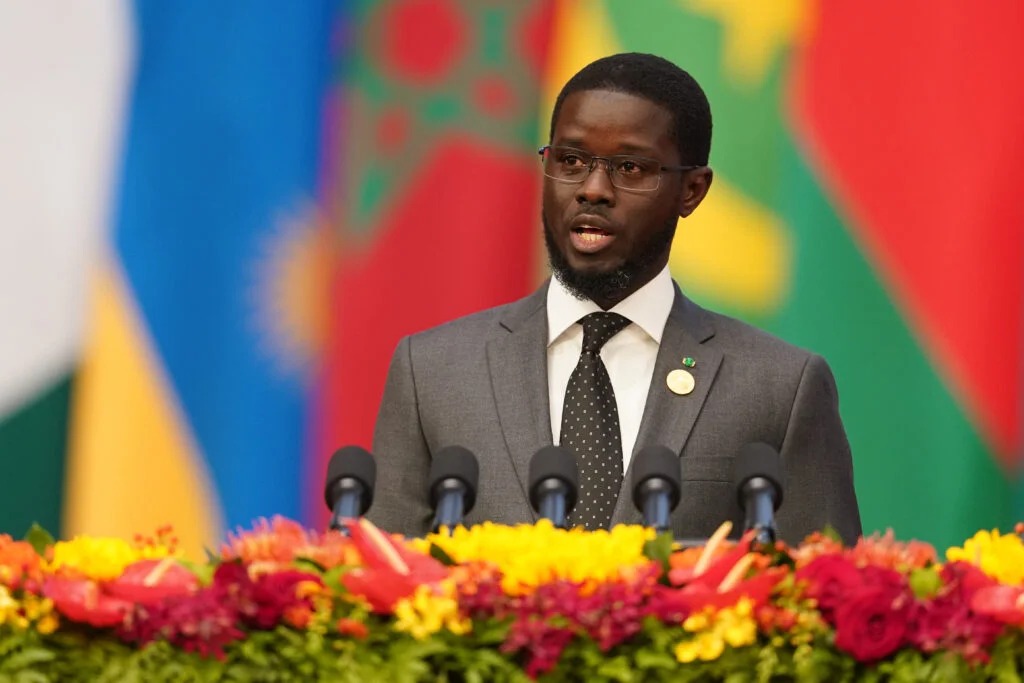
Senegal's Bassirou Diomaye Faye
By Silas Mwaudasheni Nande
The election of Senegal’s Bassirou Diomaye Faye as Chairman of the ECOWAS Authority hands the bloc’s most delicate assignment in a generation to its youngest and least conventional leader. Whether West Africa should feel hope now depends on whether Faye can convert his outsider credibility into the one currency the region actually needs: trust.
A Handover in Freetown, and a Region on Edge
On 19 July 2026, at the Julius Maada Bio International Conference Centre in Freetown, the leaders of the Economic Community of West African States did something they have done many times before and yet, this year, invested with unusual weight. They handed the rotating chairmanship of the ECOWAS Authority of Heads of State and Government to a new occupant. Sierra Leone’s President Julius Maada Bio, completing his mandatory one-year term, passed the mantle to Senegal’s President Bassirou Diomaye Faye, calling him his “younger brother” and wishing him well as he takes on the task of steering the bloc through what Bio himself described as a defining period.
At 46, Faye becomes one of the youngest leaders ever to chair the 15-member bloc, and arguably the most improbable. Two years ago he was a little-known former tax inspector who had spent time in prison on charges widely seen as politically motivated, released only ten days before an election he then won in a first-round landslide. Today he sits atop an institution founded in 1975 to knit together the economies of West Africa, an institution now fighting for its own relevance after the departure of three of its founding members and the steady creep of jihadist violence from the Sahelian interior toward the Atlantic coast.
The symbolism of the handover was not lost on delegates in Freetown. Alongside Faye’s elevation, Senegal also secured the presidency of the ECOWAS Commission, with General Birame Diop, a former army chief of staff and United Nations military adviser, taking over from the Gambian technocrat Omar Alieu Touray from September. For the first time in years, one country holds both the Authority’s rotating chair and the Commission’s permanent leadership at once, concentrating unusual influence in Dakar and inviting a natural question: what, precisely, does Bassirou Diomaye Faye now propose to do with it?
The Man From Sédhiou: Who Is Bassirou Diomaye Faye?
To understand what Faye might bring to ECOWAS, it helps to recall how he arrived at the presidency of his own country in the first place. Trained as a tax and property inspector, Faye was a middle-ranking civil servant and trade unionist who rose through the ranks of Ousmane Sonko’s Pastef party as its former leader was progressively barred from contesting elections by Senegal’s courts. When Sonko himself was disqualified from the March 2024 presidential race, Pastef turned to Faye, its little-known secretary-general, as a stand-in candidate. He campaigned from a prison cell under the slogan “Diomaye is Sonko,” was freed by presidential amnesty days before the vote, and won outright in the first round — an extraordinary rebuke of Senegal’s political establishment and, indirectly, of the wider model of managed democracy that had characterised much of West African governance for a generation.
That biography matters for ECOWAS in ways that go beyond sentiment. Faye is the first ECOWAS chairman in years who owes his position not to decades inside a ruling party machine but to a genuine anti-establishment insurgency conducted through the ballot box rather than the barracks. In a region where military juntas in Mali, Burkina Faso and Niger justify their seizure of power partly by pointing to the failures and perceived foreign capture of civilian elites, Faye is one of the few sitting heads of state who can plausibly claim to have defeated that same establishment without firing a shot. He has, moreover, positioned himself rhetorically as a sovereigntist in the Pan-Africanist mould — talking of renegotiating extractive contracts with foreign companies, reviewing military cooperation agreements with France, and asserting Senegalese control over natural resources — while remaining, unlike the Sahelian juntas, inside constitutional order and within ECOWAS itself.
This dual identity is precisely why many in the region see him as a plausible bridge to the breakaway Alliance of Sahel States. Indeed, Faye has already played this role once. During the tense December 2024 ECOWAS summit in Abuja, when the bloc granted Mali, Burkina Faso and Niger a six-month grace period before their withdrawal took final effect, Faye was present as an informal mediator between the Sahelian juntas and the wider bloc, one of relatively few civilian leaders the military governments in Bamako, Ouagadougou and Niamey still receive with a measure of trust. He speaks the language of sovereignty that resonates with juntas suspicious of a bloc they regard as historically pliant to Paris and Washington, even as he remains committed, at least formally, to constitutional rule and regional integration.
There is also the matter of generational symbolism. Faye is younger than many of the university students and unemployed graduates whose frustration has fuelled coups and protest movements across the region over the past six years. His rise, alongside that of his mentor and former prime minister Ousmane Sonko, was read across West Africa as evidence that peaceful, electoral change of an entrenched order was still possible — an implicit counter-argument to the juntas’ claim that only the army can deliver a clean break with the past. Whether that counter-argument still holds after eighteen months of turbulent governance in Dakar is one of the questions this chairmanship will test in public.
What Faye Inherits: An Organisation in Retreat
It would be difficult to overstate how much ECOWAS has been diminished institutionally in the two and a half years since the July 2023 coup in Niger set off the chain of events now defining the bloc’s crisis. What began as a punitive response to that coup — sanctions, a threatened military intervention, and diplomatic isolation of Niamey — produced precisely the opposite of its intended effect. Mali, Burkina Faso and Niger, all under military rule following coups between 2020 and 2023, drew together in mutual defence, formed the Alliance of Sahel States in September 2023, and announced their intention to leave ECOWAS altogether in January 2024. After a series of failed mediation efforts and a six-month grace period extended at the December 2024 Abuja summit, their withdrawal became formally effective on 29 January 2025.
The three departing states then went further than simple secession. In July 2024 they signed a treaty in Niamey upgrading their mutual defence pact into a full confederation, complete with a five-thousand-strong joint force, ambitions for a common currency to replace the CFA franc, and a coordinated diplomatic posture aimed squarely at reducing Western, and particularly French, influence in the Sahel. Through 2026 the AES has been consolidating rather than reconsidering: foreign ministers from the three countries met in Bamako in June to harmonise positions ahead of engagement with ECOWAS and the United Nations, while technical experts gathered in Ouagadougou to draft a common negotiating framework. The picture that emerges is not of three isolated, struggling juntas awaiting rescue by their former bloc, but of an increasingly institutionalised rival organisation settling in for a long stay outside the ECOWAS tent, with five-year transition timelines now running to 2030.
The practical consequences for ECOWAS are severe. The bloc loses roughly half its landmass and a substantial share of its population along with three states that sit at the geographic and security heart of the Sahel. Free movement of people and goods, the single most tangible achievement of West African integration for ordinary citizens over five decades, is now legally uncertain across those borders, even though the AES states have unilaterally pledged to keep their territories visa-free for ECOWAS citizens. Coordination on counter-terrorism, always imperfect, has become genuinely fractured: ECOWAS and the AES have held periodic contact — including talks in Bamako in 2025 aimed at agreeing modalities for cooperation against terrorism — but a state of mutual suspicion has periodically flared into direct confrontation, including an April 2025 incident in which Algeria, a neighbour rather than an ECOWAS member, shot down a Malian drone near their shared border, prompting the AES states to place their air defences on maximum alert and threaten to down any aircraft violating what they now call confederal airspace. Relations between ECOWAS member Benin and Niger’s junta leader have been openly hostile, driven in part by Benin’s continued security ties with France, illustrating how the AES rupture bleeds into bilateral tensions well beyond the four countries most directly involved.
Faye assumes the chairmanship, then, not of a bloc quietly managing a a manageable disagreement with three wayward members, but of an organisation whose founding logic — that West African states are stronger pooling sovereignty than guarding it jealously — is being actively and publicly contested by a rival confederation next door. He does so at a moment when even ECOWAS’s remaining members are not fully aligned: coastal states increasingly fear the security fallout of the Sahel crisis more than they fear the AES’s political defection, while the bloc’s traditional heavyweight, Nigeria, is absorbed by its own internal insurgencies and economic strain and has ceded some of the diplomatic initiative it once took for granted.
The Wars and Fractures Behind the Communiqué
Any honest accounting of what Faye now confronts must go beyond the diplomatic rupture with the AES and into the human cost of insecurity that rupture has helped entrench. The central Sahel — Mali, Burkina Faso and Niger — remains among the deadliest conflict zones on earth relative to its population, with two rival jihadist networks, Jama’at Nusrat al-Islam wal-Muslimin (JNIM, linked to al-Qaeda) and the Islamic State Sahel Province, competing for territory, tax revenue from smuggling and gold mining, and the loyalty of communities abandoned by weakened state security forces. Analysts at the Global Terrorism Index and independent monitors have tracked a westward and southward migration of this violence for several years now, and 2026 assessments confirm the trend has not reversed: the western Sahel remains the epicentre of militant Islamist violence in Africa, responsible for the overwhelming majority of such attacks on the continent.
What is new, and what should concern an incoming ECOWAS chairman more than almost anything else, is how far that violence has now travelled south of the old Sahelian battle lines. Benin has absorbed the sharpest escalation of any coastal state, with attacks rising from a handful in 2021 to well over a hundred a year by the middle of the decade, concentrated around the W-Arly-Pendjari park complex that straddles Benin, Burkina Faso and Niger and now functions as a logistical rear base for militant groups moving south. Togo’s northern Savanes region has suffered a similar, smaller-scale trajectory since JNIM claimed its first attack there in 2022. Northern Côte d’Ivoire and the border areas of Ghana, Guinea, Senegal and Mauritania are all registering greater strain, even where no major attack has yet landed. American and French security officials have used the word “metastasizing” to describe the spread of JNIM, the Islamic State’s West Africa and Sahel provinces, and al-Qaeda in the Islamic Maghreb toward the Gulf of Guinea, and JNIM’s own leadership has publicly confirmed ambitions to expand into Ghana, Togo and Benin.
This is not merely a security statistic; it is a governance stress test for exactly the coastal, still-democratic states that ECOWAS depends on for legitimacy and cohesion. The pattern in the Sahel was that jihadist violence, intercommunal tension and state neglect of peripheral regions combined to produce coups; Mali, Burkina Faso and Niger all fell to militaries that promised, and largely failed, to deliver security their civilian predecessors could not provide either. Analysts now warn openly that Benin, Togo, Côte d’Ivoire and Ghana risk repeating that cycle if their governments cannot contain the violence in their northern hinterlands. A second wave of coups along the coast, on top of the Sahelian trio already gone, would not just weaken ECOWAS further; it could functionally dissolve it.
Beyond the Sahel and its coastal spillover, ECOWAS’s chairman must also hold in view a wider basket of regional fragility: Nigeria’s long, grinding contest with Boko Haram and the Islamic State West Africa Province in its north-east, now compounded by banditry and kidnapping-for-ransom across its north-west; recurring political turbulence in Guinea-Bissau, a country whose recent history of coups and attempted coups makes it a perennial stress point for the bloc’s mediation machinery; the delicate, still-incomplete restoration of civilian rule in Guinea following its own 2021 coup; and simmering questions about third-term ambitions and constitutional manipulation in several member states that echo the very grievances the Sahelian juntas invoked to justify their own actions. ECOWAS’s credibility as a guarantor of “constitutional order” is only as strong as its willingness to apply that standard evenly — a point its critics, including the AES governments, have made forcefully and not without justification.
It is against this backdrop — a rival confederation consolidating next door, jihadist violence pressing on the coast, and older fault lines still unhealed — that Faye’s chairmanship must be judged. The temptation for any incoming chair is to treat the position largely as ceremonial, a year of hosting summits and issuing communiqués before handing on to the next head of state in the rotation. The scale of what ECOWAS now faces makes that approach a luxury the region cannot afford.
What Faye Brings to the Table
Faye’s own account of his priorities, delivered in his acceptance remarks in Freetown, was notably concrete for a ceremonial handover speech. He singled out the need to operationalise the long-delayed ECOWAS Standby Force as a genuine, functioning counter-terrorism instrument, to pool member states’ resources more effectively, to strengthen the bloc’s financial independence from external donors, and to expand protection and support for communities living under the shadow of the region’s conflicts. None of these are new ideas — ECOWAS has discussed a standby force since the early 2000s and a financial autonomy mechanism, funded by a small community levy on imports, has existed on paper for two decades without ever being fully and reliably collected — but the specificity of Faye’s framing suggests at least an intention to move past rhetoric.
What he brings that his predecessors did not is a distinctive credibility with precisely the audience ECOWAS most needs to reach: the juntas and their domestic constituencies. Bio, a career naval officer turned two-time elected president, and Tinubu, the consummate Nigerian political insider before him, both spoke the language of ECOWAS orthodoxy fluently but struggled to be heard sympathetically in Bamako, Ouagadougou or Niamey, where the bloc is widely perceived, fairly or not, as an instrument of French and Nigerian interests dressed up in regional colours. Faye’s own biography as a prison-cell candidate who broke Senegal’s political establishment, his public sovereigntist language on natural resources and foreign military bases, and his demonstrated willingness to informally mediate with the AES states already in December 2024, together give him an opening that his more conventional predecessors lacked. If any sitting ECOWAS head of state can get Bamako, Ouagadougou and Niamey to take a phone call seriously, the odds favour Faye more than most.
He also arrives with the wind of Senegal’s diplomatic standing behind him. Dakar has long cultivated a reputation, not always fully deserved but genuinely useful, as a stable, moderate voice in West African affairs — a country that has never suffered a successful coup, that hosts significant international institutions and conferences, and that under Faye has been vocal about redefining, rather than rupturing, its security relationship with France. Pairing the Authority’s chairmanship with the ECOWAS Commission presidency, now also held by a Senegalese general with direct experience of the region’s security architecture through his time as a UN military adviser, gives Faye an unusually aligned institutional platform: chair and Commission president answering, in effect, to the same capital for at least the transition period. That concentration of authority carries risks of over-centralisation, but it also removes one of the chronic frictions that has hobbled ECOWAS chairmen in the past — a Commission bureaucracy pulling in a different direction from the rotating political leadership.
Finally, Faye brings a generational argument that matters more than it might first appear. At 46, he is closer in age to the millions of unemployed, underemployed and digitally connected young West Africans whose frustration with elite governance has powered both the coup wave and Pastef’s own rise in Senegal. A chairman who can plausibly claim to understand that frustration, rather than simply managing it from above, has an opportunity — not a guarantee, but an opportunity — to reframe ECOWAS’s public image away from that of a club of ageing incumbents protecting one another’s power and toward something closer to a genuine reform vehicle. Whether he uses that opening or squanders it will shape how the bloc is perceived by its own citizens for years after his one-year term ends.
The Weight He Carries at Home
Any honest assessment, however, must set these assets against a harder truth: Faye takes on ECOWAS’s chairmanship while his own government is absorbed in one of the most serious governance and fiscal crises Senegal has faced in a generation, and that crisis has, in recent months, become acutely political.
The origins of the problem predate Faye’s presidency. Shortly after taking office in April 2024, his government’s audits uncovered previously undisclosed liabilities under his predecessor Macky Sall, eventually estimated at around a quarter of Senegal’s GDP, that had been concealed from both the Senegalese public and the International Monetary Fund. The revelation triggered a credit downgrade, the suspension of an existing IMF facility, and a slow, difficult renegotiation that has dragged through 2025 and into 2026, with Senegal’s public debt now estimated above 130 percent of GDP and growth forecasts repeatedly cut — the IMF’s own projection for 2026 growth fell to around 2.2 percent, down sharply from the 6.7 percent Senegal recorded the previous year, driven partly by a fuel subsidy bill that finance officials warned could overshoot its budget allocation by as much as two billion dollars.
The political fallout from this fiscal strain has now reached the heart of Faye’s own governing alliance. In May 2026, after months of visible tension over whether Senegal should accept an IMF-style debt restructuring, Faye dismissed his prime minister and closest political ally, Ousmane Sonko — the very figure whose disqualification from the 2024 race had put Faye in the presidency in the first place, and the man behind the “Diomaye is Sonko” slogan that defined that campaign. Sonko, who had publicly resisted IMF engagement as a “disgrace” to national sovereignty, was replaced by the technocratic economist Ahmadou Al Aminou Lo, while Sonko himself pivoted to a new institutional base as speaker of Senegal’s National Assembly, where his Pastef party retains a dominant majority. Financial markets registered the rupture sharply, with Senegal’s dollar-denominated bonds tumbling to record lows and analysts warning of a growing probability of formal restructuring on the country’s foreign-currency debt.
This matters for ECOWAS for two distinct reasons. First, it is a plain question of bandwidth: a president personally negotiating his own country’s debt crisis with the IMF’s managing director, managing a public and consequential rupture with his former mentor and prime minister, and steering a fragile domestic coalition through a subsidy crunch has less time, attention and political capital to spend flying between Bamako, Abuja, Accra and Niamey than a chairman with a settled home front would have. Second, and perhaps more corrosively, it complicates the very credibility Faye is meant to bring to the table. Part of his appeal to the Sahelian juntas and to disillusioned voters across the region rested on the image of a clean-break reformer delivering on anti-establishment promises without compromising them for outside approval. A prime minister sacked over disagreements about IMF terms, and a president now “personally handling” negotiations with the same international lender his government once treated with defiant scepticism, tells a more complicated story — one of a reformist project running into the same hard fiscal constraints that have humbled sovereigntist rhetoric across the continent before. West African publics, and especially the juntas in the AES who built their legitimacy partly on rejecting exactly this kind of external financial dependence, will not have missed the irony.
None of this disqualifies Faye from leading ECOWAS effectively. Leaders have governed successfully abroad while managing serious problems at home before. But it should temper any expectation that his chairmanship will be defined primarily by bold new initiatives rather than by the harder, more constrained work of keeping existing commitments from unravelling further while he simultaneously fights fires in Dakar.
Priorities for a One-Year Tenure
Given all of this, what should Faye actually try to accomplish in the twelve months available to him, and what should observers watch for as tests of whether the chairmanship is succeeding?
First, make the counter-terrorism force real, not aspirational. Faye named this his own priority in Freetown, and he was right to. ECOWAS has authorised, funded on paper, and repeatedly delayed a standby force for over two decades. A single, credible step this year — an agreed troop-contribution formula, a functioning joint command structure, or even a limited operational deployment along a defined stretch of the Benin–Niger–Burkina Faso frontier — would do more for the bloc’s relevance than another year of communiqués. Failure here, by contrast, will be read by coastal states as confirmation that ECOWAS cannot protect them, accelerating the same drift toward unilateral or bilateral security arrangements — with Rwanda, with private contractors, with France in some cases and Russia in others — that is already visible in the region.
Second, treat the AES relationship as a long game of confidence-building rather than a reunification project. The evidence from 2026 is unambiguous: Mali, Burkina Faso and Niger are consolidating their confederation, not searching for a way back into ECOWAS. Faye’s own credibility with these governments is real, but it should be spent on achievable, narrower goals — sustained counter-terrorism information-sharing, protection of free movement for ordinary citizens across the old ECOWAS-AES boundary, and coordinated positions ahead of shared forums like the UN General Assembly — rather than staked prematurely on the AES reversing a decision its leaders have called irreversible. A chairman who quietly delivers functional cooperation on terrorism and trade will do more for regional stability than one who publicly chases a reunification that is not coming, and risks a visible failure that would further damage ECOWAS’s standing.
Third, press ahead on the community levy and financial autonomy, even at domestic political cost. ECOWAS’s chronic inability to fund its own institutions and operations without leaning on the European Union and other outside donors has long undermined its authority to speak independently on security or governance matters. Faye’s own emphasis on this point in his acceptance remarks should be taken as a genuine test: if Senegal, holding both the Authority chair and the Commission presidency simultaneously, cannot make progress on collecting the levy reliably and insulating ECOWAS’s core budget from donor conditions, it is difficult to imagine which configuration of leadership could.
Fourth, use the coastal security crisis, not the AES dispute, as the organising emergency of the year. The temptation for any chairman is to let the drama of the Mali-Burkina-Niger rupture dominate the bloc’s attention, precisely because it is the most visible fracture. But the coastal spillover into Benin, Togo, Côte d’Ivoire and Ghana’s northern borderlands is the more urgent threat to the twelve members ECOWAS still has, because it threatens to reproduce, inside the bloc itself, the exact governance failures and coup dynamics that produced the AES rupture in the first place. A chairman who mobilises resources, intelligence-sharing and development support toward Benin’s and Togo’s northern regions this year will be doing more to prevent the next departure from ECOWAS than any amount of diplomacy aimed at the three states already gone.
Fifth, apply ECOWAS’s democratic and constitutional standards evenly. One of the AES governments’ most effective rhetorical weapons has been the accusation that ECOWAS enforces its principles selectively — harshly against juntas, more gently against elected leaders who manipulate constitutions to extend their own rule. A chairman who is seen to hold all member states, not only the weakest or most isolated, to the same standard on term limits, electoral integrity and civilian oversight of security forces will do more to rebuild the bloc’s moral authority than any single security initiative. This is politically uncomfortable, since it may require Faye to speak uncomfortably about fellow elected heads of state rather than only about juntas, but the credibility of ECOWAS’s founding logic depends on it.
Sixth, keep the private sector and economic integration agenda visible, not just security. Analysts have noted that Faye, despite his sovereigntist rhetoric, is expected to work closely with business figures such as Aliko Dangote and the ECOWAS Business Council on trade facilitation and investment, and this economic dimension should not be crowded out by the undeniable urgency of security matters. A regional bloc whose only visible output for a year is troop deployments and communiqués about terrorism will struggle to make the case to its own citizens that integration delivers tangible benefits, particularly at a moment when free movement and trade across the AES boundary are already under strain.
Should West Africa Hope?
The honest answer is: cautiously, and conditionally.
There are real grounds for a measure of hope. Faye’s biography gives him an unusual capacity to be heard by audiences — juntas, disaffected youth, sovereigntist publics — that previous ECOWAS chairmen struggled to reach at all. The concentration of the Authority chair and the Commission presidency in the same capital removes a structural friction that has hampered past chairmanships. And Faye has, unlike many predecessors, already named concrete priorities rather than vague aspirations, giving observers something specific against which to measure his year in office.
But the grounds for caution are at least as substantial. ECOWAS’s fundamental problem is not a shortage of well-intentioned chairmen; every recent occupant of the position, from Tinubu to Bio, arrived with plans to strengthen the standby force, deepen integration and heal the AES rupture, and each departed with those ambitions substantially unrealised. The structural constraints — a rotating one-year term too short to see most initiatives through, a Commission historically under-resourced and dependent on external donors, member states with sharply divergent threat perceptions and foreign alignments, and a rival confederation next door that shows every sign of permanence rather than transition — do not disappear because a more sympathetic figure now holds the gavel. Faye’s own domestic fiscal crisis, and the very public rupture with Sonko that crisis has produced, will consume time, credibility and political capital that a less encumbered chairman might have spent entirely on regional affairs.
The most useful frame for judging this chairmanship, then, is not whether Faye “solves” West Africa’s wars and fractures in twelve months — no single leader could, and it is unfair to the office and to Faye himself to measure success against that standard. The more meaningful test is narrower and more achievable: does ECOWAS end this chairmanship with a functioning, rather than merely authorised, counter-terrorism capability; with a demonstrably more reliable independent revenue base; with evidence of sustained, practical cooperation with the AES states even absent formal reunification; and with its remaining members, especially the increasingly threatened coastal states, feeling that the bloc is finally organising itself around their most urgent fear rather than around the drama of a rupture that already happened eighteen months ago.
If Faye can deliver even two or three of those narrower outcomes, his chairmanship will have been more consequential than most of those that preceded it, whatever the state of Senegal’s own finances by the time he hands the gavel on next July. If he cannot, West Africa will not be worse off for having tried a different kind of chairman — but it will have confirmed that the office itself, rotating annually among heads of state each managing their own domestic fires, may simply be too weak an instrument for the scale of the crisis the region now faces. That, ultimately, may be the more important verdict Faye’s year in charge delivers: not just what he achieves, but what the limits of his achievement reveal about whether ECOWAS as currently constructed can still do the job it was founded to do.
Similar Posts by The Mt Kenya Times:
- Mt Kenya Times ePAPER September 9, 2026
- Meet the people tour: Kalonzo Musyoka’s grassroots push for national renewal
- If Kenya’s economy is growing, why are Kenyans still struggling?
- The people saving Kenya are the ones Kenya keeps abandoning
- Ndindi Nyoro: Ruto’s project or the opposition’s new wild card?
About the Author