The Mt Kenya Times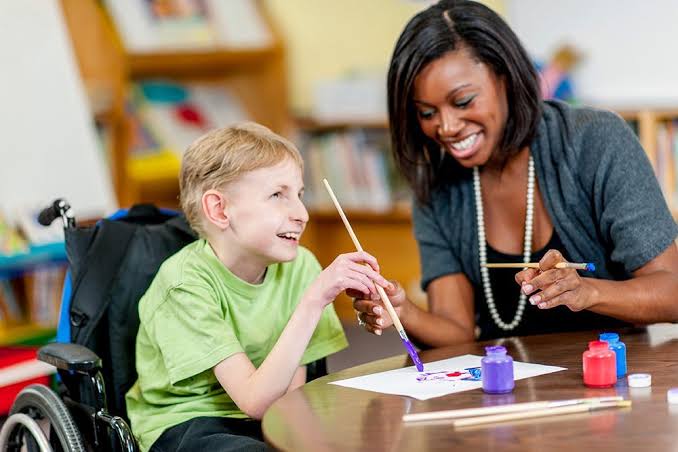
Education Of Special Needs Children. Photo - Courtesy

By: Wanjohi. P. Mugambi
Worth Noting:
- The children who have special requirements are the ones who stick out from the rest of the group for one reason or another and this distinction has nothing to do with the children’s mental or emotional well-being or their physical capabilities.
- The phrase “children with special needs” is often used to refer to these young people. Children who are classified as “children with special needs” have unique educational requirements that distinguish them apart from children who are considered to be “normal,” and they need personalized help to meet those requirements.
- Children with autism, down syndrome, and learning difficulties are examples of disorders that fall under the category of children with special needs .
A kid is a one-of-a-kind individual with their own personalities, quirks, and qualities. As a result of this natural variety, the mental capacities of all infants, even sets of identical twins, are distinct. Every youngster has their own special identity. It is not always the case that the individual traits of children are proportionate to one another. Every youngster is born with the intrinsic capacity to learn new things and grow in their own special manner.
Some children are born inherently intelligent and responsive to learning, while others can need more time to fully comprehend new information. It is for this reason that it is not a good idea to treat all children in the same manner. Children who are inclined to succeed in one area but suffer in another, as well as those who have other issues in their development, are both included in the group of children who are considered to have special needs. This category is a wide one.
The children who have special requirements are the ones who stick out from the rest of the group for one reason or another and this distinction has nothing to do with the children’s mental or emotional well-being or their physical capabilities. The phrase “children with special needs” is often used to refer to these young people. Children who are classified as “children with special needs” have unique educational requirements that distinguish them apart from children who are considered to be “normal,” and they need personalized help to meet those requirements. Children with autism, down syndrome, and learning difficulties are examples of disorders that fall under the category of children with special needs.
Children who have true difficulties with abilities such as listening, talking, reading, writing, thinking, and arithmetic are the ones we refer to as having “learning challenges.” When we speak about “children with learning issues,” we mean children who have these difficulties. It’s possible that a child’s capacity to learn across a variety of subject areas would suffer as a result of these obstacles.
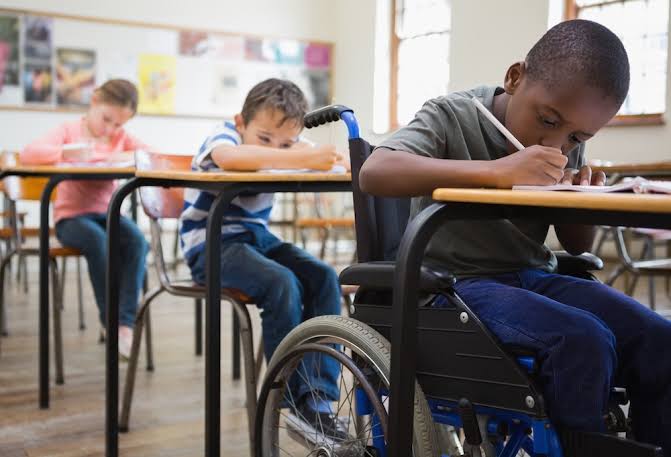
Learning difficulties are unfortunately all too frequent among young people, especially in the setting of schools and education. When someone has problems learning new things, the common assumption is that they are not intelligent enough. Children that have trouble learning should not be sent to ordinary schools because if they do so, they will continue to fail academically even after attending such institutions. Children who have difficulties in learning often have a more difficult time than their peers in acquiring new ideas and concepts. If a child who is having difficulty intellectually is enrolled in a traditional school, it is inevitable that they will lag behind the other children in their class. Every kid has a unique mental capacity for learning, and these capacities might range widely. The fact that no two children, not even two sets of identical twins, are precisely the same is one of the factors that contribute to the fact that their IQs are not the same.
Learning challenges in children are a topic that is not only intriguing but also very important There isn’t a single factor that can be singled out as the cause of a child’s difficulty in acquiring new knowledge; rather, the causes originate from a broad variety of different places.
These phenomena may be caused by a combination of internal and external factors, such as the management of learning activities that do not spark children’s learning drive and the delivery of erroneous repetition. In addition to these possible external reasons, brain dysfunction and incorrect learning processes are also possibilities.
It’s also possible that the individual’s psychological requirements aren’t being satisfied to the level that they should be. This is something that you should look into. Primary requirements, which are often referred to as physiological needs, include things like the necessity for food and water, while secondary wants, which are also referred to as psychological needs, include things like the requirement for a sense of protection and security.
The two categories of fundamental criteria are not interchangeable with one another. If a person does certain acts or displays particular behaviors, they may be able to satiate both their primary or physiological wants as well as their secondary or psychological needs. When a kid’s emotional and behavioral needs are met, the child experiences emotional growth and development on both an emotional and behavioral level.
This, in turn, has an effect on the child’s cognitive and social skills. These conditions have to be satisfied since they play a significant role in building a solid foundation, which is necessary for the development and growth of new characteristics.
If the child’s requirements are satisfied, he or she will experience fulfillment and joy, which is a state that may be encouraged and supported.
The converse is true if the youngster is unable to conquer this impediment; in that instance, he or she may suffer intense disappointment or fury as a result. Feelings of aggravation are sometimes brought on by a combination of things, including one’s own actions, the actions of others, outside influences, and even one’s own mental condition.
During the formative years of a kid, negative experiences such as disappointments or frustrations may make it more difficult for the youngster to adapt to new environments in the future. It is possible for a kid to experience learning challenges, which are one kind of adjustment disorder. Adjustment disorders may affect children In light of the information presented above, the researcher aims to focus the bulk of this investigation on the problem of identifying the psychological needs of children who have difficulties with learning as the primary focus of this investigation.
There is a significant amount of space here for study and discussion. It is possible to deduce, based on the circumstances that lead to the emergence of learning difficulties, what psychological and physiological needs children who have these difficulties have.
We choose to focus on this topic so that in the future we would have a better understanding of the types of assistance that parents and teachers of children who have difficulties learning need in order to give those children with the most favorable conditions for education and growth.
Similar Posts by The Mt Kenya Times:
- Nigeria Starts Making Its Own Next-Generation Malaria Nets
- Diaspora Times Global Oct 3 – Oct 9, 2026
- Kwale’s electricity push moves from grid to growth
- Linguistic Features Of Chromatonyms In English And Uzbek
- A Poem, a Universe: A poetry book gaze at Jumaniyoz Jabborov’s “Ko‘zgudagi sanam”
About the Author