The Mt Kenya Times
Medical Practitioners & Operation Linda Ugatuzi fraternity at the joint launch of digital signature collection process to amend the Constitution of Kenya (2010)
By: Dennis Wendo
Worth Noting:
- Under Article 15 of the 2010 Kenya Constitution specified in clause (2), affirms the establishment of commissions and independent offices specified in clause (3), except to the extent that the Constitution provides otherwise. Kenya has 10 Commissions, with independent offices being, The Auditor-General and the Controller of Budget office. The establishment of HSC should not be a case of isolation, rather a timely priority to consider.
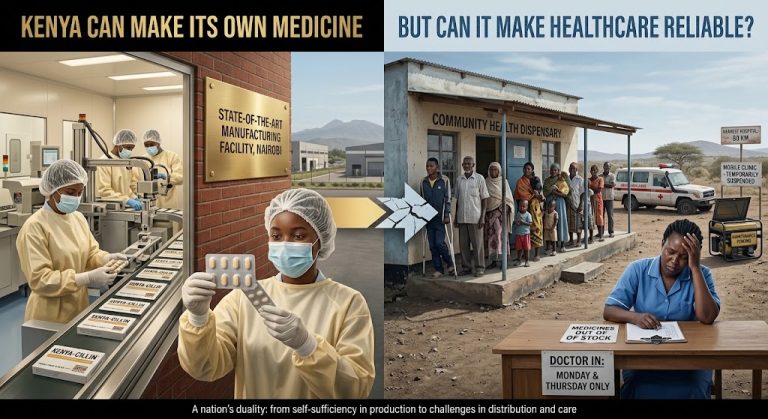
- Healthcare systems continue to suffer from abandonment and undercapitalization. There is still limited access to health care facilities, lack of adequate personnel and expertise to address medical needs, poor Infrastructure with most facilities overburdened to handle challenges. This is a threat across the six World Health Organization (WHO) pillars of healthcare delivery.

The Constitution of Kenya (2010) devolved health services to the counties in 2013. The operations of public institutions such as the National Referral facilities and research institutions were left under the National Government. Industrial strikes continue to disrupt the provision of services in the public health sector.
The uncoordinated implementation of health services in the counties remains the root of disputes. The Building Bridges Initiative (BBI) report contained a proposal for the establishment of the health service commission (HSC). The proposal advocated for the transfer of the human resource for health from the county government to the specialized health service commission.
Under Article 15 of the 2010 Kenya Constitution specified in clause (2), affirms the establishment of commissions and independent offices specified in clause (3), except to the extent that the Constitution provides otherwise. Kenya has 10 Commissions, with independent offices being, The Auditor-General and the Controller of Budget office. The establishment of HSC should not be a case of isolation, rather a timely priority to consider.
Healthcare systems continue to suffer from abandonment and undercapitalization. There is still limited access to health care facilities, lack of adequate personnel and expertise to address medical needs, poor Infrastructure with most facilities overburdened to handle challenges. This is a threat across the six World Health Organization (WHO) pillars of healthcare delivery.
Absurdly the few facilities that are highly equipped with specialized equipment are limited in having effective processes and personnel. We have setbacks in supply chain, understaffing, innovations, technology and healthcare financing.
There is a need to increase budgetary allocation and strengthen leadership and management in the sector. A small percentage of Kenyans have access to private insurance and can afford to pay for their own expenses. A majority cannot and grapple to the extremes in offsetting medical related costs.
The government should accelerate discussions and implementation of public-private partnership initiatives for creation of sustainable models for healthcare financing to optimally achieve Universal Health Coverage (UHC). Multinational companies extracting resources from Kenya should be encouraged to plough some of the profits back into healthcare for the communities providing the workforce for their commercial activities. The poor governance and lack of accountability in the use of resources allocated to the healthcare sector requires redress. Proper policies should be in place to mitigate the human resource and staffing challenges.
The HSC Model is not a foreign concept. Uganda has it in place and is working well to address dedicated and emerging health care challenges.
The Uganda Health Service Commission covers Central Government Health Institutions that include the ministry of health, National Referral Hospitals, Regional Referral Hospitals, Directorate of Public Health and Environment and specialized institutions such as the Uganda Blood Transfusion Services, Cancer Institute’s and Medical Professional Councils.
The Commission provides for technical support and support supervision to the District Service Commission (DSCs) and Local Governments on matters relating to human resource health management.
The proposal to amend the 2010 Constitution, through popular initiative by the people of Kenya is worthwhile. Cited as the Constitution of Kenya (Amendment) Act 2022, it offers an opportunity for the establishment of a health service commission. It outlines the composition and qualifications for the proposed commission, which shall be appointed by the president with approval of the national assembly. Parliament shall enact necessary legislation to regulate the operations of the HSC.
The Health Service Commission shall set and review the standards of education and training for persons entering the health service; review the demand and supply of health workers; advise the national and county governments on matters relating to the health professions and health service delivery; advise the government on policy and other activities necessary to achieve and maintain constitutional and other legal provisions on health rights; prepare periodic reports on the Commission’s activities, as well as progress reports on the attainment of health rights as provided for in Article 21 of this Constitution and liaise where necessary, with other persons or agencies in order to fulfill its mandate.
The functions of the Commission shall be to register trained health workers; recruit and employ registered health workers; assign health workers employed by the Commission for service in any public Hospital or health facility; promote and transfer health workers according to service need; exercise disciplinary control over health workers employed by the Commission and terminate the employment of health workers in the health service.
The members of the HSC shall hold office for a renewable term of 4 years. The Commission shall ensure just, equitable, impartial and non- discriminatory working environment for all health providers and in management of human healthcare resources and set the criteria for the conversion of Community Health Volunteers to Community Health Workers.
The establishment of HSC will unify the over 90,000 healthcare workers in the country and will create a conducive labour environment in the public health sector, addressing localized industrial actions currently on surge. This will ensure the delivery of quality healthcare goes a notch higher. There is a strong need for political goodwill and support to Kenya Medical Practitioners and Dentist Union, Kenya Union of Clinical Officers, Kenya Healthcare Federation, Kenya Medical Association, Operation Linda Ugatuzi Civil Society and other forefront stakeholders championing for reforms in the health sector.
So far 1M signatures have been collected. We are targeting 7M signatures by end of June 2023.
Dennis Wendo
Founder Integrated Development Network
Email: dambehi@gmail.com
Similar Posts by The Mt Kenya Times:
- Mt Kenya Times ePAPER September 7, 2026
- Lesuuda crosses the floor — and takes Samburu with her
- The Rift Valley is not Ruto’s anymore — and DCP is making sure everyone knows it
- Kalonzo and Muturi march into Gachagua country
- Faith and politics travel together for Gachagua in Washington State
About the Author