
Exploring The Acrimony Of Stating Meritocracy And Kenya In The Same Sentence
 The Mt Kenya Times
Image by Joshua Chiang
By Jerameel Kevins Owuor Odhiambo
Worth Noting:
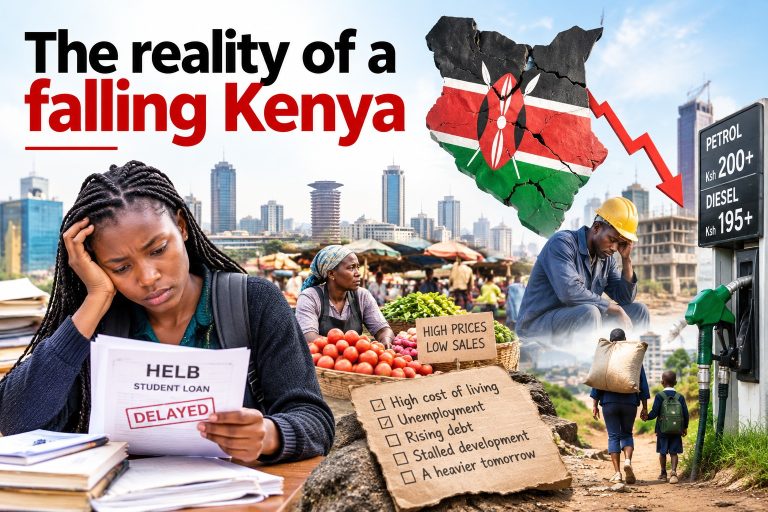
- Kenya’s unemployment and underemployment levels are trending towards new levels of permanent hopelessness. Ordinarily, the government should have gathered by now its deep thinkers, intellectuals and strategists to brainstorm on how to tackle this challenge.
- Faced with a glut of workers, as is the case, public and private sectors have an opportunity to embrace competition and transparency and set clear qualifications for vacancies. In the absence of such purposeful steps, the country risks sliding into elitism, where new employment opportunities and promotions become available to a privileged few largely those of a particular pedigree or with deep political connections.
- Virtually all public sector institutions, such as state universities and parastatals, suffer from poor leadership and mismanagement. This crisis manifests itself in the form of fiscal imprudence and the looting of public resources by unqualified yet politically connected stewards.
Meritocracy refers to a governmental or other administrative system wherein appointments and responsibilities are assigned to individuals based on their merits, which are determined through objective evaluations. Merit can be earned by either intellectual or manual labor, as each person has his or her own talents. Nevertheless, there is no absolute definition of merit because both intelligence and skill are relative. In our current society, individuals can, theoretically, reach any goal in a meritocratic system. Indeed, merit should be the basis on which resources are allocated. This said, personal beliefs, bureaucratic complications, national regulations, and other human characteristics obscure the obvious superiority of this approach.
Members of groups, including societies, often support and follow an individual who adheres to the group’s norms rather than one who may be more deserving of such loyalty but who does not adhere to the shared rules. Individuals in a meritocratic system feel valued, believe their abilities are recognized, and have incentives to improve their professional performance. In such a context, individuals experience their environment as fair and feel more confident about themselves, others, and their work. Individuals working under such conditions are very likely to have higher levels of motivation, engage in more collaborative behavior, show greater flexibility and experience enhanced well-being compared with those operating in a system that is perceived as not based on merit.
Meritocracy can be viewed from various contextualized lenses such as political meritocracy, social meritocracy, work place meritocracy name it. Professor Daniel Bell argues that political meritocracy is the idea that a political system is designed with the aim of selecting political leaders with above average ability to make morally informed political judgments. That is, political meritocracy has two key components: the political leaders have above average ability and virtue and the selection mechanism is designed to choose such leaders. Political meritocracy has been largely eclipsed from political theorizing in the modern world, but there are three important reasons for reviving and reinterpreting this political idea.
It is of paramount importance that “Good Governance” should be operative from both top and bottom, at all levels and from all sides. Selections to important positions should not be on political bias, influence family connections and friendships but should be done appropriately purely on their own merit. As you will realize in the course of this paper, the same is devoid in Kenya. In Kenya folks get into public offices depending on their alliance to the current regime. Political correctness is key and then loyalty follows it closely at second place in order for one to get a place in public service. As of now it is even said that in the job market in Kenya what matters is the person you know than even your credentials.
Meritocracy in Kenya is under attack. In case you doubt the same, let me share relevant examples of the same. The remittance from Kenyans in diaspora is the highest as per the data from Central Bank of Kenya. Kenya is now earning more foreign exchange from diaspora remittances than each of its major exports coffee, tea and horticulture in spite of persistent criticism of a poor diaspora policy. The latest figures from the Central Bank of Kenya reveal that the country’s diaspora remittances rose by 8.34 percent to $4.027 billion in 2022, closing in on exports, which brought in $5.77 billion worth of foreign currency in the same period. Compared with 2021, Kenya’s total exports rose 7.5 percent, a slower growth rate than the diaspora remittances, which are projected to keep growing as the world’s economy continues to recover.
Enough of that, why do these Kenyans seek places abroad. Brain drain in Kenya is real cancer as of now. Most professionals after getting done with their respective professional qualifications opt to look for opportunities abroad for in Kenya we don’t value our own brains. Lawyer Donald Kipkorir has been vocal on the same. He has castigated the government for making top brains in the country to leave the country for better spaces in foreign nations; yet those brains could be better used in the country and thus spur economic development in the nation. Recently, Acting Director General in charge of Medical Services Dr. Patrick Amoth sent a letter to the Director of Immigration Services, in the letter he was instructing the Director to ensure that doctors who are qualified be not permitted to go abroad even though he admitted that the government lacks capacity to employ the many doctors churned out of the various medical schools in the country. In one of the past daily Nation issues, it had a shouting headline of how over 4,000 doctors haven’t been employed and most of them die courtesy of suicide and related depression.
In the job market especially the public service as of now, two dominant communities in Kenya feel that they are entitled to getting positions in the government. If you doubt the same, look at the composition of the Cabinet Secretaries and Principal Secretaries. You will be able to get my point. This has been even noted by Auditor General, to look further on the same have a date with the various reports made by the Auditor General.
Kenya’s unemployment and underemployment levels are trending towards new levels of permanent hopelessness. Ordinarily, the government should have gathered by now its deep thinkers, intellectuals and strategists to brainstorm on how to tackle this challenge. Faced with a glut of workers, as is the case, public and private sectors have an opportunity to embrace competition and transparency and set clear qualifications for vacancies. In the absence of such purposeful steps, the country risks sliding into elitism, where new employment opportunities and promotions become available to a privileged few largely those of a particular pedigree or with deep political connections. Virtually all public sector institutions, such as state universities and parastatals, suffer from poor leadership and mismanagement. This crisis manifests itself in the form of fiscal imprudence and the looting of public resources by unqualified yet politically connected stewards.
Whereas this problem is ubiquitous and worsening, political leaders are engaged in deal making around narrow interests, which would ultimately mainstream elitism and rent seeking. Pursuing such a path will, no doubt, entrench and exacerbate inequality by denying opportunities to qualified candidates from poor families and marginalized communities. This would accentuate the country’s mismatch of its most precious resources labour and accelerate brain drain, worsening the situation. Africa has qualified and talented individuals who can steer it to greater heights yet lack of political goodwill continues to be a major impediment to that. Across the continent, a handful of political elites and their lieutenants strive to preserve their privileged status by practicing nepotism and crony capitalism. In the end, their ill-educated and unqualified appointees have done nothing but bankrupt state enterprises.
Nepotism at the county level puts local public institutions such as schools and dispensaries at the risk of being run into the ground as well. Replacing a dysfunctional recruitment system that is based on nepotism, tribalism and cronyism with meritocracy can yield tremendous results and benefits. Placing value on qualifications and talent often brings pride, prestige and efficiency to the workplace. Furthermore, a merit-based reward system can be a catalyst for self-improvement, hard work, innovation and productivity.
UNDP states that government bureaucracy characterized by meritocratic recruitment, along with predictable, rewarding career ladders, are associated with higher economic growth. And for a country that is synonymous with corruption, like ours, meritocracy reduces graft by placing a barrier between bureaucrats and politicians. It also promotes equality and fairness and encourages individuals to do their best to achieve personal and societal goals
In a meritocratic society, there is a leveling of the playing ground and everybody has an equal chance to advance based on qualifications, talent and efforts regardless of their gender, tribe, class, political connections and other non-merit factors. Meritocratic countries, such as Singapore, are governed by the best and the brightest and experience the highest levels of living standards, economic wellbeing and shared prosperity. In contrast, the countries that are mired in economic morass are encumbered by patronage, nepotism, cronyism, corruption and incompetence
Systems that are not perceived as merit-based encounter a variety of problems, some of which may vary according to individual personality differences. Indeed, some individuals may experience constant frustration, lack of motivation and anger; if not appropriately channelled, these can lead to agitation, anxiety and burnout. A non-meritocratic system offers fewer incentives to improve professionally, which affects both the most talented individuals whose achievements may be ignored or even sabotaged as well as average workers. Perceiving an environment as not merit-based potentially contributes to reduced self-esteem and can drain workers of energy, rendering them victims of their own learned helplessness and placing them in positions of inferiority.
As, it has been demonstrated in this article, meritocracy in Kenya is on its deathbed. This has been courtesy of elites in the various sectors and be sure that if the same continues then as a nation we are damned. The earlier we make meritocracy part and parcel of Kenya’s culture, the better it will be for us and the generations that will follow us in quick succession. Sorry to say this, but as of now there is a big time disharmony of combining meritocracy and Kenya in the same sentence. I end with the immortal words of Lee Kuan Yew, Singapore’s founding father and first prime minister, who declared: “We must have a system that enables the best man (and woman) and the most suitable to go into the job that needs them”.
Jerameel Kevins Owuor Odhiambo is a law student at University of Nairobi, Parklands Campus. He is a regular commentator on social, political, legal and contemporary issues. He can be reached at kevinsjerameel@gmail.com.
Similar Posts by The Mt Kenya Times:
- Mt Kenya Times ePAPER October 22, 2026
- Ruto heads to Harare for COMESA summit on trade and regional security
- Mudavadi and Wetangula walk out as Sifuna speaks at Nabwera memorial
- Police accountability on trial as seven officers face probe over journalist’s arrest
- Learners, teachers graduate from thrive for good organic farming training
About the Author



Wonderful items from you, man. I have remember your stuff prior to and you are just too great.
I actually like what you’ve bought here, really like what you’re
saying and the way in which in which you are saying it. You make it enjoyable and
you still take care of to stay it smart. I cant wait to read far more from you.
That is really a wonderful site.
Fabulous, what a blog it is! This blog gives helpful facts to us, keep it up.