
Financial Inclusion Heralds A New Dawn For African Women As Continent Moves Towards The Africa We Want
 The Mt Kenya Times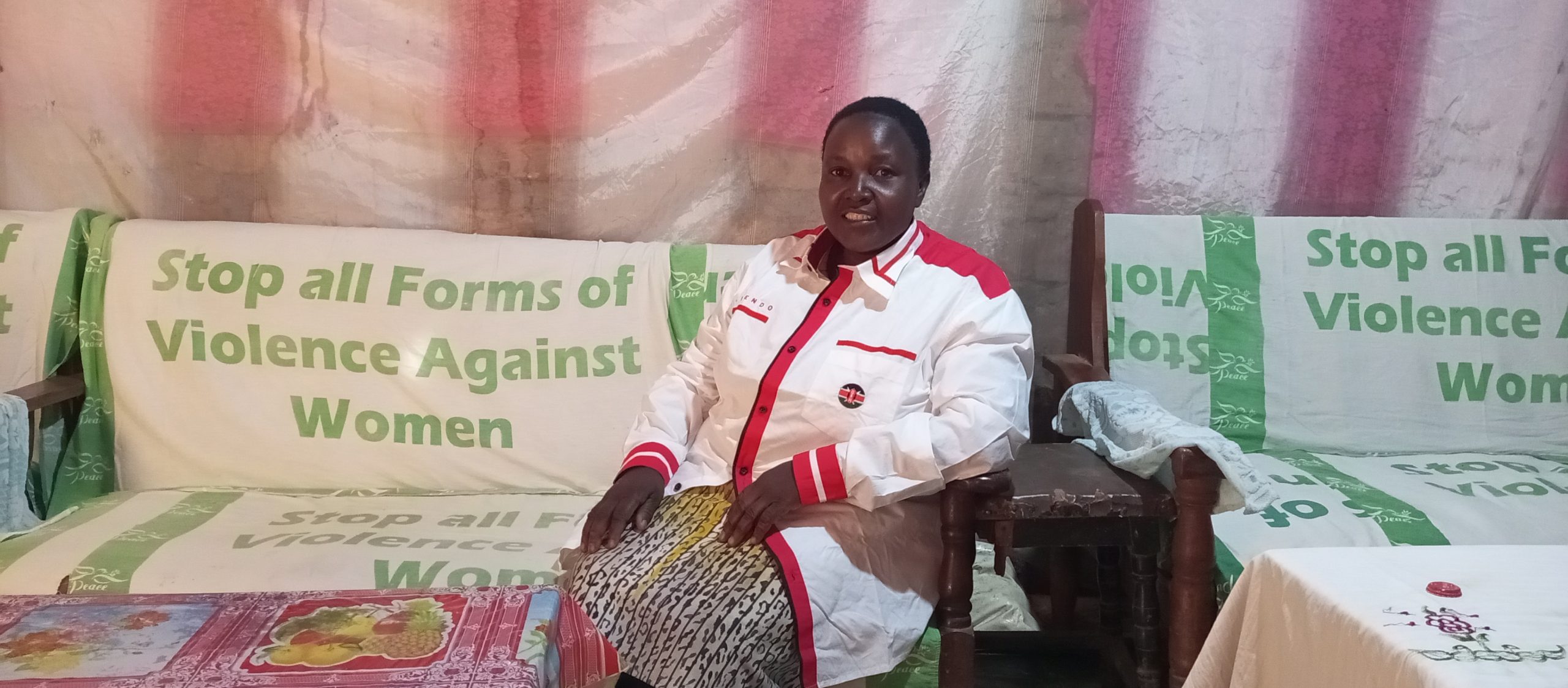
Joyce Kemunto, a female genital mutilation (FGM) practitioner turned anti-FGM crusader, has decorated her entire house including the seat covers with messages against the practice Photo /Elizabeth Angira
By Elizabeth Angira
Worth Noting:
- For instance, the Constitutive Act of the African Union (AU) is an undertaking by the leaders to promote unity, solidarity, cohesion and cooperation among Africans, which came into force on May 26, 2001. But the Africans, long struggling with social and economic challenges, desired fast, quality and sustainable development.
- They, therefore, came up with Agenda 2063. Agenda 2063, adopted in January 2015 in Addis Ababa, Ethiopia, is a 50-year strategy geared towards enabling Africa to achieve inclusive growth and sustainable development.
- In the words of the African leaders, it is a continuation of the Pan-African drive over centuries for unity, self-determination, freedom, progress and collective prosperity pursued under Pan-Africanism and African Renaissance.
In December 2012, Joyce Kemunto, a resident of Nyatieko Ward in Kisii County, one of Kenya’s 47 constitutional regional administrations, literally put down her razor blade and picked up a hoe, bringing to a close a quarter century of her female genital mutilation (FGM) enterprise.
“I realised I had been committing a grievous injustice to the young girls even if it had been a good source of income for my family,” Ruefully says the 64-year-old.
She was inducted into the practice in 1987, aged just 28, by an older practising relative.
“My husband was not against it because I was making up to Kshs. 20,000 ($157) per season, especially during the December school holidays,” she confesses.
Joyce, who could conduct her trade in the neighbouring counties of Nyamira, Homa Bay and Migori, experienced a change of heart after attending a seminar where she learnt about the side effects of FGM.
“Even though none of the over 1, 000 girls I initiated ever developed any immediate complications, it hit me hard when I learnt that FGM could lead to excessive bleeding, complications during giving birth, breaking of marriages, contamination of diseases and even death,” she says.
In March 2021, the High Court of Kenya ruled that the practice of FGM violates a woman’s right to health, human dignity and in instances when it results in death, the right to life, adding that the practice also undermines international human rights standards. During the trial and ruling of the case by Dr. Tatu Kamau who had challenged the constitutionality of the Prohibition of Female Genital Mutilation Act, several African Union treaties such as the Protocol to the African Charter on Human and Peoples’ Rights on the Rights of Women in Africa (Maputo Protocol on Women’s Rights), the African Charter on the Rights and Welfare of the Child, together with other international instruments including the Convention on Elimination of All Forms of Discrimination against Women; and the Beijing Declaration and Platform for Action, were referenced to validate the retrogressive nature of FGM and the need to protect women and girls rights.
The World Health Organization (WHO), in a report released on January 31, 2023, says there are 30 countries where FGM is practised in Africa’s western, eastern, and north-eastern regions and some countries in the Middle East and Asia.
“… more than 200 million girls and women alive today have been subjected to the practice, with more than 3 million girls estimated to be at risk of FGM annually,” the report says.
African Union
Joyce and many other Africans -both men and women who are in position of power and even ordinary ones -have over many generations, driven both by cultural beliefs and a desire to earn a living, engaged in retrogressive practices and activities that hinder women’s advancement in Africa.
“I have nothing to show in terms of investments from my 25 years of circumcising girls,” she confesses.
It is in a quest to end such cultural beliefs, including FGM, early girl child marriages, gender-based violence (GBV), and empower women like Joyce in Africa that the continent’s leaders have made efforts to institute legal, regulatory and policy changes to spur economic and financial inclusion of African women.
For instance, the Constitutive Act of the African Union (AU) is an undertaking by the leaders to promote unity, solidarity, cohesion and cooperation among Africans, which came into force on May 26, 2001. But the Africans, long struggling with social and economic challenges, desired fast, quality and sustainable development.
They, therefore, came up with Agenda 2063. Agenda 2063, adopted in January 2015 in Addis Ababa, Ethiopia, is a 50-year strategy geared towards enabling Africa to achieve inclusive growth and sustainable development.
In the words of the African leaders, it is a continuation of the Pan-African drive over centuries for unity, self-determination, freedom, progress and collective prosperity pursued under Pan-Africanism and African Renaissance.
Yet, there was a risk that vulnerable sections of Africans, especially women, would be left out of the development. That is why they came up with the Strategy for Gender Equality and Women’s Empowerment (GEWE) for 2018-2028 to facilitate the realization of Aspiration 6 of Agenda 2063, which calls for “An Africa, whose development is people-driven, relying on the potential of African people, especially its women and youth, and caring for children.”
According to the African Development Bank (AfDB), this means the African woman will be fully empowered in all spheres, with equal social, political and economic rights, including the rights to own and inherit property, sign contracts, register and manage businesses.
“Rural women will have access to productive assets: land, credit, inputs and financial services,” the Bank says.
Also, according to AfDB, all forms of GBV and discrimination (social, economic, political) against women and girls will be eliminated, and the latter will fully enjoyed all their human rights. All harmful social practices, especially FGM and child marriages, will end and there would be a marked reduction, if not total elimination, of barriers to quality health and education for women and girls.
A case for African women’s economic and financial inclusion
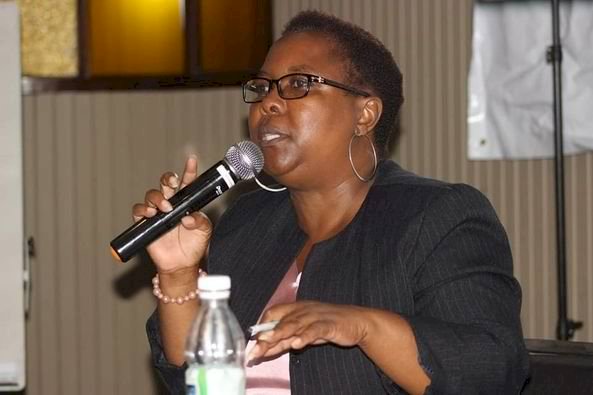
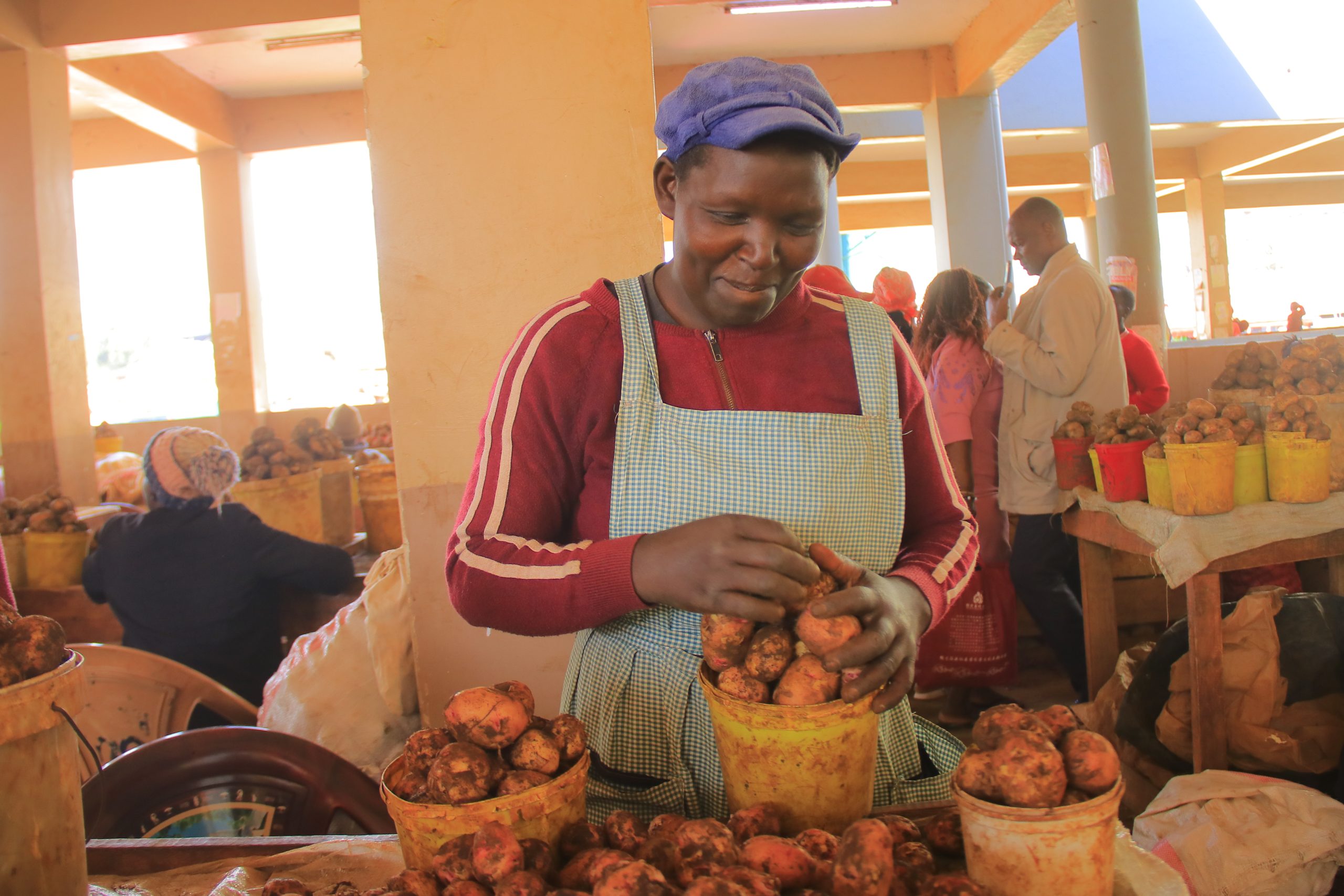
Florence Marcella, 57, from Bobasi Constituency in Kenya’s Kisii County, a vegetable and fruits vendor for more than 20 years, says financially and economically including women will have a major impact in the country’s rural economy.
“We women are the backbone of the family and if we are facilitated to access financial services and start business we are good and competitive enough to increase rural economic productivity, create wealthy, reduce poverty and invest more in our families health and education thereby improving the social and economic waellbeing of our children and the family at large,” says Florence.
Everlyne Moraa Ndubi, a tomato seller in Kisii Town, one of the fastest-growing metropolitan towns in Western Kenya, says it is important to include women in economic and financial development in the dountry, as it promotes gender equality, creates more opportunities for a wide section of the family unit, improves overall economic performance, and contributes to sustainable development
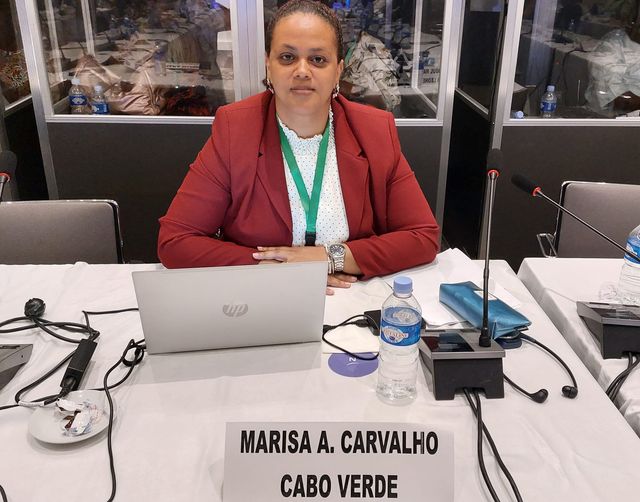
“It is a human right enshrined in all international treaties,” says Marisa Carvalho, the President of Cape Verde Institute for Gender Equality and Equity (ICIEG), a state institution responsible for establishing, implementing and following gender policies.
She notes that since women’s economic and financial inclusion involves about half the population not only in Cape Verde but also on the African continent, “in economic terms, it is inconceivable that half the population is excluded from economic production.”
Emma Kaliya, the Director of the Malawi Human Rights Resource Centre (MHRRC), says one cannot talk about development and leave out women, who are the global economy’s major contributors.
She says women, especially in Africa, have less access to control over and ownership of land compared to men. They are paid less than men in workplaces and mostly under poor working conditions because of gender inequality in the labour market.
“Women spend more time in unpaid care and domestic work where they spend most of their time,” says Emma.
Farai Mpofu, Head of Investor Education, Securities and Exchange Commission of Zimbabwe (SECZ), says women span from their home management duties to their roles as micro-economic actors in their village fields and small holder agriculture plots, cultural actors, rural and urban informal sector players, the formally employed and entrepreneurs, all the way through to Samia Suluhu Hassan, the President of Tanzania, and Ngozi Okonjo-Iweala, Director-General of the World Trade Organisation (WTO).
“Women’s innate and overt ability and opportunity to influence and determine outcomes is not fully recognised nor is it appropriately harnessed; continental development targets are achievable with women as co-designers and informed implementors,” says Farai.
Germaine AKEZA Nkunzurwanda, an agro-entrepreneur in Rwanda, says the United Nations (UN) estimates that women comprise 40 per cent of the agricultural workforce worldwide and as much as 60 per cent in sub-Saharan Africa, including Rwanda.
“Empowering and mainstreaming women’s workforce in agriculture can bring a paradigm shift towards economic growth in Africa,” she says, “It will enhance food and nutrition security and alleviate poverty and hunger on the continent.”
This is critical because the UN’s Food and Agriculture Organization (FAO) says Africa, most of whose people are farmers, cannot feed itself and has been in this situation for many decades.
“The number of chronically undernourished people has risen from 173 million in 1990-92 to some 200 million in 1997-99. Of these, 194 million (34 per cent of the population) are in Sub-Saharan Africa,” FAO says in a report titled Underpinning Investments in African Agriculture and trade-related Capacities for improved Market Access: A Continental Vision.
Success stories
AfDB says much has been done towards achieving these aspirations for African women.
Different African countries have initiated constitutional, legal and policy reforms to empower women socially, politically and economically.
“Our Constitution, which we promulgated in 2010, recognizes the principle of gender equality and prohibits discrimination on the basis of gender,” says Ruth Kemuma, 30, a store owner in Kenya’s Nyanza Region, “It also provides for affirmative action measures to redress gender imbalances in various sectors of society.”
Kenya has also enacted the Matrimonial Property Act (2013), which provides for the equal distribution of matrimonial property between spouses upon dissolution of marriage.
“This law ensures that women have a legal right to property acquired during marriage, which is essential for their economic empowerment,” says Ruth.
Virginia Muwanigwa, Chief Executive Officer of the Zimbabwe Gender Commission (ZGC), says the South African country has enacted strong constitutional provisions for the advancement of women’s rights and the promotion of gender equality.
“Our Constitution has many pro-women clauses, for example, Section 13 prescribes affirmative action for groups that have been historically marginalised and Section 80 focuses on the rights of women and highlights the provision for equal opportunities, in political, social and economic activities,” she says.
Sierra Leone has just enacted the Gender Equality and Women’s Empowerment (GEWE) Act, which has been described as a “ground-breaking” law. It assures women of 30 per cent of public and private jobs, including senior positions. It also ensures at least 14 weeks of maternity leave and equal access to bank credit and training opportunities for women.
It has harsh consequences for employers who do not implement the new law, especially observing the percentage of jobs reserved for women. These include fines of $2,500 and jail terms for officials of institutions such as banks if they fail to grant fair access to financial support, which is aimed at enabling more women to venture into entrepreneurship.
Fatoumatta Sanneh Ceesay of the Gambia Radio and Television Services says that training of women is crucial to any efforts to empower them.
“The Gambia Women’s Bureau has been training women on economic activities and how they use the right marketing strategies to promote businesses and have access to the right market,” Fatoumatta says, “The Gambia Women Chamber of Commerce has been providing capacity building for women business owners on how they can maximise profits and expand their businesses.”
Bente Krogmann, Chief Executive Officer, mTek Services, a Kenyan-headquartered digital online insurance platform, says the East African country has initiated legal and policy reforms that have helped women play an increasing role in the financial and economic spheres.
“Liberalization of the information and communication technology (ICT) is a game changer for women empowerment economically and financially in Kenya,” Bente says.
She says advancements in financial technology, such as mobile money, have increased women’s access to digital wallets.
A case in point is the M-Pesa (“M” for mobile, pesa is Swahili for money) service.
Danielle White in a paper titled The Social and Economic Impact of M-Pesa on the Lives of Women in the Fishing Industry on Lake Victoria, says M-Pesa has had an immense impact and has been hugely beneficial to the lives of women in the fishing industry.
Danielle says that the formal banking sector has long been unavailable to many women in the least Developed Countries (LDCs). This has been a very large impediment to women’s status within society and the development of communities.
“With the introduction of M-Pesa, women now have a safe means of saving their money,” she says, “This has enabled many women to expand their business or create a new business and make a more substantial income.”
In addition to saving, Danielle says the ability to send and receive money through M-Pesa has revolutionized how women trade fish.
“The time and money spent trading has been drastically reduced and this has enabled women to make much more money in much less time,” she says.
Some countries have created funds such as Kenya’s Women Enterprise Fund, a State Agency that provides accessible and affordable credit to support women starting and/or expanding businesses for wealth and employment creation.
Bente says the development of products and services tailored to women, for example, by banks launching women-only accounts and/or products and Chama (merry-go-round groups) accounts to attract women investment groups, is also empowering women.
“Kenya has also formulated policies, which among others, advocate for women to sit on boards of companies and large businesses and be part of decision-making,” she says.
It is the same case in Malawi.
“Women should be at the table where policies and laws are being implemented. Women have been left behind for so long, we should improve the status of women,” says Emma.
Backed by increased skills gain, especially with technological and digital transformation, through training, women are no longer pushovers economically.
It is not, therefore, surprising to see the 2021 FinAccess Household Survey findings indicating reduced disparities in Kenya in the access to financial services by gender, which has narrowed over time, from 8.5 per cent in 2016 to 4.2 per cent in 2021, thus enabling women to participate more meaningfully in formal economic activities.
“Even those without formal education, and those in the lowest wealth quintile, are enjoying the dividends of financial technology,” says the Survey whose financial inclusion measurement cuts across the four dimensions of Access, Usage, Quality and Impact/ Welfare.
The FinAccess Surveys were initiated to enhance financial inclusion measurement, provide a better understanding of the financial inclusion landscape indicators to track financial inclusion dynamics over time, and provide data to various stakeholders.
They are funded and conducted by the Central Bank of Kenya, the Kenya National Bureau of Statistics and Financial Sector Deepening Kenya (FSD Kenya), an independent trust funded by, among others, the Kenya government, the United Kingdom, Sweden and the Bill and Melinda Gates Foundation.
Kenya has initiated a number of government-funded financial services, targeting women. The Women Enterprise Fund (WEF) was set uo by the country’s third President the Late Mwai Kibaki to provide women with access to affordable credit and business training to start and grow their businesses. The country’s current President, William Ruto, however, relaunched the Fund recently after taking it digital to make it accessible to especially rural women through the mobile phones.
President Ruto said women will borrow at a rate of six per cent a year, a move aimed at enabling more women to access it and accelerate their economic empowerment. Besides, the loans will be accessed instantly unlike in the past when the processing took 45 days.
“We have also eliminated financial intermediaries. This will boost access and check credit costs,” said the President
One of the Kenyan President’s August 2022 Presidential Election key campaign promises was that, if elected, he will set up a Hustler Fund, which will provide affordable loans to Kenyans in the bottom of the pyramid, the mama mbogas (vegetable vendors) and boda bodas (public transport motorcycle riders).
After his election and swearing in as the country’s fifth President, he set up the Hustler Fund, also known as The Financial Inclusion Fund,which allows Kenyan citizens borrow Money through their cell phones.
“Our objective in setting up the Fund to provide affordable credit to sections of the population that have been left behind for far too long,” says a statement on its website, “The Hustlers Fund will lend to businesses at 8 per cent a year, the lowest interest ever charged in Kenya.”
Emma from Malawi says increased employment of women and leadership opportunities in Malawi has seen boosted women’s economic productivity, increased economic diversification and income equality in the country.
African countries, including Malawi and Kenya, have enacted procurement laws that have reserved a certain percentage of state procurement budgets for women and women-owned enterprises, giving them access to the lucrative national supply of goods, services and works business.
“We have made efforts to remove all forms of violence and discrimination against women for them to have equal economic rights and to effectively manage their businesses,” Emma says.
Mpofu says the implementation of the Zimbabwe’s first phase of the National Financial Inclusion Strategy (NFIS I – 2016-2020) was a transformative shift in the empowerment of the country’s women.
Zimbabwe’s financial market regulators, SECZ, Reserve Bank of Zimbabwe (RBZ) and Insurance and Pensions Commission(IPEC), constitute the South African country’s National Steering Committee responsible for the implementation of the Strategy.
In the Foreward of its successor, the second phase of the National Financial Inclusion Strategy II (NFIS 2022-2026), John Panonetsa Mangudya, the Governor, RBZ, said two studies – the FinScope Micro Small and Medium Enterprises (MSMEs) and FinScope Zimbabwe 2022 Consumer Surveys -conducted in 2022 had shown the strides the country had made in financial inclusion.
They showed that 83 per cent of adults are formally served, up from 69 per cent in 2014, and 95 per cent of MSMEs formally served, up from 18 per cent in 2012, despite the disruptive effects of the Covid-19 pandemic.
“Women’s financial inclusion increased from 68 per cent in 2014 to 83 per cent in 2022, while men that are formally served increased from 70 per cent to 85 per cent on the back of increased access to banking products,” he said, “ The financial exclusion gap narrowed from 23 per cent in 2014 to 12 per cent in 2022.”
Challenges
While the African countries have made great strides in reforming the social, economic and political sectors to empower women, still there are several challenges women have to grapple with.
“…despite all the above policy and administrative measures put in place by the government, the Zimbabwe Gender Commission (ZGC) notes with concern persistent barriers to women’s meaningful participation in the national economy, including unequal access to credit, markets, financial services, infrastructure, land and opportunities to influence policy,” says Virginia, the Commission’s CEO.
Joyce Moraa, a Kenyan 50-year old second hand clothes seller, singles out the partriachcal African family setup as a major impediment to women empowerment.
“Lack of women representation in decision-making positions both in public and private sectors limits our influence in some of the projects and programmes that would have a major impact on our wellbeing and that of the society and country at large,” says Joyce.
She cites her Kisii Community who have never elected a woman Member of Parliament since Kenya attained independence in1963 or as a Governor in any of the two counties of Kisii and Nyamira they inhabit since the country’s Constitution, which has been widely hailed as one of the most progressive constitutions in Africa with a robust Bill of Rights, was promulmated in 2010.
Emma says women’s right to own and inherit property remains challenging in many African countries. Moreover, according to the World Bank, across Sub-Saharan Africa, land ownership is critical for income generation, accessing credit, and transferring wealth to younger generations.
“As such, inequalities in land ownership often go hand in hand with inequalities in economic opportunities,” the bank says.
Virginia says gender-based violence is still prevalent, and it perpetuates gender disparities and limits women’s participation in economic sectors.
“Violence against women and girls creates “economic costs” which include reduced productivity due to absenteeism, reduced women’s participation in the labour market and losses related to higher demand for health and judicial services,” she says.
Esnahs Nyaramba, a community-based organisation leader, says patriarchal African family systems are rigged against women.
“Some of the largest business deals are sealed by men in exclusive clubs and often in wee hours of the night when women are deep asleep at home looking after their children and property,” Esnahs says.
Conclusion
It is encouraging that a majority of African countries are reforming their financial and economic sectors and, backed by improvements their educational systems that, according to AfDB’s report titled Trends and Achievements in Girls’ Education (1970-2010) and Best Practices for Promotion of Girls’ Education in Africa, has seen female enrollment significantly improving over the years, women are increasingly starting to play their rightful role in the continent’s financial and economic development.
This is not surprising given that Gladys Mosioma, 68, who hails from Nyamira County in Kenya, says that during her childhood days parents pulled the girls out of school and married them out for dowry to educate their boys.
She says now women are accessing education like men, gaining qualifications that enables them to compete favourably in the job market.
“Women have risen to positions of decision making in both in public and private sectors, including in the three arms of government -the executive, judiciary and legislature, which has enabled them to come up and implement policies that affect women directly,” she says.
This is an African renaissance.
“Overall, countries across Africa have made commendable strides, we should not lose the momentum,” says Bente.
Indeed, many countries have made great strides in empowering the African women. It is, however, not time to celebrate. Instead, now it is time for the African countries to act without stoping or slowing down the pace of the constitutional, legal and policy reforms. For, still a lot needs to be done to enable women to effectively contribute to the continent’s financial and economic development. Then, and only then, will the continent achieve full and sustainable development.
Ms. Angira was able to research, develop and write this article with the valuable support of the African Union through the African Union Agenda 2063 Pitch Zone Awards, a partnership with the African Women in Media
Similar Posts by The Mt Kenya Times:
- Mt Kenya Times ePAPER October 3, 2026
- Ruto puts Coast landlords on notice over squatter harassment
- Nairobi lights candles for Raila in Uhuru Park tribute
- Jambojet returns to Entebbe with daily flights and fares from KSh22,950
- From Lamu to the region: What the Dangote Refinery could mean for Kenya’s energy economy
About the Author


