Floyd Shivambu’s Political Gambit: Power, Principle, Or Personal Project?
 The Mt Kenya Times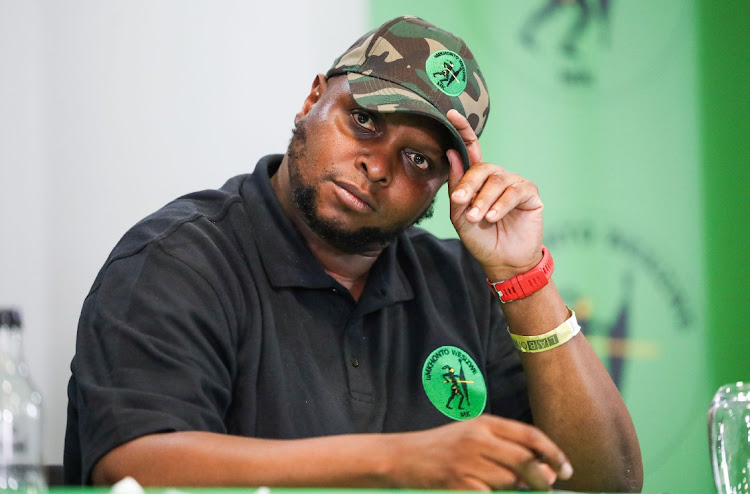
Floyd Shivambu
By: Silas Mwaudasheni Nande
1. The Enigma of Floyd Shivambu
In the ever-fluctuating realm of South African politics – where loyalty often bows to expediency and ideologies warp under the pressure of power – Floyd Shivambu has emerged as both a compelling figure and a controversial operator. His political journey, beginning within the African National Congress Youth League (ANCYL), maturing through the founding of the Economic Freedom Fighters (EFF), and veering into murky territory through his recent engagements with Jacob Zuma’s uMkhonto weSizwe Party (MKP) and self-proclaimed prophet Shepherd Bushiri, suggests a man either reshaping revolutionary thought or consolidating power for a more personal mission.
Now, as whispers mount about the formation of his own political outfit – Mawisa – questions reverberate through South Africa’s fractured political landscape: Has Shivambu finally broken with his ideological lineage? Was his dalliance with MKP an act of subterfuge or strategic curiosity? And above all, is this about national reform – or the ambitions of one man?
2. From Red Beret to Revolutionary: The EFF Genesis
Shivambu’s political gravitas was cemented alongside Julius Malema in the post-Polokwane era, when both were expelled from the ANC and responded with a new vision: Economic Freedom Fighters. Founded in 2013, the EFF positioned itself as a radical alternative to ANC centrism – a revolutionary pan-Africanist, anti-capitalist formation that channeled discontent over land reform, economic exclusion, and youth unemployment.
Shivambu served as the party’s deputy president and policy maestro, often crafting the ideological scaffolding behind its sharp parliamentary performances and electoral messaging. His economic sophistication lent credibility to the EFF’s radical rhetoric. Yet by 2022, rifts began to surface. Internal disagreements regarding accountability – most notably surrounding the VBS Mutual Bank scandal, where Shivambu’s younger brother Brian was implicated – triggered tension within the central command.
Despite dismissals and clarifications, questions persisted. Shivambu’s increasing independence within the party, his selective silences, and his back-channel dialogues with various political actors fed speculation about a deeper schism.
3. A Quiet Exit: Shivambu Leaves the EFF
In August 2024, Shivambu tendered his resignation from all leadership structures within the EFF. The announcement was terse; there was no grand press conference, only a letter circulated to select media houses. Publicly, the reason cited was “irreconcilable ideological differences.” But the vacuum left behind invited speculation.
Was he forced out? Or did he walk away to preserve a more ambitious plan?
Some insiders claim his exit followed a failed internal challenge to Julius Malema’s growing “cult of personality.” Others allege that Shivambu had lost control over the EFF’s policy direction, marginalized by Malema’s populist tone and confrontational style.
Political analyst Nompumelelo Runji noted in a SABC News panel (Oct 2024), “We mustn’t overlook that Shivambu was not just a figurehead – he was the EFF’s intellectual capital. His departure signaled not just internal discord but a pivot point in the party’s ideological journey.”
4. The Zuma Detour: An Unlikely Alliance
Within months, Shivambu emerged – rather shockingly – as an informal affiliate of Jacob Zuma’s MKP, a party founded in 2023 to galvanize nationalist and traditionalist sentiments among ANC dissidents. For an individual who had previously lambasted Zuma for state capture and “authoritarian populism,” the alignment raised eyebrows.
Was it opportunism, or had he seen in MKP a vehicle for revolutionizing policy from within?
Shivambu’s participation in strategy meetings in KwaZulu-Natal and his appearance at an MKP youth forum sparked rumors of his imminent absorption into the party’s leadership. However, internal MKP sources – speaking to City Press in January 2025 – alleged that Shivambu’s presence stoked paranoia within Zuma’s inner circle.
Within MKP’s inner circles, whispers of suspicion clung to Shivambu like smoke. To some insiders, his quiet demeanor and probing questions raised red flags; they believed he wasn’t simply there as a supporter, but as a political operative – an outsider collecting information under the guise of collaboration. Doubt crept into the corridors of influence, and eventually, Jacob Zuma himself grew wary, unable to fully trust Shivambu’s intentions. The perception that he was a mole – watching, listening, reporting – shaped the undercurrent that led to his quiet sidelining.
Ultimately, his recall from MKP functions followed a clandestine visit to Shepherd Bushiri in Malawi, viewed as a betrayal by MKP’s senior leadership and a red flag for nationalist purists.
5. Bushiri and the Malawi Meeting: Calculated or Catastrophic?
The trip to Malawi – conducted under ambiguous circumstances – further muddied Shivambu’s intentions. Though Bushiri remains popular among segments of southern Africa’s spiritual community, his political entanglements and fugitive status in South Africa made the meeting politically radioactive.
Some speculate Shivambu sought spiritual counsel; others claim it was a move to access Bushiri’s vast pan-African networks and potential funding streams. Regardless, the optics were disastrous.
Political writer Modibe Modiba tweeted in February 2025: “Shivambu’s spiritual diplomacy with Bushiri? It’s either genius or a desperate bid for relevance.” The tweet went viral, sparking memes of Shivambu as a “prophet in politics.”
6. Mawisa: The Birth of a “People’s Movement”
By March 2025, posters started circulating on social media under the enigmatic banner “Mawisa – The People’s Voice.” Though not yet officially launched, early indicators pointed to Shivambu as its architect.
The term Mawisa, rooted in several indigenous languages, loosely translates to “waters that shift” – aptly symbolizing both his political reemergence and the fluidity of South Africa’s party system.
Initial policy leaks show promises to:
- Reform land expropriation policies with technocratic planning.
- Introduce universal basic income for youth.
- Embrace a pan-African trade and education compact.
Shivambu’s public statements reference “a decaying political system propped up by cults, factions, and nostalgia,” veiled critiques of both the EFF and ANC. In a recent interview with PowerFM, he declared: “Mawisa is not about personalities. It’s about reshaping the social contract between the state and its citizens.”
7. Is Shivambu Power-Hungry or Strategically Misunderstood?
Critics argue his moves mirror those of political opportunists: discard old allies, forge temporary alliances, and create your own platform when power slips away. Yet others insist Shivambu remains true to his ideals, merely frustrated by party machines that suffocate dissent.
Veteran journalist Karima Brown once described him as “a surgeon with a machete – precise in his thinking, messy in his politics.” That metaphor seems apt today.
He is both revered and reviled: a technocrat to some, a traitor to others.
8. The Cult Question: Critique of EFF and ANC Structures
In recent addresses, Shivambu has been unsparing in his critique of hierarchical political structures. Without naming names, he lambasted “pseudo-revolutionary parties hijacked by celebrity egos.”
EFF insiders see this as a direct jab at Malema, while ANC loyalists see echoes of Cyril Ramaphosa’s critics. Whether these barbs resonate beyond disenchanted urban voters remains to be seen.
In a township forum in Soweto, 23-year-old activist Naledi Mokoena remarked: “Shivambu talks different now. He sounds tired of fighting from within. Maybe he’s building something new. Or maybe he’s just mad he wasn’t the chosen one.”
9. Public Perception and Political Capital
The ultimate test of Mawisa’s viability lies not in slogans or manifestos, but in the hearts of South Africans. Will disillusioned youth see Shivambu as a vessel for their frustrations? Or has the volatility of his recent moves alienated potential supporters?
Early polling by the Institute for Democratic Alternatives in South Africa (IDASA) shows 8-11% of young urban voters expressing “interest” in a new political alternative led by Shivambu. That is no small base – but it’s far from electoral dominance.
As 2026 local elections loom, Mawisa may attract small-scale wins – municipal wards, council seats – but will it crack the hegemony of the ANC, EFF, or Democratic Alliance? Analysts remain skeptical, citing limited resources, fragmented organizing, and Shivambu’s controversial past.
- Shivambu’s Gambit: A Threat or Just Tremors?
Floyd Shivambu’s emergence with the budding Mawisa movement introduces an air of disruption into a political atmosphere long dominated by the African National Congress (ANC), Democratic Alliance (DA), and Economic Freedom Fighters (EFF). Yet disruption is not dominance. While his rhetorical precision and history of ideological influence make him a noteworthy contender, Shivambu lacks the wide organizational scaffolding and entrenched constituency that these larger parties command. His departure from the EFF and flirtation with uMkhonto weSizwe (MKP) left a trail of fractured trust, and it’s unclear whether his new vision can translate into a coherent and mobilized base beyond early urban curiosity.
For the ANC, Shivambu poses more of a symbolic threat than a practical one – for now. His critique of gerontocratic governance and corruption resonates with younger voters disillusioned by the party’s protracted scandals and policy inertia. If Mawisa captures the imagination of ANC’s youth demographic, it could siphon energy from internal reformers and challenge the ANC’s claim to being the sole liberation legacy. But unless Shivambu can embed his message in local governance battles and community networks, his threat will remain theoretical rather than electoral.
The DA, characterized by its liberal constitutionalism and centrist pull, has less overlap with Shivambu’s brand of economic radicalism and Africanist rhetoric. Still, his proposal for technocratically guided land reform and economic justice could attract a sliver of Black professionals or restless youth who view the DA’s race-blind positioning as tone-deaf. Yet for the most part, Shivambu’s ideological compass is set in a different direction, making his challenge to the DA more ideological than directly competitive.
It’s the EFF, however, that feels Shivambu’s heat most directly. He was once its ideological architect, and now his condemnation of “personality cults” and performative radicalism slices close to home. If Mawisa gains traction, it won’t just peel away disaffected cadres – it may expose the fragility of the EFF’s internal democracy and policy credibility. But whether Shivambu’s movement blooms into a sustained political alternative or withers under the weight of South Africa’s electoral terrain depends on one crucial test: Can he transform personal narrative into collective momentum, or will his movement remain a solitary stand against the giants he once helped build?
- Zuma’s Decision: Strategic Safeguard or Premature Purge?
Jacob Zuma’s decision to relieve Floyd Shivambu of his position as secretary-general of the MK Party was, on the surface, a move to preserve party discipline and cohesion. The official reason – Shivambu’s unsanctioned visit to Shepherd Bushiri in Malawi – was framed as a breach of protocol and a liability to the party’s image. Given the MKP’s fragile legitimacy and its reliance on a tightly controlled narrative, Zuma may have felt compelled to act swiftly to avoid internal dissent or public scandal. In that sense, the removal could be interpreted as a strategic safeguard, reinforcing the party’s intolerance for perceived insubordination and protecting its brand from association with controversial figures like Bushiri.
However, the timing and manner of Shivambu’s dismissal raise questions about whether Zuma acted too hastily – or under pressure from factions within his own circle. Shivambu later claimed that Zuma had initially approved the Malawi trip and only reversed his stance after being influenced by “political scoundrels” exploiting Zuma’s trust. If true, this suggests that the decision may have been less about principle and more about palace politics. Shivambu’s growing popularity, his independent media engagements, and his subtle critiques of party leadership may have triggered insecurities among Zuma’s loyalists, prompting a preemptive strike to neutralize a potential rival rather than a genuine disciplinary response.
In hindsight, Zuma’s move may have cost the MKP more than it gained. Shivambu’s removal not only fractured the party’s internal unity but also gave him the moral high ground to launch consultations for a new political movement. His narrative of being ousted for “listening to the people” has resonated with some disillusioned supporters. By acting when he did, Zuma may have inadvertently accelerated the rise of a competing force – one that could siphon off the very base MKP hoped to consolidate. Whether this was a miscalculation or a necessary sacrifice remains to be seen, but the political fallout is already reshaping the terrain.
12. Conclusion: A Disruptor or a Divider in South African Politics?
As the dust settles around Floyd Shivambu’s political metamorphosis, one truth becomes increasingly difficult to ignore: he is far from finished – and even farther from being easily understood. With each unexpected move, Shivambu defies the typical arc of political fallout. He doesn’t retreat; he recalibrates. Whether Mawisa matures into a fully-fledged people’s movement, lingers as a symbolic footnote in South Africa’s post-liberation politics, or collapses under the weight of its contradictions, will hinge on Shivambu’s ability to bridge credibility with constituency – to convince a skeptical electorate that his shifts are guided by conviction rather than calculation.
Navigating South Africa’s political terrain is no small feat. Trust has become both the most valuable and the most volatile currency in its democracy. Shivambu enters this space with both an advantage and a burden: he possesses the ideological clarity that helped shape the EFF, yet bears the scars of internal conflict, allegations of hypocrisy, and an ever-present suspicion of self-interest. His challenge now is not just to distance himself from old narratives but to construct a new one – one powerful enough to cut through cynicism and rally a coalition of the disillusioned, the disaffected, and the daring.
The question that looms over every speech, every policy outline, and every strategic alliance is this: is Shivambu genuinely trying to rescue the soul of revolutionary politics from structures he sees as compromised? Or is Mawisa simply the latest stage for an ambitious tactician intent on carving out a personal empire amid fragmentation and fatigue? In a country where political rebirths are frequent yet fragile, sincerity is often judged retroactively – only time will reveal which version of Shivambu history accepts.
But one thing is clear – South African politics has never lacked spectacle, seismic shifts, or stirring reinvention. In Floyd Shivambu, we may be witnessing the convergence of all three: a disruptor who could either fracture the landscape further or channel its chaos into something entirely new. In this unfolding story, prediction is perilous. Only persistence, and the public’s pulse, will determine the shape of his legacy. And for now, the stage remains his to command – or to lose.
Similar Posts by The Mt Kenya Times:
- Mt Kenya Times ePAPER October 12, 2026
- Gachagua’s party storms Kikuyu from afar as 2027 countdown begins
- Counties caught: The KSh100B payroll scandal Kenya can no longer hide
- CS Ogamba: tree planting could generate carbon credit millions to fund education
- Farouk Kibet calls for unity and development as leaders rally behind Ruto’s 2027 re-election bid
About the Author