Escalation And Strategy: Analyzing The United States-Iran Tensions Amid Military Strikes
 The Mt Kenya Times
The United States strikes Iran
By: Silas Mwaudasheni Nande
Introduction
The longstanding tensions between the United States and Iran have once again surged into the global spotlight. What was once a cold standoff, interspersed with diplomacy and sanctions, has now entered a new phase with direct military confrontation. The latest events in June 2025 signal more than a flashpoint – they raise fundamental questions about U.S. strategy, regional security, and the future of the Iranian state.
The Historical Arc of U.S.-Iran Relations
The fraught relationship between the United States and Iran is not merely a product of recent geopolitical disputes – it is the culmination of decades of mistrust, intervention, and ideological divergence.
1953: The CIA-Backed Coup and the Fall of Iranian Democracy
The modern rupture began in 1953, when the U.S. Central Intelligence Agency (CIA), in collaboration with British intelligence, orchestrated a coup to overthrow Iran’s democratically elected Prime Minister, Mohammad Mossadegh. Mossadegh had moved to nationalize Iran’s oil industry, which had long been under British control. This move threatened Western economic interests and Cold War-era strategic calculations.
The coup, known as Operation Ajax, reinstated Shah Mohammad Reza Pahlavi with expanded powers. While the Shah was seen as a pro-Western modernizer, his regime became increasingly autocratic, relying on brutal repression and a feared secret police force, SAVAK, to silence dissent.
1957-1979: Nuclear Cooperation and Strategic Alliance
Ironically, the U.S. was once a key supporter of Iran’s nuclear ambitions. Under President Eisenhower’s “Atoms for Peace” program, the U.S. provided Iran with nuclear technology for civilian use. This cooperation continued into the 1970s, even as the Shah’s regime grew more repressive.
During this period, Iran was a linchpin of U.S. strategy in the Middle East, serving as a bulwark against Soviet influence. The Shah purchased vast quantities of American arms and maintained close ties with successive U.S. administrations.
1979: The Islamic Revolution and the Great Break
Everything changed in 1979. A popular revolution, fueled by resentment toward the Shah’s authoritarianism and Western influence, overthrew the monarchy. Ayatollah Ruhollah Khomeini established the Islamic Republic, marking a dramatic ideological shift. The U.S. was now seen not as a partner, but as the “Great Satan.”
The rupture was cemented by the U.S. Embassy hostage crisis, in which 52 American diplomats and citizens were held for 444 days. Diplomatic relations were severed in 1980 and have never been fully restored.
1980s-2000s: Proxy Conflicts and Escalating Hostility
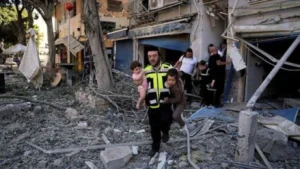
Throughout the 1980s, the U.S. and Iran found themselves on opposite sides of regional conflicts. During the Iran-Iraq War, the U.S. supported Saddam Hussein’s Iraq, further deepening Iranian mistrust. In 1988, a U.S. Navy cruiser mistakenly shot down Iran Air Flight 655, killing 290 civilians – an incident that remains a sore point in Iranian memory.
The 1990s and early 2000s saw continued friction, with the U.S. labeling Iran part of the “Axis of Evil” under President George W. Bush. Iran’s support for Hezbollah and other proxy groups, as well as its nuclear ambitions, kept tensions high.
2015-Present: The Nuclear Deal and Its Collapse
The 2015 Joint Comprehensive Plan of Action (JCPOA) was a rare diplomatic breakthrough. It offered Iran sanctions relief in exchange for curbs on its nuclear program. However, the U.S. withdrawal from the deal in 2018 under President Trump reignited hostilities, leading to a cycle of sanctions, sabotage, and military brinkmanship.
This historical backdrop reveals that the current crisis is not an isolated flare-up but part of a long continuum of strategic rivalry, ideological opposition, and mutual suspicion. The legacy of 1953 still casts a long shadow, and every new confrontation is filtered through decades of unresolved grievances.
Nuclear Brinkmanship and the Fallout
At the heart of the crisis lies Iran’s nuclear program. Tehran has consistently defended its pursuit of nuclear technology as peaceful, while the United States, Israel, and their allies have viewed it through the lens of proliferation risk. The 2015 Joint Comprehensive Plan of Action (JCPOA) was designed to restrict Iran’s nuclear capabilities in exchange for sanctions relief. However, the 2018 U.S. withdrawal from the accord under then-President Trump dismantled a fragile framework and reignited hostilities.
The situation escalated sharply this month. U.S. forces conducted coordinated airstrikes on three major Iranian nuclear sites – Fordow, Natanz, and Isfahan – following Israeli attacks that accused Iran of nearing weaponization. Though Iran denies the charge, Washington justified its actions as necessary for deterrence.
The International Atomic Energy Agency (IAEA) has been thrust into controversy. Its Director General, Rafael Grossi, is under fire for a report that some say facilitated the strikes. While the IAEA’s Board of Governors declared Iran non-compliant, internal findings indicate no conclusive evidence of a bomb-making effort, a nuance seemingly lost in the policy response.
Economic Strangulation and Strategic Consequences
Sanctions have long been a cornerstone of U.S. strategy toward Iran. Designed to erode Tehran’s regional posture and curb domestic repression, these economic measures have devastated ordinary Iranians. With inflation rampant and essential services degraded, the economy teeters on collapse.
Now, with the resumption of kinetic warfare, critical civilian infrastructure has been hit. Energy grids and transport hubs, already brittle under sanctions, are under new strain. The net effect may be an economic and humanitarian disaster with regional spillover risks.
A Proxy Chessboard in Flames
Beyond nuclear disputes, the U.S.-Iran rivalry spans a broader geopolitical canvas. From Hezbollah in Lebanon to militias in Syria and Iraq, Iran’s alliances have long challenged American interests and those of its allies, particularly Israel and Saudi Arabia. The U.S. sees these as destabilizing networks, while Iran portrays them as strategic depth.
The United States’ military footprint across the Middle East compounds tensions. With troops stationed in Qatar, Bahrain, and Iraq, American assets have become targets. Iran’s retaliatory strikes on U.S. bases following the air raids demonstrate a volatile tit-for-tat dynamic that risks broader escalation.
One potential flashpoint: the Strait of Hormuz. Tehran’s threat to block this vital maritime chokepoint would send shockwaves through global energy markets, threatening not just regional but global economic stability.
Diplomacy in the Shadow of Missiles
Amid the drumbeat of war, diplomatic signals persist – but faintly. President Trump has alluded to the possibility of renewed talks, yet Tehran remains resistant, asserting it will not negotiate under fire. The military strikes, while meant as strategic deterrents, may have entrenched positions further, narrowing the diplomatic runway.
Is State Collapse a Strategic Aim?
Officially, the U.S. claims its goals are limited: halt Iran’s nuclear program, reduce its regional influence, and ensure security for allies. Yet the cumulative strategy – military strikes, maximum sanctions, rhetorical antagonism – raises uncomfortable questions.
Some analysts argue that the U.S. aims not just to restrain Iran but to catalyze regime collapse. The Trump-era “maximum pressure” campaign sought behavioral change through economic suffocation. Critics suggest this implicitly encouraged regime change, even if not formally acknowledged.
Support for exiled opposition groups, the precedent of the 2003 Iraq invasion, and the alignment with Israeli hawks deepen suspicions. The pattern appears less about containment and more about transformation – a shift from restraining Iran to dismantling the current regime altogether.
Moreover, the scale of military damage and the threat to institutional cohesion fuel concern that Iran may not endure the compounded pressures. Whether by design or collateral consequence, the effects could push Iran toward fragmentation or functional disintegration.
Potential Future Developments In U.S.-Iran Relations
Looking ahead, the trajectory of U.S.-Iran relations is poised to be shaped by a volatile mix of military brinkmanship, diplomatic overtures, and shifting regional dynamics. Based on current developments and expert analysis, here are several plausible scenarios:
- Escalation into Prolonged Conflict
With Iran vowing retaliation for the recent U.S. strikes on its nuclear facilities, there is a high risk of a sustained cycle of military exchanges. Iran has already launched missiles at U.S. bases in Qatar and Iraq, and its parliament is considering closing the Strait of Hormuz, a move that could disrupt global oil markets and provoke further U.S. military responses. If this tit-for-tat continues, it could spiral into a broader regional war involving proxy forces and U.S. allies like Israel and Saudi Arabia.
- Strategic Retaliation and Asymmetric Warfare
Rather than direct confrontation, Iran may lean on its network of regional proxies, such as Hezbollah, the Houthis, and militias in Iraq and Syria, to target U.S. interests indirectly. Cyberattacks, sabotage of energy infrastructure, and maritime harassment in the Persian Gulf are also likely tools in Iran’s asymmetric playbook. This would allow Tehran to respond without inviting full-scale war.
- Diplomatic Reset or Backchannel Negotiations
Despite the current hostilities, there are faint signals of potential diplomacy. Iranian President Masoud Pezeshkian has expressed cautious openness to dialogue, while President Trump has hinted at the possibility of a new deal, though both sides remain deeply mistrustful. A diplomatic breakthrough would likely require third-party mediation, confidence-building measures, and a recalibration of maximalist demands.
- Economic Collapse and Internal Pressure in Iran
The compounded effects of sanctions, military strikes, and infrastructure damage could push Iran’s economy to the brink. This may lead to increased domestic unrest or pressure on the regime to shift its foreign policy posture. Alternatively, it could harden the government’s resolve and lead to further isolation.
- Regional Realignment and External Mediation
Russia and China may play more active roles in mediating or exploiting the conflict. Russian President Vladimir Putin has already condemned the U.S. strikes and offered support to Iran. A multipolar diplomatic effort involving the EU, Russia, and China could emerge as a counterbalance to U.S. influence, potentially reshaping the regional order.
- A New Nuclear Agreement or Arms Race
If diplomacy resumes, it may result in a revised nuclear agreement – possibly more stringent than the JCPOA. However, if talks fail, Iran may accelerate its nuclear program, prompting a regional arms race with countries like Saudi Arabia seeking their own deterrents.
Each of these paths carries profound implications – not just for U.S.-Iran relations, but for global security, energy markets, and the future of diplomacy in a multipolar world.
Profound Implications For Global Security
The unfolding U.S.-Iran confrontation carries profound implications for global security, with ripple effects that extend far beyond the Middle East. Here’s a breakdown of the key global risks and strategic consequences:
- Energy Market Disruption
The most immediate threat stems from Iran’s threat to close the Strait of Hormuz, a maritime chokepoint through which nearly 20% of the world’s oil and LNG flows. A closure, even temporary, could spike global oil prices to $120 per barrel or more, triggering inflation, supply chain shocks, and economic instability across energy-dependent economies.
- Regional Escalation and Proxy Warfare
The conflict risks drawing in regional actors like Israel, Saudi Arabia, and the UAE, while emboldening Iran’s proxies such as Hezbollah, the Houthis, and militias in Iraq and Syria. This could ignite a broader regional war, destabilizing fragile states and overwhelming humanitarian systems.
- Global Diplomatic Polarization
The strikes have already deepened divides at the UN Security Council, with countries like Russia, China, and Pakistan condemning U.S. actions and calling for an immediate ceasefire. This polarization could erode multilateral cooperation on other global issues, from arms control to climate change.
- Terrorism and Asymmetric Threats
A weakened or cornered Iran may resort to asymmetric retaliation, including cyberattacks, maritime sabotage, or support for transnational terrorist operations. Western interests and infrastructure, both physical and digital, could become targets, raising global threat levels.
- Nuclear Non-Proliferation at Risk
The collapse of diplomatic frameworks like the JCPOA and the targeting of nuclear facilities may undermine the global non-proliferation regime. Other states may reconsider their commitments, fearing that compliance offers no protection from military action.
- Humanitarian Fallout
With hundreds already killed and critical infrastructure damaged, the conflict could trigger mass displacement, refugee flows, and a humanitarian crisis that strains international aid systems and border security in neighboring regions.
In essence, this is not just a bilateral conflict, it’s a geopolitical tremor with the potential to reshape global alliances, economic stability, and the norms of international engagement.
A Precipice with No Clear Path Forward
There is no formal U.S. policy advocating Iran’s erasure from the world map. Yet the convergence of military force, economic destabilization, and political isolation generates outcomes that mirror those of state collapse. Whether intentional or not, this trajectory threatens to redefine not only Iran’s place in the world but also the stability of the wider Middle East.
The coming weeks will reveal whether diplomacy can interrupt this cycle of escalation. Until then, the world watches two adversaries locked in a strategic spiral – one that could redraw geopolitical boundaries or lead to unintended catastrophe.
Similar Posts by The Mt Kenya Times:
- AI Curse or boon: The Future of Intelligence: Artificial or Emotional?
- Dr. Ekrah Ndung’u wins TVET advocacy award after 12 years
- Mt Kenya Times ePAPER October 17-18, 2026
- Ruto bets billions on Kerio Valley — with one eye on 2027
- Ruto’s health ministry kills Murang’a’s digital hospitals
About the Author