From menstrual health to AI: Kenya keynote tour puts youth voices at the centre
 The Mt Kenya Times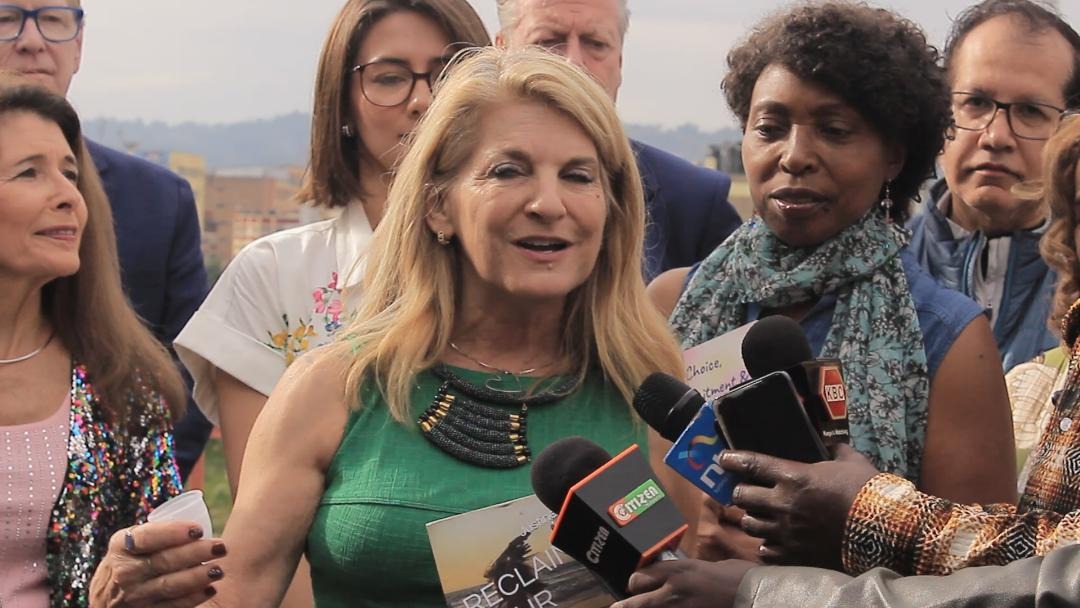
Justine Reese addressing media said that , she would like to provide textiles and training so that women can make reusable products for their own use and even sell them. Photo/Elizabeth Angira
By Elizabeth Angira
Some girls miss school, and it has nothing to do with lack of interest in education. Sometimes the reason is something as natural as a monthly period.
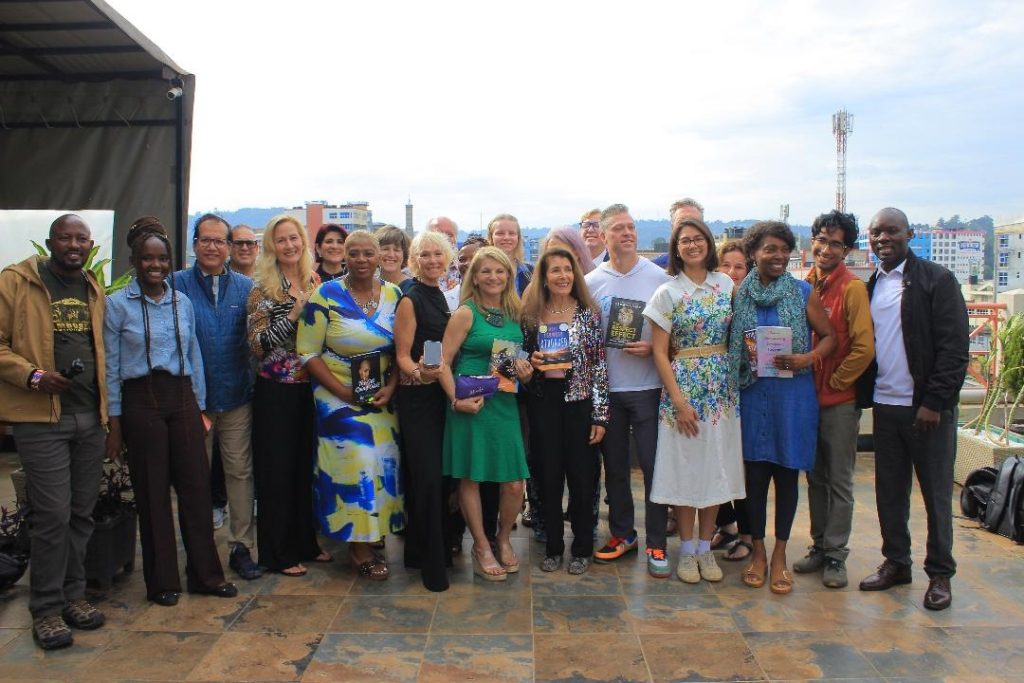
This reality came out strongly during the 2026 Kenya Keynote Tour, where educators, entrepreneurs, health professionals, creatives and humanitarian advocates from Kenya and the United States visited schools and communities to engage young people.
Each visitor brought a different skill, but the message was largely the same. Young people need practical support, opportunities, mentorship and safe spaces where they can find their voices and shape their futures.
A period should not end a girl’s education
For Justine Reese, founder of Empowered Voice, empowering young people means giving them the confidence and tools to speak for themselves and solve the problems they face every day.
During her visit, Reese focused on menstrual health and the need for sustainable products that can keep girls in school while also creating income opportunities.
“If a girl cannot stay in school simply because of something that happens to her every month, this is a problem,” she said.
She introduced menstrual cups and reusable pads, but stressed that the programme is about more than handing out products. It is also exploring how young people can learn to make reusable sanitary products themselves, turning menstrual health into a chance to gain skills and start small businesses.
Reese said the initiative is working with local people in Kisii and Nairobi. One of the enterprises involved is Ahadi Reusable Menstrual Pads, in Nairobi.
According to Reese, she began making reusable pads after seeing how hard it was for girls around her to afford menstrual products.
“She knew that she could not stay in school, and she saw other girls around her,” Reese said.
Reese believes the same approach can work in schools and prisons, where women and girls also struggle to access hygiene products.
She recalled meeting a woman in prison who said she could not afford diapers and sometimes had to make them herself or wait for donations.
Rather than depending only on donations, Reese would like to provide textiles and training so that women can make reusable products for their own use and even sell them.
“We feel that a period should not end a girl’s education. It should end a sentence,” she said.
Local action to keep girls in school
Local organisations working directly with communities are also taking up the issue.
Dominic Obadiah, a humanitarian diplomat and founder of Civility Voice Diplomat, said his organisation supports girls with sanitary pads and also deals with another need closely tied to menstrual hygiene: clean water. It is providing water tanks to communities and schools so that girls can keep themselves clean.
For Obadiah, keeping girls in school takes more than encouraging them to attend class. It means removing the practical barriers they meet once they get there.
Sanitary pads together with reliable clean water can make school a much safer and more comfortable place for girls during their periods.
These efforts show a wider understanding of menstrual health: dignity, education, sanitation and economic opportunity are all connected.
Creativity as a pathway to opportunity
The tour brought together people from many professions, yet their experiences pointed to one thing: young people need chances to discover and grow their talents.
Diane Strand from California said the tour strengthened her belief in the power of creativity.
“I am all about the arts and bringing creativity to everything that you do in life, in business, because that’s what provides our solutions when we have challenges that we need to overcome,” she said.
Watching Kenyan students sing, dance and share their dreams showed her how creativity can help young people step out of their comfort zones.
She was especially encouraged by a project that brought students together to write books. Supported by Top Talent International, the project hopes to see the students’ work published and, possibly, reach readers beyond Kenya.
For Strand, creativity is not only about art. It is also about taking the next step even when you are not sure how things will turn out.
Giving young authors a voice

Leslie Lattimore-Lorefield from Washington, D.C. described her time in Kenya as life-changing. A mother of 12 who served in the military for almost three decades, she said she came expecting to inspire Kenyan children, but ended up being inspired by them. She was impressed by how eager they were to learn and how seriously they thought about their futures.
She runs Girl Organize That Life, a business through which she works with high-achieving women and young women aged 18 to 23.
Her experience in Kenya, she said, reminded her how important it is to invest in young people and build partnerships that continue after the tour ends.
Falling reading, habits were also a major concern. With children surrounded by digital content, participants urged students to keep finding ways to engage with books. One participant said reading is still a valuable source of knowledge, but young people should not feel pressured to read everything at once.
“If you don’t like to read or that’s not your favorite place, that’s fine. Take a little bit, take baby steps, but find the knowledge within each page,” she said.
Technology can also help keep stories alive. Reese said she uses audiobooks to reach people who cannot read. A young author’s family or friends may not be able to read a printed book, but they can listen to an audiobook, which makes the author’s story reach more people.
Education in the age of AI
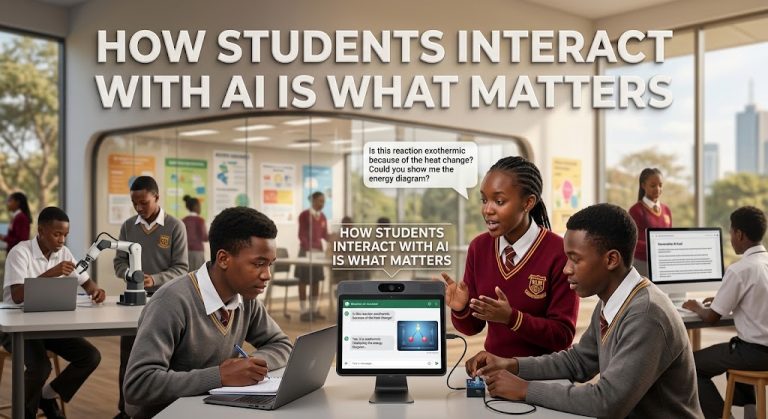
Artificial intelligence was another big topic, especially how it is changing education.
Dennis Janoya, an educator with more than 37 years of experience, said AI should not be seen only as a threat to teachers or students. He began as a mathematics teacher and now develops maths courses for middle and high school students. In his view, AI can support personalised learning. A learner who grasps a concept quickly can move ahead, while one who needs more help can be guided back to topics that need more practice.
Still, he said teachers and parents remain important.
“We have to be the guides and the coaches of how to use AI and use it effectively,” he said.
Beyond the classroom: health, confidence and wellbeing
For Dr Tina Cooper-Smith, a gynaecologist and fertility doctor from the United States, education should go beyond exam results. Young people also need to understand their bodies, relationships and emotional wellbeing, said the founder of the Alive2Thrive Method. She described health as a mix of physical, mental, emotional and social wellbeing.
She was struck by the Kenyan students she met, who were curious and eager to learn and remained closely connected to their communities. But she warned that as the world moves deeper into the information age and AI grows quickly, society must not lose human connection.
“We need to bring back the joy of living, the connection to our bodies, to each other,” she said.
Cooper-Smith also called for age-appropriate conversations on sexuality, bodily autonomy, relationships and reproductive health.
She encouraged young people to know that their bodies belong to them, and that consent and respect must always be at the centre of relationships.
“No is a complete sentence,” she said.
She added that talking about delaying sex and talking about contraception do not contradict each other. Young people need accurate information and the freedom to make informed decisions about their bodies and futures.
Small steps, big possibilities
A sanitary pad can keep a girl in school. A water tank gives her a safe place to stay clean and keep her dignity. A reusable pad can become a business. A book gives a young writer a voice, and an audiobook carries that story to someone who cannot read. A computer opens new doors for a student. A conversation about consent helps a young person understand their rights. And used responsibly, AI can help teachers support learners with different needs.
For local advocates like Dominic Obadiah and visitors like Justine Reese, the goal is the same, to remove the everyday barriers that stop young people, especially girls, from learning, taking part and reaching their full potential.
Similar Posts by The Mt Kenya Times:
- Garang’s ghost: What South Sudan does with its liberation ideals
- When the teacher breaks: TSC’s quiet battle for mental health in the classroom
- Patel makes history with third African crown
- The Kenyan paradox: How political elitism and social stratification are mortgaging the ambitions of future generations
- Gilded cages and paper tigers: Competition law’s ironic dance with economic justice in Kenya
About the Author