Full university sponsorship for 2026: Bold promise or dream deferred?
 The Mt Kenya Times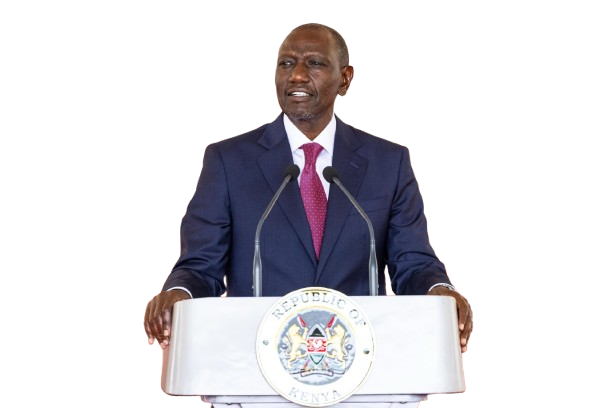
President William Ruto
Ruto’s pledge to fully fund university students from 2026 has ignited both hope and deep scepticism among Kenyans still waiting for existing education promises to be kept
By Hadassah Karangu
President William Ruto’s announcement that students joining Kenyan universities from 2026 would be fully sponsored by the government captured national attention the moment it was made — and just as quickly, it divided the country between those who desperately want to believe it and those who have heard it all before.
The reaction was entirely predictable, and entirely human. For parents who have sold livestock, borrowed money and worked extra shifts to keep a child in school, the promise of free university education is not merely a policy proposal — it is the answer to years of sacrifice and sleepless nights. For students who dream of higher education but dread becoming a financial burden on their families, it represents something even more profound: opportunity, dignity and a future that does not begin with debt.
Yet even as the excitement spread, a quieter, more familiar emotion followed close behind. Doubt.

Kenyans are not sceptical because they do not want the promise to succeed. Most desperately do. Education remains one of the few reliable pathways through which ordinary families escape poverty and build something better for the next generation. The prospect of a bright child attending university on a full government scholarship is a dream that families across this country have carried for generations. The problem is not the dream. The problem is the record.
Over the past several years, university funding has become one of the most bitterly contested issues in Kenya’s public life. Students have repeatedly raised concerns about delayed Higher Education Loans Board disbursements and withheld scholarships. Some have missed lectures because their fees were not paid. Others have spent entire semesters in uncertainty, unsure whether their funding would come through at all. Universities, meanwhile, have accumulated debts, struggled to maintain services and watched their financial situations deteriorate steadily. The system, in short, was already under strain before this new commitment was announced.
This is the backdrop against which Ruto’s pledge must be assessed — and it is a challenging one. For continuing students in particular, the announcement carries a bittersweet quality. Many are asking, with some justification, why incoming students are being promised full sponsorship while those already navigating the system continue to face funding gaps and uncertainty. It is a reasonable question, and it deserves a direct answer.
The financial scale of what is being proposed is also impossible to ignore. Tens of thousands of students join Kenyan universities every year. Tuition fees, accommodation support, learning materials, institutional operating costs and administrative overheads all require substantial and sustained resourcing. Even in a well-functioning fiscal environment, the numbers are formidable. In an economy facing the pressures Kenya currently confronts — a high cost of living, persistent youth unemployment, significant public debt and intense competition for limited government resources — the arithmetic becomes considerably more daunting.
Supporters of the proposal push back firmly on this framing. Education, they argue, should never be treated as an expense. It is an investment — in future doctors, engineers, teachers, scientists, journalists and entrepreneurs. History lends weight to this argument. Countries that have made sustained, serious investments in education have consistently seen stronger economic growth, greater innovation and improved living standards across the population. Spending on education is not a drain on national resources. Done well, it is among the most productive uses of public money any government can make.
The difficulty is that good intentions and sound theory are not enough. Every ambitious programme ultimately lives or dies on implementation. Kenyans know this from experience. Political rallies and election seasons have produced no shortage of bold pledges over the years. Some have been honoured. Others have quietly faded as economic realities have reasserted themselves, leaving behind a residue of disappointment that has made the public — understandably — cautious about the next announcement.
Trust is not built through speeches. It is built through results.
What citizens are asking for is not a miracle. They are asking for clarity. Has a credible funding framework been developed? Have universities been consulted and brought into the planning process? Is there a transparent allocation in the national budget that corresponds to the scale of the commitment? Are the reforms needed to make the programme sustainable already underway? These are not hostile questions. They are the questions of a public that has been here before and wants, this time, to see the plan in writing.
The government’s credibility on this issue will not be determined by the warmth of the announcement or the headlines it generated. It will be determined by what actually happens when students report to university in 2026 — whether the promised support reaches them, whether institutions have the resources to absorb them, and whether the system holds.
Until then, the country remains suspended between hope and scepticism — two responses that are not, in fact, contradictory. Kenyans can want this to work and still demand proof that it will. They can celebrate the ambition of the vision while insisting on the rigour of the plan. That is not cynicism. That is a citizenry that has learned, through hard experience, that the distance between a promise and its delivery is where most things are either built or lost.
The months ahead will tell the story. Whether Ruto’s announcement marks the opening of a new chapter in Kenya’s higher education system, or becomes another pledge remembered more for its ambition than its achievement, will depend entirely on what happens next — not in press conferences, but in the lived experience of thousands of young Kenyans whose futures hang in the balance.
The question is not going away. And Kenya is watching.
Similar Posts by The Mt Kenya Times:
- Mt Kenya Times ePAPER October 21, 2026
- Kenya confirms ninth Ebola case as outbreak remains contained within single cluster
- Musk pledges SpaceX share for every American child in 2027
- Abiy calls for deeper Kenya-Ethiopia trade partnership at Eldoret ceremony
- Kenya’s oil moment: Promise, responsibility and the long road from Turkana to market
About the Author