Gachagua impeachment case turns to legal battle over evidence, procedure

Former Deputy President Rigathi Gachagua
By MKT Correspondents
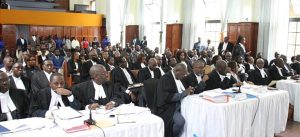
The High Court yesterday resumed hearing a consolidated petition challenging the impeachment of former Deputy President Rigathi Gachagua, with lawyers on both sides locked in a fierce dispute over constitutional procedure, admissibility of evidence, and the legality of Parliament’s actions.
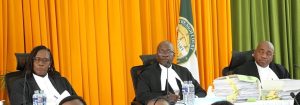
The proceedings before a three-judge bench comprising Justices Eric Ogola, Freda Mugambi and Anthony Mrima have attracted significant public and political attention, given the case’s implications for Kenya’s constitutional democracy and the limits of parliamentary power in removing a sitting deputy president.
Gachagua, who was impeached by the Senate on October 17, 2024, continues to argue that his removal from office was unlawful, politically motivated, and conducted in violation of constitutional safeguards.
He maintains that the process was designed to weaken his political influence, particularly within the Mt Kenya region ahead of the 2027 General Election.
Through Senior Counsel Paul Muite and constitutional lawyer Kibe Mungai, Gachagua’s legal team told the court that Parliament acted as “prosecutor, judge and executioner,” denying him a fair hearing and failing to uphold due process guarantees.
The lawyers argued that the Senate did not establish a special 11-member committee as required under Article 145 of the Constitution to investigate the impeachment allegations before the matter was debated and voted on in plenary.
They described this omission as a fundamental procedural flaw that invalidates the entire impeachment process.
According to the petitioners, the Constitution requires strict adherence to procedural safeguards in impeachment proceedings, including proper investigation, fair hearing, and adequate time for defence.
They insisted that the Senate’s failure to follow these steps rendered the process unconstitutional.
Lawyer Andrew Muge, also representing Gachagua, challenged the adequacy of public participation in the impeachment motion, arguing that Parliament failed to provide sufficient information for citizens to meaningfully engage.
He questioned the credibility of claims that tens of thousands of Kenyans submitted views within a short period, saying the process lacked transparency and verifiable engagement.
He further told the court that lawmakers debated and passed the motion before properly considering the public participation report, raising concerns about whether public input had any real influence on the decision-making process.
Another key argument presented in court was that impeachment should only be applied in cases of clear constitutional or public harm, not as a tool for political competition or settling political scores. Mungai drew comparisons with impeachment thresholds in other constitutional democracies, arguing that Kenya must maintain similarly high standards to prevent abuse of the process.
The legal team further claimed that there were early political efforts to initiate the impeachment motion through different Members of Parliament before Kibwezi West MP Mwengi Mutuse eventually fronted it, a matter they argue demonstrates political orchestration behind the process.
On the other side, lawyers representing the National Assembly and the Senate led by Tom Ojienda and Githu Muigai urged the court to strike out a supplementary affidavit filed by Gachagua, arguing that it was introduced without the court’s leave and contained serious allegations that had not been tested through proper channels.
The respondents told the court that the affidavit introduced new claims that were never presented before the Senate during the impeachment hearings. Among the contested claims is an allegation that President William Ruto personally called Dr Dan Gikonyo who was treating Gachagua at Karen hospital to inquire about his health, a matter they said requires strict verification and possible confirmation from the Head of State.
They further argued that the affidavit was filed one and a half years after the alleged events without explanation for the delay, and that it introduced material that Parliament and the Senate never had the opportunity to examine during impeachment proceedings.
The respondents insisted that judicial review of impeachment should be confined to material that was before Parliament at the time of decision-making.
They maintained that allowing new evidence at this stage would amount to rewriting the legislative record.
However, the court declined to strike out the affidavit, allowing it to remain part of the proceedings, a decision seen as a significant early procedural win for Gachagua’s legal team.
The court was also told that the affidavit raises issues requiring independent verification, including possible document examination and confirmation from individuals allegedly mentioned in the document.
Gachagua, who attended court accompanied by his wife Pastor Dorcas Rigathi, family members and political allies, has consistently maintained that his impeachment was unconstitutional and part of a broader political strategy to sideline him from national leadership.
His removal from office followed Senate proceedings in which lawmakers upheld five out of 11 charges against him, including allegations of ethnic division, misconduct, and violation of his oath of office.
The Senate vote effectively ended his tenure and paved the way for the appointment of Prof. Kithure Kindiki as Deputy President.
The case has since evolved into a landmark constitutional challenge testing the boundaries of impeachment powers, the doctrine of separation of powers, and the role of courts in reviewing parliamentary decisions.
Legal analysts say the outcome could set a major precedent on how future impeachment proceedings are conducted in Kenya, particularly on issues of public participation, procedural compliance, and evidentiary standards.
The hearing is expected to continue with further submissions from both sides as the court prepares to determine whether the impeachment process met constitutional thresholds or whether it should be nullified.
Similar Posts by The Mt Kenya Times:
- Mt Kenya Times ePAPER October 26, 2026
- Sakaja challenges Kamukunji police over Eastleigh suspect bail
- Muturi demands binding livestreaming rules for 2027 polls to prevent repeat of 2022 chaos
- NTSA calls for road safety to be declared a national disaster after 24 die in Mtito Andei crash
- Ruku turns on Waiguru over deputy president ambitions: ‘That seat is not being contested for’
About the Author