Rigathi Gachagua
2027 opposition presidential race
By David Kimani
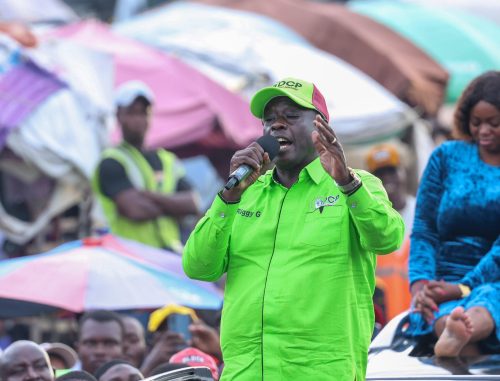
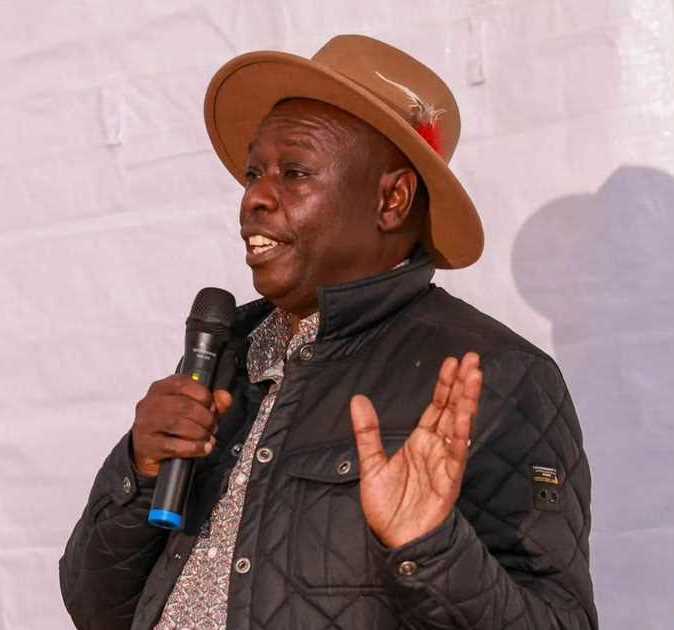
Rigathi Gachagua, the former Deputy President of Kenya and leader of the Democracy for the Citizens Party, declared yesterday that he is prepared to serve as Nairobi Senator Edwin Sifuna’s running mate in the 2027 general election if political arithmetic demands it, a statement that instantly reshuffled the deck in the already volatile race to unseat President William Ruto eleven months from now.
Gachagua made the remarks during a community engagement with Kenyans in Spokane, Washington, the latest stop on an extended diaspora tour of the United States that has become, in effect, an early campaign trail. He was blunt, characteristically so. “If we do our arithmetic and find that Nairobi Senator Edwin Sifuna will send President William Ruto home early, so be it,” he told the gathering. “And there is no problem, by the way, even I, Riggy G, can deputise Sifuna.”
It was a sentence designed to travel — and it did.
To understand the full weight of what Gachagua said in Spokane, one must understand the peculiar theatre of Kenya’s pre-election season. The general election is constitutionally fixed for 10 August 2027, the second Tuesday of the month as required by the 2010 Constitution. That gives the opposition roughly eleven months to resolve a question it has been circling for the better part of two years: who will carry the single presidential ticket that, its leaders have repeatedly pledged, will face Ruto? The pledge has been easier to make than to keep.
The field of serious opposition contenders is both deep and combustible. Kalonzo Musyoka, the veteran Wiper party leader who has twice served as vice president and twice lost the presidential race, commands a formidable base in Ukambani and presents himself as the elder statesman whose time has finally come. Fred Matiang’i, the former Interior Cabinet Secretary who became one of Kenya’s most feared ministers before his dramatic fall from grace, carries the Jubilee party ticket and has built steady support in parts of the Mount Kenya region. Martha Karua, leader of the People’s Liberation Party, brings intellectual credibility and a fierce reputation for principle that her allies in the United Alternative Government and the Linda Mwananchi movement have rallied around. Former Chief Justice David Maraga and former Attorney General Justin Muturi — now the Democratic Party leader — have both positioned themselves as candidates, with Maraga hinting at closer cooperation with Karua.
And then there is Sifuna. At 44, the combative Nairobi senator has emerged as the most compelling voice of a younger opposition generation, his tongue sharp and his crowd work formidable. His Linda Mwananchi movement has raised grassroots funds and built momentum, and he has been increasingly candid about his presidential ambitions. But he has also attracted scepticism from quarters that might have been expected to support him.
The day before Gachagua spoke in Spokane, Central Organisation of Trade Unions Secretary-General Francis Atwoli — speaking at a UDA Western Region aspirants’ meeting in Kisumu — advised Sifuna to stand down. “The time is not ripe for the young man,” Atwoli said. “The time is not now for Edwin Sifuna.” Atwoli argued that the senator needed to build a broader political network before mounting a national campaign.
Gachagua was having none of it. “I saw that man, COTU Secretary-General Francis Atwoli, telling Sifuna that he is too young to be president and should therefore wait,” he told the Spokane audience. “I want to tell that Mzee, Sifuna is above 18 years. He is 44. Barack Obama was elected US president at 47. Franklin Roosevelt was 42.” He then turned to Sifuna directly, saying: “I have told my younger brother, do not be discouraged by anybody. Go for it.”
The intervention matters beyond the drama of the moment. Gachagua controls the most electorally significant block the opposition needs: the Mount Kenya vote. His ability to deliver — or withhold — that region from any challenger is the central variable in every opposition ticket calculation. His willingness to consider a subordinate role, whatever its ultimate sincerity, signals that he is prepared to trade the top position for the right political configuration. That is a significant concession from a man who has also, in the same breath, insisted: “Riggy G here is a serious candidate.”
His framing of the ticket as flexible — Sifuna over Kalonzo, Kalonzo over Sifuna, or Gachagua himself at the top — is deliberate. “We will come up with a line-up and you will love it,” he told the diaspora audience. “We will blend youthful energy with experience.” It was the language of a man managing multiple audiences simultaneously: reassuring Sifuna’s supporters that youth is not disqualifying, signalling to Kalonzo that he has not been written off, and reminding everyone that Gachagua himself remains the axis on which the coalition turns.
The diaspora setting was itself strategic. Central Bank of Kenya data shows that Kenyans abroad remitted close to USD 4.9 billion — roughly KSh640 billion — in 2024, making the diaspora one of the country’s most important sources of foreign exchange. Kenyans living abroad are also eligible to vote in presidential elections under the 2010 Constitution, which is why diaspora forums have become fixtures of opposition pre-campaign planning. What is said in Spokane or Minneapolis does not stay there; it travels, often faster than anything said in Nairobi.
The opposition’s credibility problem is real. As recently as July 2026, the Ol Kalou by-election exposed the coalition’s unity pledge as aspirational at best, with nine candidates — eight of them aligned against Ruto — splitting the anti-government vote into irrelevance. A movement that cannot agree on a candidate for a constituency seat faces steep questions about its ability to consolidate behind one person for the presidency.
The October 9 People’s Forum on Electoral Preparedness, being coordinated by Maraga, Muturi, and Linda Mwananchi spokesperson Caroli Omondi, is the opposition’s next formal attempt to bring order to the chaos. Whether it succeeds is another matter. As Kenya accelerates toward August 2027, the only certainty is that the race for the right to challenge Ruto is growing louder, messier, and more consequential with every passing week.
Gachagua flew into Spokane promising a line-up Kenyans will love — the question is whether Kenya’s fractious opposition can actually produce one before the ballot box closes the argument for good.
Similar Posts by The Mt Kenya Times:
- Tax relief for Kenyans: Will more money in our pockets make life easier?
- Poisoned bottle: Are we drinking ourselves into early graves?
- How Kenya and South Africa constitutionalized concentration while preaching the gospel of the disadvantaged
- Discipline begins at home
- Onana escapes serious injury in three-car crash
About the Author