Genocide Remembrance Day: A Nation Confronts Its Scars, A Journey Towards Elusive Closure
 The Mt Kenya Times
By: Silas Mwaudasheni Nande
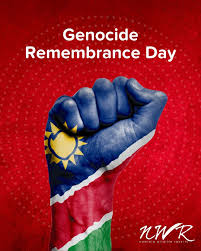
As the sun rises over the vast Namibian landscape this morning, a profound silence descends upon the nation, pregnant with the weight of history. For the first time, May 28th is officially observed as Genocide Remembrance Day – a solemn declaration by the Namibian government marking the closure of the infamous German concentration camps in 1908. This pivotal day is more than a mere date on the calendar; it is a profound act of national recognition, a somber acknowledgement of the darkest chapter in Namibia’s colonial past. Yet, as the nation reflects, a deeper question emerges: Can a single day, or indeed a series of negotiations, truly mark a “closure” to wounds so deep, to suffering so immense, as that inflicted upon the Ovaherero and Nama people? This article delves into the harrowing history of this day, explores its profound significance for Namibians, particularly the Nama and Herero communities, and critically analyzes the complex notion of closure in the shadow of genocide.
The Genesis of a Crime: German Colonialism and the Road to Annihilation
The late 19th century saw a brutal scramble for Africa, with European powers carving up the continent with scant regard for its inhabitants. German South West Africa, established in 1884, quickly became a microcosm of imperial ambition fueled by racial superiority and economic greed. Prior to German arrival, the land was home to diverse and sophisticated communities: the pastoral Ovaherero, the fiercely independent Nama, the resilient San, Damara, and various Ovambo groups. For centuries, these communities had developed complex social structures, land tenure systems, and trade networks.
The German presence, however, systematically dismantled this delicate balance. Through a combination of fraudulent treaties, outright land theft, and the imposition of a harsh colonial administration, the indigenous populations found themselves increasingly dispossessed and marginalized. German settlers, backed by military might, seized prime grazing lands, confiscated cattle – the lifeblood of the Herero economy – and subjected the local populace to degrading labor practices and racial discrimination. Tensions simmered, fueled by broken promises and mounting injustices. The land, which for generations had sustained their way of life, was being systematically alienated, and the very fabric of their societies was under threat.
The breaking point arrived on January 12, 1904. Driven to desperation by the relentless oppression and the prospect of utter ruin, Samuel Maharero, paramount chief of the Ovaherero, led an uprising against German colonial rule. The initial Herero revolt, though targeting German men and military installations, notably spared German women, children, and missionaries, reflecting a desperate plea for justice rather than indiscriminate vengeance. The Herero sought to reclaim their stolen lands and dignity. Their initial successes stunned the Germans, forcing Berlin to dispatch a new, ruthless commander: Lieutenant-General Lothar von Trotha.
Von Trotha arrived in June 1904, imbued with a chillingly genocidal ideology. He viewed the African people as an impediment to German colonial expansion, fit only for extermination. His strategy was not about pacification or negotiation; it was about annihilation. Following the decisive Battle of Ohamakari (Waterberg) in August 1904, where the Herero were outmaneuvered but not decisively defeated, von Trotha issued his infamous “Extermination Order” (Vernichtungsbefehl) on October 2, 1904. Its words remain etched in the annals of infamy:
“Within the German boundaries every Herero, whether armed or unarmed, with or without cattle, will be shot. I shall no longer receive women and children; I will drive them back to their people or I will have them shot.”
This was not merely a military directive; it was a clear decree of genocide. Thousands of Herero, driven from the Waterberg, were forced into the unforgiving Omaheke desert. German military units systematically poisoned waterholes and cut off escape routes, condemning tens of thousands to a agonizing death by thirst and starvation. The desert became a vast, silent graveyard, testament to an unparalleled act of calculated cruelty.
The Nama people, witnessing the Herero’s fate and suffering under similar German oppression, launched their own uprising in late 1904, led by revered figures like Hendrik Witbooi and Jacob Morenga. They too faced the brutal efficiency of von Trotha’s forces, their resistance met with similar scorched-earth tactics and widespread atrocities. The stage was set for the establishment of concentration camps, a chilling precursor to the horrors of the 20th century.
The Horrors Unveiled: German Concentration Camps in South West Africa
 As the Herero and Nama people succumbed to the combined assault of German firepower, the desert, and starvation, the survivors faced a new, equally horrific fate: incarceration in concentration camps. These were not initially conceived as gas chambers, but their purpose was equally insidious: to break the spirit of the surviving indigenous communities, to exploit their labor to death, and to systematically degrade and dehumanize them. Established from 1904 onwards, camps sprung up across the territory, in locations such as Swakopmund, Windhoek, Omaruru, Karibib, and most notoriously, Shark Island (Haifischinsel) near Lüderitz.
Shark Island stands as a chilling monument to the depths of human cruelty. Located off the coast of Lüderitz, its barren, windswept expanse became a death trap. Prisoners, predominantly Nama and Herero women, children, and the elderly, were crammed into makeshift shelters, exposed to the biting cold Atlantic winds and the relentless sun. Malnutrition was endemic, with prisoners surviving on meager rations of rice and often rotten flour. Forced labor in the harbour, guano fields, and railway construction gangs under brutal conditions further weakened their already frail bodies.
Disease, however, was the ultimate killer. Typhus, scurvy, dysentery, and pneumonia ripped through the emaciated populations. Lack of sanitation, contaminated water, and the absence of proper medical care turned the camps into charnel houses. Mortality rates on Shark Island often soared to horrifying levels, with reports indicating that 70% to 90% of some groups perished within months. Those who survived often bore the indelible scars of their ordeal – chronic illness, broken bodies, and shattered spirits.
Conditions in other camps, though perhaps not reaching the same staggering death tolls as Shark Island, mirrored the same patterns of abuse, starvation, and systematic neglect. Prisoners were forced to build the very infrastructure that facilitated German colonial exploitation, often working until they dropped dead from exhaustion. The camps were designed to strip away every shred of dignity, to transform human beings into disposable units of labor, paving the way for the total appropriation of their land and resources.
Adding another layer of horror was the involvement of scientific racism and grotesque medical experimentation. German doctors and anthropologists, driven by the pseudoscientific theories of racial hierarchy prevalent at the time, conducted sadistic “experiments” on living prisoners. Dr. Eugen Fischer, later a leading figure in Nazi eugenics, conducted studies on mixed-race children, examining their physical characteristics and advocating for the prevention of further “racial mixing.” Skulls and other body parts of deceased prisoners were systematically collected, boiled, cleaned, and shipped to Germany for “racial research” in museums and universities, including the prestigious Charité hospital in Berlin. This macabre trade in human remains underscored the complete dehumanization of the indigenous people, reducing them to mere specimens for racist “science.”
The concentration camps eventually closed in May 1908. This closure was not a humanitarian gesture driven by moral compunction, but rather a pragmatic decision influenced by several factors: international condemnation and growing scrutiny, the massive decline in prisoner numbers due to the high mortality rates (there were simply few left to exploit), and a shift in German colonial policy towards a more systematic system of forced labor on farms and in mines, rather than large, centralized camps. The surviving Herero and Nama were dispersed, often forced into servile labor on German farms or confined to reserves on their ancestral lands, now fully dispossessed and economically ruined. The date of May 28, 1908, marked the formal shutdown of these death camps, a physical end to a systematic horror, but by no means an end to the suffering it had engendered.
The Long Shadow: What Genocide Remembrance Day Means for Namibians
The declaration of May 28th as Genocide Remembrance Day reverberates deeply across Namibia, particularly for the descendants of the Herero and Nama genocide survivors. For these communities, this day is a profound act of recognition and validation. For over a century, their suffering was largely dismissed, ignored, or downplayed, often obscured by the victor’s narrative of colonial progress. An official remembrance day unequivocally acknowledges the historical truth of the genocide, validating the oral histories, the generational trauma, and the persistent cries for justice that have echoed through their families for generations. It is a vital step in restoring dignity to the victims and their descendants.
The intergenerational impact of the genocide cannot be overstated. Decades of research in post-conflict societies demonstrate that trauma is not confined to individuals but can be passed down through generations, manifesting as higher rates of PTSD, depression, anxiety, and social dysfunction. For the Herero and Nama, this trauma is compounded by the enduring economic marginalization and land dispossession directly stemming from the genocide. Many descendants live in poverty, still landless, often working on the very farms that once belonged to their ancestors. Genocide Remembrance Day thus becomes a focal point for understanding these persistent socio-economic disparities, linking them directly to the historical injustice.
The day also holds immense cultural significance. It is a time for remembering ancestors lost, for traditional mourning ceremonies, for recounting the stories that have been orally preserved, often in secret, for over a century. It is an opportunity to reclaim narratives, to strengthen cultural identity, and to reaffirm the resilience of communities that were pushed to the brink of extinction. Memorials, such as the infamous Shark Island, now become sites of pilgrimage and education, places where the spirits of the ancestors can be honored and their stories told to new generations.
Crucially, Genocide Remembrance Day underscores the ongoing struggle for justice and reparations from the German government. While Germany formally acknowledged the atrocities as “genocide” in 2021 and offered a “reconciliation” package of €1.1 billion for development projects over 30 years, this agreement remains deeply contentious for many within the affected communities. Critics argue that the funds do not constitute direct “reparations” as legally defined, that the amount is insufficient given the scale of the destruction, and that it was negotiated without full consensus or direct participation from all descendant groups. The fight for a truly comprehensive, legally binding, and morally acceptable form of restorative justice continues, and the remembrance day serves as a powerful reminder of this unresolved historical debt.
Furthermore, the genocide was fundamentally a crime of land dispossession. The vast majority of commercially viable land in Namibia remains in the hands of descendants of German settlers, a direct legacy of the 1904-1908 events. Genocide Remembrance Day implicitly highlights the urgency of addressing this stark inequality, reminding the nation that true reconciliation cannot occur without confronting the ongoing economic disparities rooted in colonial violence.
Beyond the immediate impact on the Herero and Nama, Genocide Remembrance Day holds broader significance for all Namibians. It fosters a shared understanding of the nation’s turbulent past, promoting national unity through a common history of struggle against colonialism, albeit with different experiences. It reinforces a national commitment to the principle of “Never Again,” serving as a stark reminder of the consequences of unchecked hatred, racism, and state-sponsored violence. It encourages education and awareness, ensuring that future generations, both in Namibia and globally, understand this dark chapter in human history and the importance of safeguarding human rights. Namibia, having experienced genocide firsthand, positions itself as a moral voice on the international stage, advocating for justice and prevention wherever such atrocities occur.
The Namibian government’s decision to declare this day is therefore highly significant. It demonstrates a commitment to national healing, to confronting uncomfortable truths, and to advocating for its citizens on the global stage. However, it also highlights the internal challenges of uniting diverse perspectives within the victim communities and navigating the complexities of international diplomacy.
True Closure: A Critical Analysis
The concept of “closure” in the context of genocide is profoundly complex and often elusive. While May 28th, 1908, marked the physical closure of the German concentration camps, can May 28th, 2025 or years to come, truly mark a “closure” to the genocide itself?
Symbolic Closure: In a symbolic sense, yes, the declaration of Genocide Remembrance Day offers a form of closure. It is an official, national recognition of the atrocities, a public act of mourning, and a commitment to remembering the victims. It provides a focal point for collective grief and reflection, validating the suffering that has been carried for generations. It is a powerful statement that the victims’ lives mattered, and their deaths will not be forgotten.
Historical Closure: The camps themselves ceased to operate. From a purely historical and administrative perspective, that chapter closed. However, the effects of the camps and the genocide – the demographic decimation, the loss of land, language, and culture, the psychological trauma, the economic disenfranchisement – did not close. They festered, shaping the contours of Namibian society for over a century. History, in this sense, is not closed but continuously lived and grappled with.
Emotional and Psychological Closure: For the victims and their descendants, emotional and psychological closure is not a singular event but a long, arduous process. It requires:
- A Full and Unreserved Apology: While Germany’s 2021 apology was a significant diplomatic step, many victim communities felt it lacked the full legal and moral weight required, particularly its avoidance of the term “reparations” in favor of “reconciliation projects.” True emotional closure demands a clear and unambiguous admission of guilt for the specific crime of genocide.
- Adequate Reparations and Restitution: The financial agreement, while substantial in monetary terms for development projects, is seen by many as insufficient and not truly addressing the direct, individual, and communal losses incurred. For many, real closure necessitates material restitution – including the return of ancestral lands – that empowers the affected communities to rebuild what was lost. The debate over direct payments versus development aid remains a significant hurdle to genuine closure.
- Return of Ancestral Remains and Artifacts: The symbolic and spiritual importance of bringing home the skulls and other human remains taken to Germany for “scientific” study is paramount. For many, true healing cannot begin until their ancestors are returned to their sacred burial grounds. The return of cultural artifacts also contributes to the restoration of identity and heritage.
- Comprehensive Educational Initiatives: Closure requires a shared understanding of the past in both Namibia and Germany. This means not only acknowledging the history in textbooks but also fostering deeper dialogue, supporting educational exchanges, and ensuring that the lessons of the genocide are understood and integrated into national consciousness in both countries.
- True Reconciliation: Reconciliation is not merely the absence of conflict but a profound process of building trust and understanding. It requires genuine dialogue, a willingness to address past injustices, and a commitment to ensuring that power imbalances are rectified. For many, Germany’s reluctance to engage with all descendant groups directly or address the land question thoroughly hinders true reconciliation.
Political and Legal Closure: From a legal perspective, the matter remains partially open. While Germany has acknowledged the genocide, it has avoided a full legal admission that would entail direct reparations under international law. Legal challenges, particularly in international courts, underscore the ongoing pursuit of a comprehensive legal closure that aligns with international human rights standards.
The path forward is therefore complex. It requires continued, robust dialogue between the Namibian and German governments, but crucially, it also demands inclusive engagement with all segments of the affected communities. Addressing the lingering land question and economic disparities that are direct consequences of the genocide is paramount. Sustaining remembrance through memorials, museums, and the oral histories of survivors and their descendants will ensure that the lessons of this dark chapter are never forgotten. The “Special Initiative” funds, while contested, must be transparently and effectively managed to reach and benefit the most affected communities directly. The struggle for true closure is an ongoing journey, a continuous act of advocacy, remembrance, and the pursuit of holistic justice.
Conclusion: A Nation Remembers, A Future Forged in Truth
The declaration of May 28th as Genocide Remembrance Day is a momentous occasion for Namibia. It is a powerful and necessary step in acknowledging the horrific truths of its colonial past, a day for the nation to stand in solidarity with the Ovaherero and Nama people, whose ancestors endured unspeakable suffering in the German concentration camps. It marks a historical end to a physical horror, offering a vital symbolic closure for a nation striving to heal.
However, the path to true closure is long and multifaceted. It transcends the physical closure of the camps in 1908 or even a single day of remembrance in 2025. It demands continued commitment to justice, encompassing meaningful reparations, the return of ancestral remains, and a deep, empathetic understanding of intergenerational trauma. It calls for genuine reconciliation, built on truth, mutual respect, and a rectification of the historical injustices that continue to cast a long shadow over Namibian society, particularly concerning land and economic equity.
As Namibia remembers, it also looks forward. This day serves as a powerful reminder of the resilience of its people, their unwavering spirit in the face of unimaginable adversity. It is a testament to the enduring human capacity for survival, for reclaiming narrative, and for demanding accountability. May 28th is not just about looking back at the past; it is about building a future rooted in truth, a future where such atrocities can never be repeated, and where the promise of justice and healing can finally be realized for all Namibians.
Similar Posts by The Mt Kenya Times:
- Optimizing traffic flow at urban intersections and methods for reducing congestion
- Kenya as a global nation
- Hardship and peer pressure in universities
- Laikipia students swap lectures for Ingwamiti Hills
- We told our children to study, but where are the jobs?
About the Author