Government Announces 17 Million UHC Registrations as Kidney Institute Nears Completion

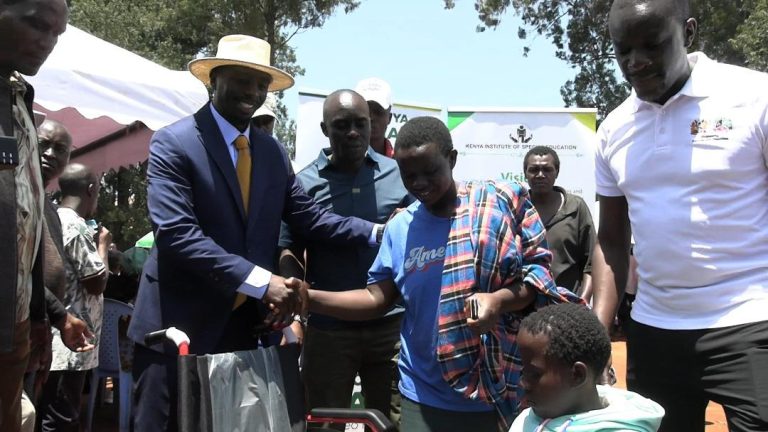
In picture, Deputy President Prof Kithure Kindiki accompanied by Health CS Debra Mulongo Barasa, during his visit at the KNH in Nairobi.
By Aoma Keziah,

Deputy President Kithure Kindiki visited the Kenyatta National Hospital (KNH) to assess the progress of the government’s Universal Health Coverage (UHC) program and to engage with patients and healthcare workers on ongoing improvements.
During his visit, he revealed that 17 million Kenyans are now registered under the country’s UHC initiative, known as Taifa Care. The program, designed to provide equitable access to quality healthcare services, has made significant strides since its launch. While acknowledging that there were initial challenges, assuring that most of the teething problems have been resolved, with the government working diligently to streamline all outstanding issues.
“We are committed to ensuring that hospitals across the country provide efficient and timely services to all Kenyans.” He affirmed.
The Deputy President also toured the hospital’s facilities to directly engage with staff and patients, assessing the implementation of the UHC program and identifying areas requiring further attention. His visit underscored the government’s focus on improving the overall healthcare delivery system, particularly in terms of infrastructure and service efficiency.
He also announcement that the progress of the East African Kidney Institute (EAKI), a specialized facility being built adjacent to KNH. The institute, which is 99% complete, aims to address the growing prevalence of kidney-related illnesses in the country. Kidney dialysis and transplants, often expensive and logistically challenging, have placed a significant burden on patients.
The EAKI, once fully operational by the end of March 2025, is set to provide affordable, high-quality treatment for kidney conditions, eliminating the need for patients to travel abroad for transplants. The construction of this facility is part of the government’s broader efforts to improve access to specialized care and reduce the financial strain on families dealing with kidney diseases.
“With the East African Kidney Institute, we are not only addressing a critical health challenge but also ensuring that Kenyans no longer have to incur the heavy costs of seeking treatment outside the country. This initiative will go a long way in making kidney treatments more accessible and affordable for all.” Said Kindiki.
The Deputy President’s visit to Kenyatta National Hospital marks a continued focus by the government on improving the healthcare system as part of its commitment to achieving universal health coverage and ensuring that all Kenyans have access to affordable, quality medical care.
Similar Posts by Aoma Keziah:
- Nationwide Youth Business Drive Enters Last Lap With New Nyota Trainings
- Green Light From Washington Sets G42 On Fast Track to Build Region’s Most Powerful AI Network
- Safina Eyes Kariobangi North Seat in Intensified Push Before Poll Day
- KEBS Opens Talks With Manufacturers On New Standards Levy Order 2025
- Kenya, Uganda And South Sudan Chart Way Forward On East Africa Rail Corridor
About the Author

 The Mt Kenya Times