Have the insensitive Tories killed the British National Health Service:
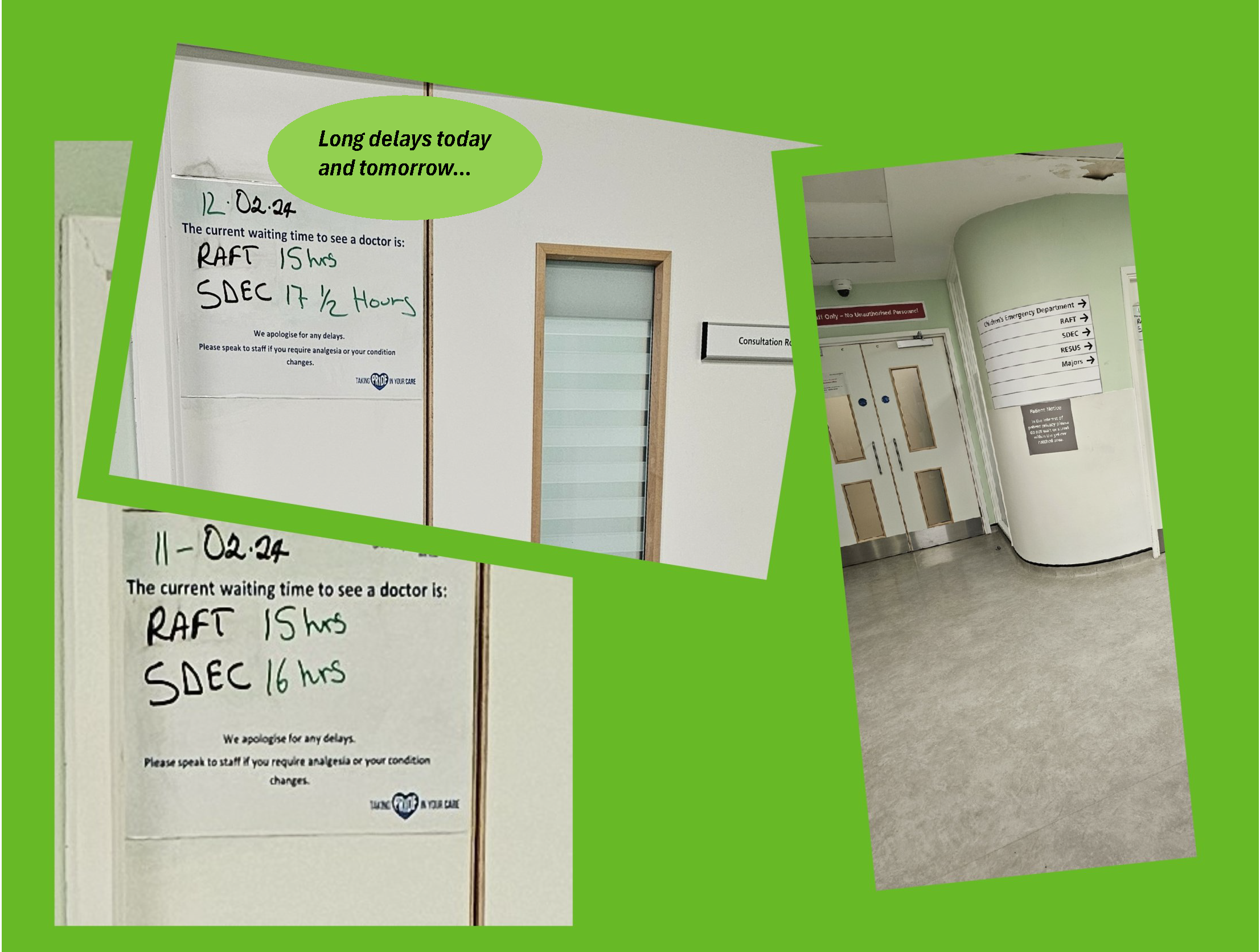
Unacceptable waiting times that distressed many patients at this hospita_,in London. Some had to wait longer than the times on these notices.
EXCLUSIVE INVESTIGATION:
Have the insensitive Tories killed the British National Health Service:
TORMENT OF PAIN, 20-HOUR WAITS, SCREAMING PATIENTS, CHAOS IN UK HOSPITAL ACCIDENT & EMERGENCY
By SHAMLAL PURI in London
Senior Editor – UK and Associate Publisher
Worth Noting:
- Walking into the A&E, I saw five emergency ambulances parked outside. They whizzed in and out of the hospital with their flashing emergency blue beacon lights turned on to warn pedestrians of the emergency vehicle to respond to medical emergencies and bring back seriously ill patients.
- There is a separate entrance for those ferried by ambulances. These patients, mostly in life-and-death situations, were categorised as major emergencies with top priority for immediate treatment.
- Once inside the A&E, a notice warning patients waiting for the delays was displayed. Same Day Emergency Care (SDEC) patients were asked to wait 15 hours before seeing a clinician. These are primarily for less urgent cases.

Once feted as the world’s best State-run chain of hospitals and the envy of the world, the United Kingdom’s National Health Service (NHS) is in the throes of death unless it is resuscitated immediately with a desperately needed financial lifeline and staff recruitment.
Aneurin Bevan, the Labour Party Health Minister in the 1940s, who is popularly credited as the founder of this unique health system, would be turning in his grave at how the Government runs the service so incompetently today.
Today, the NHS, which runs 930 of the UK’s 1,148 hospitals, is starved of funds, depriving people of the best services and patient care for which it was initially established in 1948.
That is the general feeling of the people I met at the Accident and Emergency (A&E) Unit of a hospital in London, where I spent torturous waking hours in the night last week, not as a patient, but to observe the flow of those seeking treatment and their pre-admission sufferings.

What I saw in this hospital happens in most British hospitals undergoing severe crises in 2024.
Once upon a time, patients at NHS hospitals were seen within four hours, but now, the stories of the good old health system can only be narrated to the grandchildren as folklore.
My assignment started around midday on a wintery day. I left that unit 20 hours later, profoundly sympathising with the plight of those I spent the night huddled with patients waiting to be seen by doctors in the Accident and Emergency Unit.
Walking into the A&E, I saw five emergency ambulances parked outside. They whizzed in and out of the hospital with their flashing emergency blue beacon lights turned on to warn pedestrians of the emergency vehicle to respond to medical emergencies and bring back seriously ill patients.
There is a separate entrance for those ferried by ambulances. These patients, mostly in life-and-death situations, were categorised as major emergencies with top priority for immediate treatment.

Once inside the A&E, a notice warning patients waiting for the delays was displayed. Same Day Emergency Care (SDEC) patients were asked to wait 15 hours before seeing a clinician. These are primarily for less urgent cases.
They were assessed, diagnosed, treated and sent home on the same day without having to stay in the hospital overnight,
The second category of patients, who were seen comparatively faster, were in the Rapid Assessments and First Treatment (RAFT) category. They, too, had to wait about 14 hours to be seen by a doctor.
The waiting period was later extended to 17.5 hours for SDEC and 15 hours for RAFT,

Undoubtedly, many patients in pain understandably get nervous when told of the waiting times.
I asked someone in authority if this was normal waiting time. Assuming I was a patient, he said waiting 14 to 17 hours was normal these days.
Staff do not bat an eye when one complains of lengthy delays. They are almost programmed to keep a straight face.
After all, they had not come to a pub waiting to be served their favourite pint. They were in the A&E.
There were eight pre-admission check-in procedures before a consultant could see the patient and weed out those pretending to be ill.
The patient’s name, address, next of kin, and illness details were taken and passed to the medical team to compare with previous medical history.

Then, they are told to wait for health assessments such as blood pressure and diabetic sugar levels carried out by nurses.
After this, the real ordeal started – the long wait for the clinician or the doctor to see the patient. This is where most of the waiting time was wasted.
At any given time, there were over 50 people in the A&E. I observed most of these walk-in patients wearing trainers for comfort, but I did not miss seeing two ladies wearing high heels waiting for the doctors. Perhaps they were in the wrong place or were making a fashion statement!
I anonymously spoke to some of them, and they agreed that the NHS had gone appallingly downhill.
Some patients were in the A&E with their children. I saw two mothers with their toddlers sitting it out in the night.

Undoubtedly, waits of some 15 to 20 hours can have catastrophic consequences for people’s health, particularly the vulnerable and elderly.
All was quiet, and patients were instructed to wait until they were called. The nurses and staff called out only a few names between time gaps. They were the lucky ones treated and discharged. As they left, I saw them joyfully smiling as if they won the National Lottery.
I was in the A&E for nine hours by now. They had no time for me. No one had come to ask me if I was a patient waiting to be seen!
I would have been thrown out if they found I was a journalist.
The night was not short of accidental drama for those still waiting to be seen.
Suddenly, there was a commotion at around 9 pm.
A middle-aged African-Caribbean man who sat in a wheelchair nearby was visibly in pain, shaking his head aggressively. He was ignored.

He suddenly fell off his wheelchair, landing on the floor with a thud, writhing and howling with his hoarse throat.
His wheelchair vanished – an action that I could not understand.
The security men were alerted, and the front desk of the A&E called for help.
It took about 15 minutes for an emergency doctor on duty to arrive with a couple of helpers and security staff to lend a hand.
They stretchered the confused man into the treatment room.

Surprisingly, none of the patients in the packed A&E stepped forward to his aid.
It was dinner time, and those who could move stepped out a few doors away to buy sandwiches, a staple of the British.
I heard someone sitting beside me moan that the hospital had no sandwiches.
I checked out this claim out of curiosity and hunger and, by now, in need of fresh air.
His complaint was not an exaggeration as I found none of the hospital’s several canteens had any sandwiches – they had not been delivered that day.
Three gastronomic adventurers among the patients ordered three pizzas from the High Street Pizza joint, which were delivered.
Other patients gorged on biscuits, chocolates, sweets, soft drinks, coffee, and tea from the hospital canteen to get by the night.
That must have had a telling effect on the sugar levels of diabetic or heart patients waiting for treatment.
It was just past dinner time. The complimentary coffee trolley, courtesy of the hospital, came out for one of its four rounds during the night.
One patient’s relative, waiting to be seen, got a cup of coffee for the elderly lady. She snoozed while drinking and loosened her grip on the beverage cup, sending it on the floor.
The embarrassed relative who had brought the elderly patient the drink quickly darted to the nearby washroom, brought some tissues, and wiped out the spillage from the floor.
Then something peculiar happened. An elderly patient, who was earlier brought in a wheelchair into the A&E and who was in pain, mysteriously vanished—leaving behind his wheelchair.
The nurse assigned to care for him came looking out and was confused. She went into the washroom area, repeatedly calling his name. She gave up and went to look after the next patient under her care.
Then, just the way he had vanished, he reappeared and returned to his wheelchair with chocolates, a bottle of Coca Cola and crisps – his dinner.
The shocking bit of staying for some 20 hours in the A&E was that there were only two doctors on duty – one was allocated for the ambulance admissions, and the other looked after those walking wounded in the A&E where I sat.
This does not imply that no patients were seen; only a few were seen and discharged after treatment, while new ones kept coming in.

By 3 am, the waiting patients were exhausted, and tempers started getting frayed.
Then, one of the male nurses called the roll call of those patients he wanted to see for blood pressure repeats and asked them to return to the waiting room. They were slowly inching towards the doctor’s long-anticipated consultation.
There was no response when the names were called for a second checkup. I thought they were sleeping soundly on the benches, thinking they were in a two-star hotel instead of the A&E.
I counted 12 patients who went AWOL. Frustrated, they had given up on waiting and gone home. They did not have the patience to wait. One of them I spoke with while he was still in the A&E complained that he had been there for the past 13 hours without being seen by the doctors.
I left the A&E 20 hours later at 9.15 the following morning, exhausted by the assignment but ready to face the day at work again!!
I consciously did not take photos of the patients in the A&E as they had the right to have their privacy protected.
The NHS is in the doldrums. There are many such hospitals, like the one I visited, where waiting times are horrendously long, people die in the A&E waiting to be seen, and overworked doctors make serious and fatal clinical errors.
The staff, no doubt, work hard at all hospitals. Observers blame the Government for the current neglect of the NHS.
One man asked, “Why is this government handing out billions of Pounds to Ukraine when this country needs that cash to revive the NHS and public services?”
The warning signs of the collapse of the NHS are there. The Government and its ministers should start taking the NHS seriously.
The NHS crisis is so severe that more than 1.5 million people in the UK have to wait in the A&E for at least 12 hours before being admitted.
Figures released by the opposition Liberal Democrats show that 1,540,945 people waited at least 12 hours before being treated.
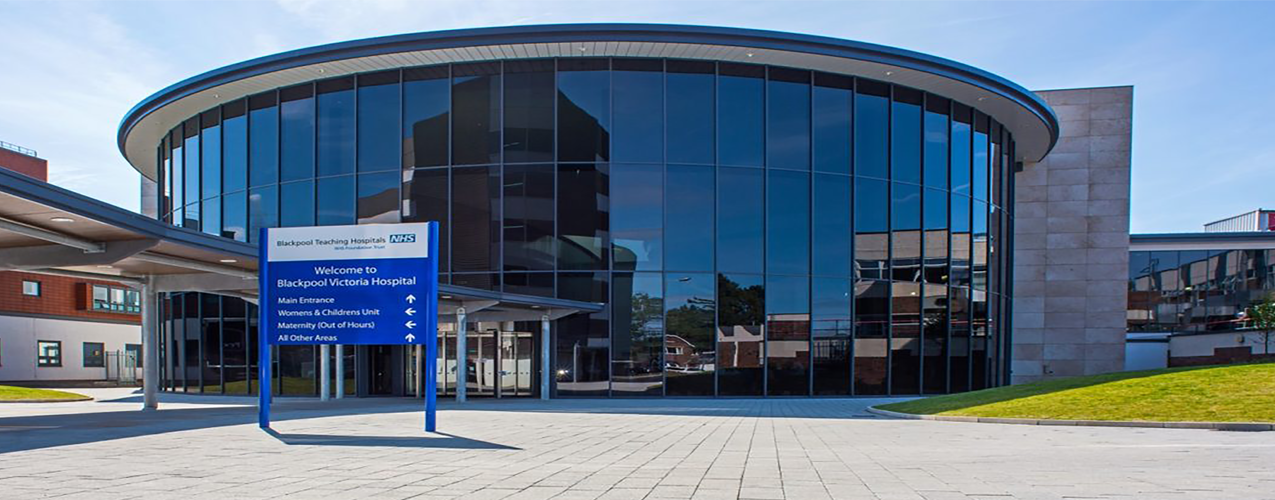
The Blackpool Teaching Hospital ranked among the worst in January, where the delays were 12 hours. Others named and shamed were Shrewsbury and Telford Hospital,
The delays are getting severe daily throughout the country. The wait I witnessed at this hospital in London during my assignment now extended to around 20 hours.
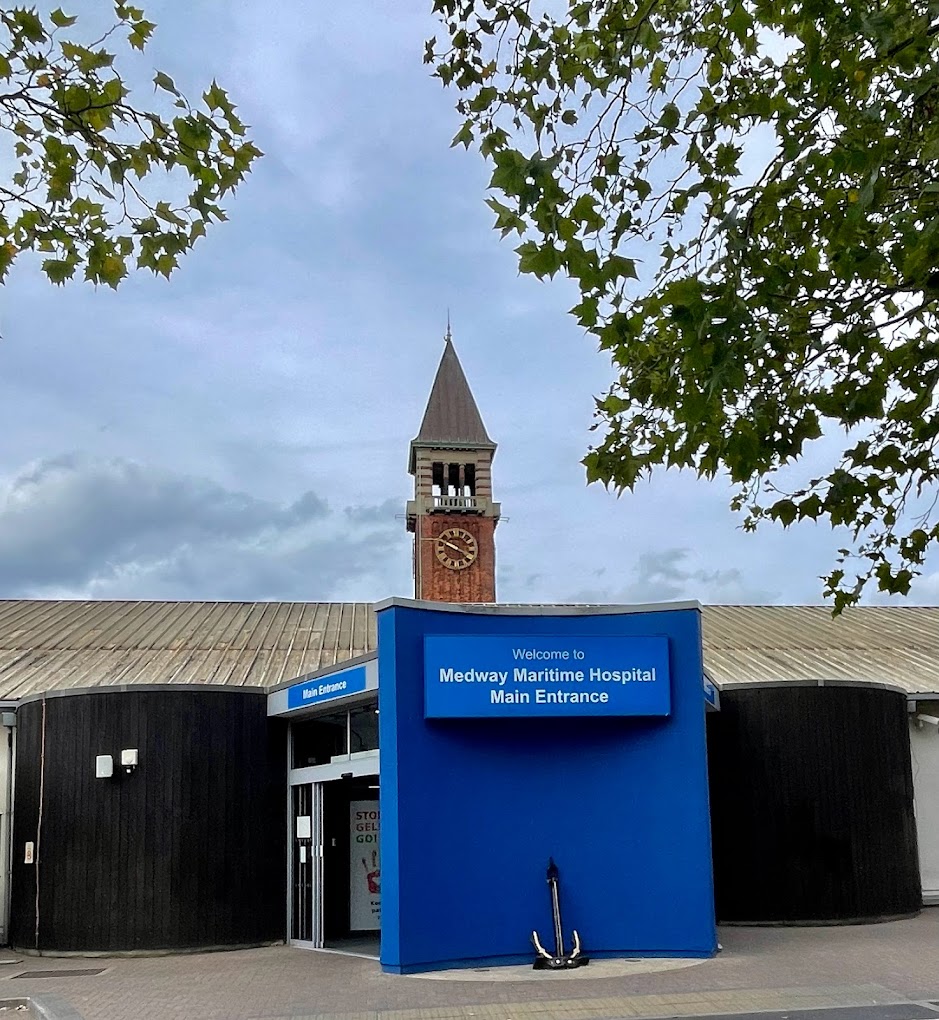
An 89-year-old mother with dementia spent three days in January at the Medway Maritime Hospital foyer in Gillingham, Kent, waiting for a bed. Those dehumanising hours in the bitterly chilly winter must have been tormenting for her.
She was finally admitted and treated for sepsis, acute kidney failure and osteoarthritis in her knee.
The hospital apologised for this elderly woman’s treatment, blaming the delay on a terribly busy period that saw many patients needing admission for treatment.
In another incident in Nottingham, a mother of three aged 39 went to Queen’s Medical Centre in Nottingham in January about a headache, but when her name was called to see a doctor, she was found collapsed under her winter coat.
Nurses observed her three times, but they failed to spot the severity of her condition. When a nurse called her name after a while, there was no response.
The staff assumed she had left the A&E, but she was then found collapsed under her winter coat. She was rushed into intensive care but lost her fight for life.
Seeing just one at its worst proves that the health service is at the lowest rung of the ladder with a shambolic service.
How is the NHS funded? Most public NHS funding comes from general taxation and National Insurance contributions (NICs).
Health experts say a small proportion of funding 1% of the total Department of Health and Social Care budget in 2021/22) comes from patient charges for services such as prescriptions and dental treatment.
What is the NHS budget? The Department of Health and Social Care’s budget spending in 2022/23 was £181.7 billion.
Most of this spending (94.6 per cent, or £171.8 billion) was on day-to-day items such as staff salaries and medicines. The remainder was primarily capital expenditure on long-term fixed assets such as new buildings or equipment.
Of the day-to-day spending, most (£155.1 billion in 2022/23) was allocated to NHS England for spending on health services. The remainder was allocated to central budgets of the Department of Health and Social Care and its other arms-length bodies, such as the UK Health Security Agency and the Office for Health Improvement and Disparities.
The NHS is underfunded by more than £10 billion. Some even put this figure to £30 billion. Overworked doctors and nurses are leaving for better opportunities abroad, where they receive improved benefits and salaries.
Some nurses are paid so poorly that their poverty forces them to turn to food banks to provide meals for their families.
NHS doctors plan to strike again soon as their professional body, the British Medical Association (BMA), is balloting their members for further strike actions. The consequences of this will be severe.
The Sunak government and the Tory governments before him have proved they cannot run the NHS efficiently.
Instead of improving the health services, the ruling Conservatives and Prime Minister Rishi Sunak are working tirelessly to promote themselves for the forthcoming general election.
If things continue as they are now, the UK, once known for medical tourism, will lose overseas private patients seeking treatment.
Years ago, one Middle East patient seeking private treatment from a private hospital in London was charged £180 for a paracetamol tablet. He produced a copy of the hospital’s bill to prove this.
Similar Posts by Shamlal Puri:
- BRITAIN PLEDGES ‘ROCK SOLID’ SUPPORT TO UKRAINE
- KENYAN HOCKEY LEGENDS HONOURED IN LONDON
- Tourism bonanza for the Middle East: FOUR DAYS WHEN THE WORLD CAME UNDER ONE ROOF IN DUBAI
- LONDON PACKAGING WEEK WITH TOP GLOBAL BRANDS ATTRACTS THOUSANDS OF VISITORS
- UK’S NATIONAL HEALTH SERVICE IN BIZARRE COLOUR BAR CRISIS
About the Author