Health and Lifestyle: Misdiagnosis and Ignorance Challenges In Fighting Diabetes In The Country
 The Mt Kenya Times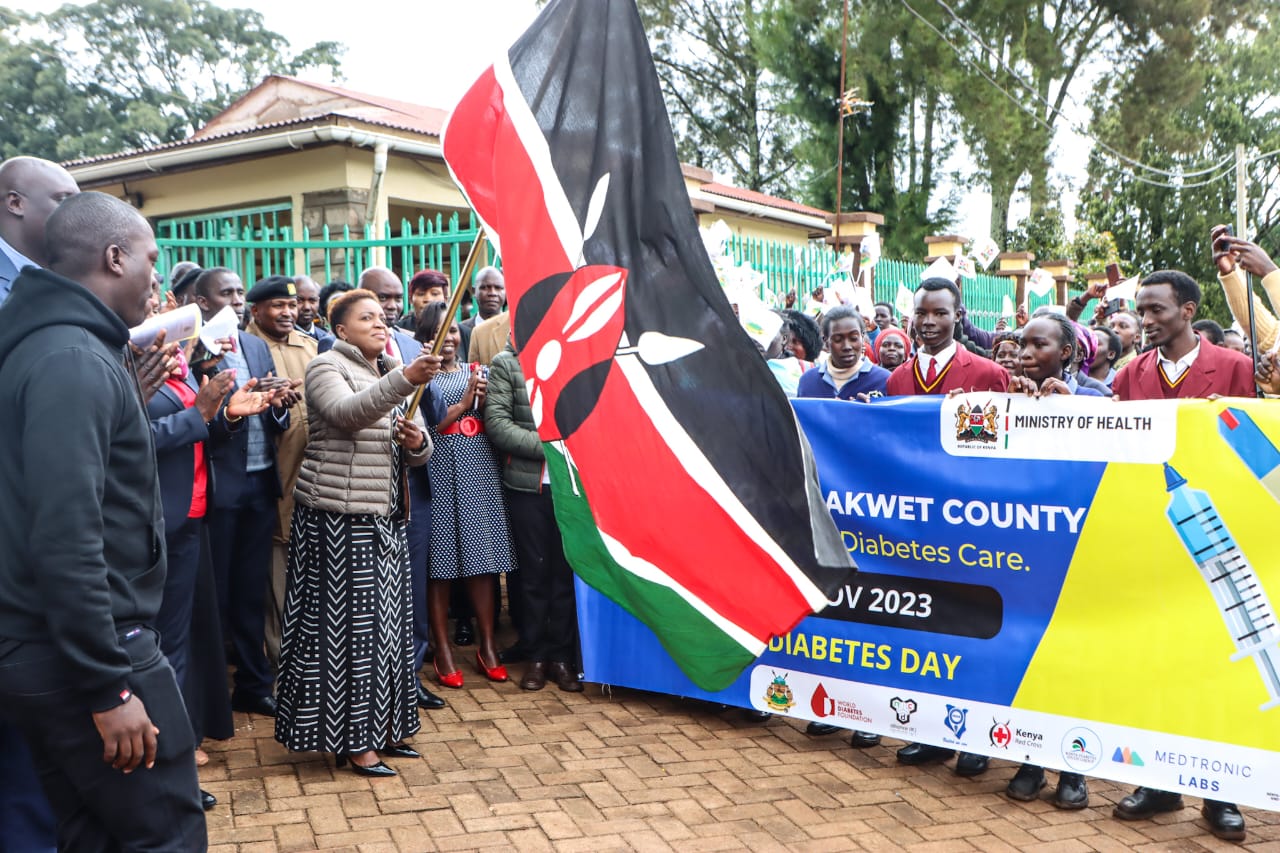
Health CS Susan Nakhumicha launching World Diabetes Day
By Sefu Sabila
Worth Noting:
- According to Mrs. Salama, before actually diagnosis, her daughter was being treated of malaria, despite exhibiting a majority of symptoms indicating diabetes at a nearby clinic at home. The situation persisted, triggering the doctor’s to refer her at Kitale Referral Hospital.
- “After the end of Ramadan last year, she was immediately diagnosed with malaria, the treatment went on, but there was no sign of improvement, and each day was getting worse. I could hear her movements at night visiting the toilet, and constantly drinking water, which sadly explaining to the nurse at the clinic didn’t take it in, and continued with the malaria dosage. Until when the doctor referred us to Kitale Referral.” She explained.

With the world marking world diabetes day on Tuesday, an event that is marked annually on 14th November, it has been sweet sad journey for Mrs. Salama Mwingi, a mother to 11 year old Mwanahalima Ali, who was diagnosed with diabetes type A in June 2022, which is insulin dependant.
Diabetes comes into two forms, with type A common among children and youth, where the pancreas fails to produce insulin, and one has to be injected with insulin. While type B which is common among adults can be managed by diet, tablets and exercise. Diabetes B according to WHO occurs when the body does not produce enough insulin for normal blood functioning, and one might require one could be insulined at times.
The theme for this year being ‘Know your Risk, Know your Response’, due to unawareness among Kenyans, two-thirds of diabetic patients are undiagnosed and this becomes a big challenge to the ministry of health, according to a report by the World Health Organization (WHO)in June this year. The report further states that the prevalence of diabetes in Kenya is at 3.3%, and will be 4.5% by 2025.
“Everyday it makes me sad that my daughter is among the statistics mentioned by the ministry of health on diabetes. It has not been an easy journey at all. Sometimes we feel like it’s ending but with the guide of her doctor, I’m managing her well, since she’s has never been hospitalized since last when she was confirmed to be diabetic on June last year. “Mrs. Salama said.

According to endocrinologists, many symptoms of diabetes are ignored, while others opt to take traditional herbs which later worsens the situation when they start treatment. However, if diabetes is detected early, treatment can decrease the chance of developing adverse complications brought about by diabetes.
According to Mrs. Salama, before actually diagnosis, her daughter was being treated of malaria, despite exhibiting a majority of symptoms indicating diabetes at a nearby clinic at home. The situation persisted, triggering the doctor’s to refer her at Kitale Referral Hospital.
“After the end of Ramadan last year, she was immediately diagnosed with malaria, the treatment went on, but there was no sign of improvement, and each day was getting worse. I could hear her movements at night visiting the toilet, and constantly drinking water, which sadly explaining to the nurse at the clinic didn’t take it in, and continued with the malaria dosage. Until when the doctor referred us to Kitale Referral.” She explained.
According to WHO, common symptoms of diabetes include, frequent urination, extreme hunger, increased fatigue, excessive thirst and irritability. Additionally, adverse effects could lead to blurred vision, stroke, amputation, kidney failure and heart related conditions.
Misdiagnosis and ignorance among challenges affecting the health sector, not only in diabetes but across. Mrs Salama says her daughter almost lost her life, as for two weeks she was getting treatment for malaria whereas her blood sugars were extremely high.
“When we arrived at Kitale Referral Hospital, the diagnosis of malaria was negative and the doctor asked for blood sugar test, where her levels were not reading at the machine, only indicating red which is dangerous. Being taken to the emergency unit was the worst scenario, my daughter was extremely weak”. She said.
After stabilizating her, she has later been homely managed with insulin and diet, which she has since seen improvement. Mrs. Salama said she has been following promptly the prescriptions by the doctor and AMPATH, who keep constant check and get updates on the sugar levels of Mwanahalima. However, she says it has not been an easy task, as being a child, sometimes it’s hard to control her, which means denying her some of her favorite snacks and ensuring she eats just enough not to trigger the sugar levels.
“My daughter is easily rritated, this is not good due to her condition. It becomes hard, denying her to have soda, cookies. Sometimes I feel sad that I have to make her feel like the rest by avoiding to buy for the rest of her siblings, it has not been easy. While at school it’s difficult because some of her friends don’t understand and offer sweets, biscuits and cakes, which will raise the sugar levels, is quite hard. But through the guidance of her doctors and AMPATH, the journey has been almost smooth; we have managed to keep the sugar levels at a constant level. “She explained.
Marking the day with the residents of Elegeyo Marakwet, Health Cabinet Secretary Susan Nakhumicha said Only 40% of those estimated to have diabetes are currently undergoing treatment; increased awareness can remedy that situation. The CS further said that together with the ministry of health, the country is working to ensure Kenyans lead a healthy lifestyle.
“The ministry of health has made significant strides towards provision of quality healthcare including enhanced access to diabetes care.I underscore the importance of balanced diet, regular physical activities as well as avoiding tobacco and excessive consumption of alcohol.”The CS said.
The CS was speaking during the launch of a pioneering project, integrating diabetes and hypertension into primary healthcare at the Iten County Referral Hospital during the World Diabetes Day. The initiative which is supported by the World Diabetes Foundation, has spanned 35 counties. The Ministry’s efforts include establishing six diabetes centers, implementing clinical guidelines, and providing training for healthcare providers. Community Health Promoters equipped with screening tools enhance grassroots-level diabetes detection, aligning with UHC principles.
Avoiding stress, eating regular portion of meals, taking medication as prescribed by the endocrinologist, exercise and drinking plenty of water, are among home remedies to advised to preventing the risks of diabetes. Mrs Salama says since her daughter diagnosis with diabetes, she learnt the benefits of balanced diet and has been a boost for her daughter.
Similar Posts by The Mt Kenya Times:
- Mt Kenya Times ePAPER August 29-30, 2026
- Old Mutual swings to KSh882M profit as insurance arm ends losing run
- US pumps KSh930M into Kenya police modernisation
- Kalonzo comes to the Coast with a simple, devastating message: You have been betrayed
- Tear gas, shuttered shops and a government out of touch: The KRA tax revolt that could define Kenya’s road to 2027
About the Author