How women’s savings group became a lifeline for diabetes patients
 The Mt Kenya Times
By Elizabeth Angira
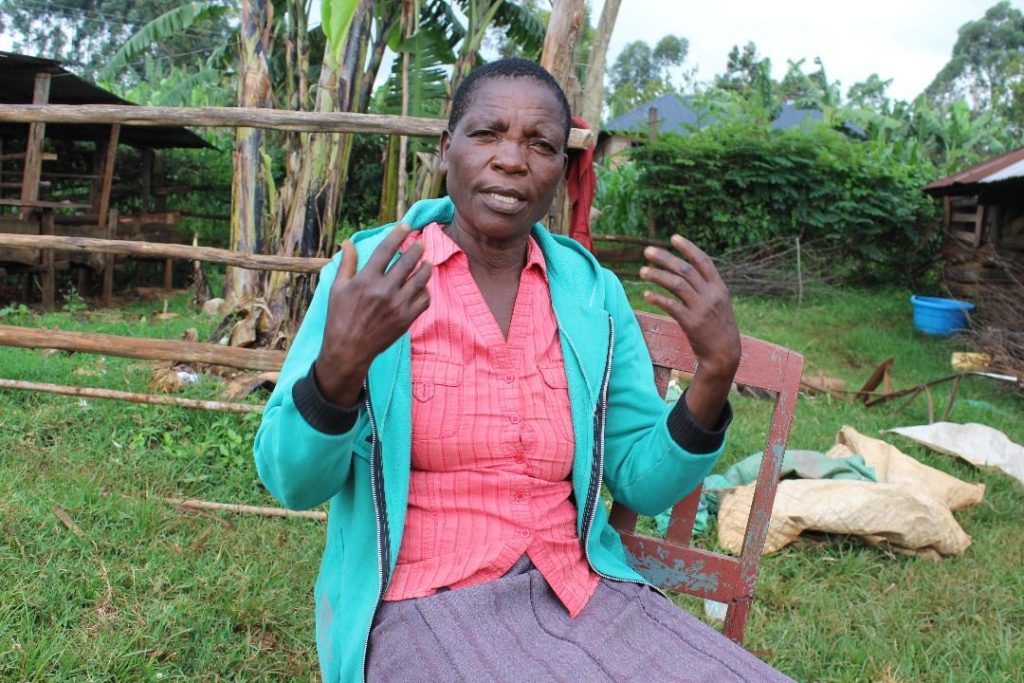
Rose Bwari, a 60-year-old smallholder farmer in Bomuri Village in Kisii County, was looking forward to ageing gracefully.
Then, in 2020, she began experiencing severe headaches.
“I started feeling weak, and things appeared blurry. I feared I was losing my sight,” she recalls.
 At the nearby Ogembo Level 4 Hospital, she was diagnosed with hypertension and put on treatment, but she did not feel better.
Later, a relative took her to Mbagathi County Referral Hospital in Nairobi, where she was diagnosed with diabetes.
“The news shocked me. I always thought diabetes was a disease for rich people, but I learned it can affect anyone,” she recalls.
Diabetes is a chronic metabolic disease characterised by elevated blood sugar. Type 1 diabetes occurs when the pancreas produces little or no insulin, while type 2 diabetes, the most common, occurs when the body becomes resistant to insulin or does not make enough insulin. The disease is a leading cause of heart disease, kidney failure, blindness, and lower-limb amputation.
Living with diabetes has been a daily struggle for Bwari.
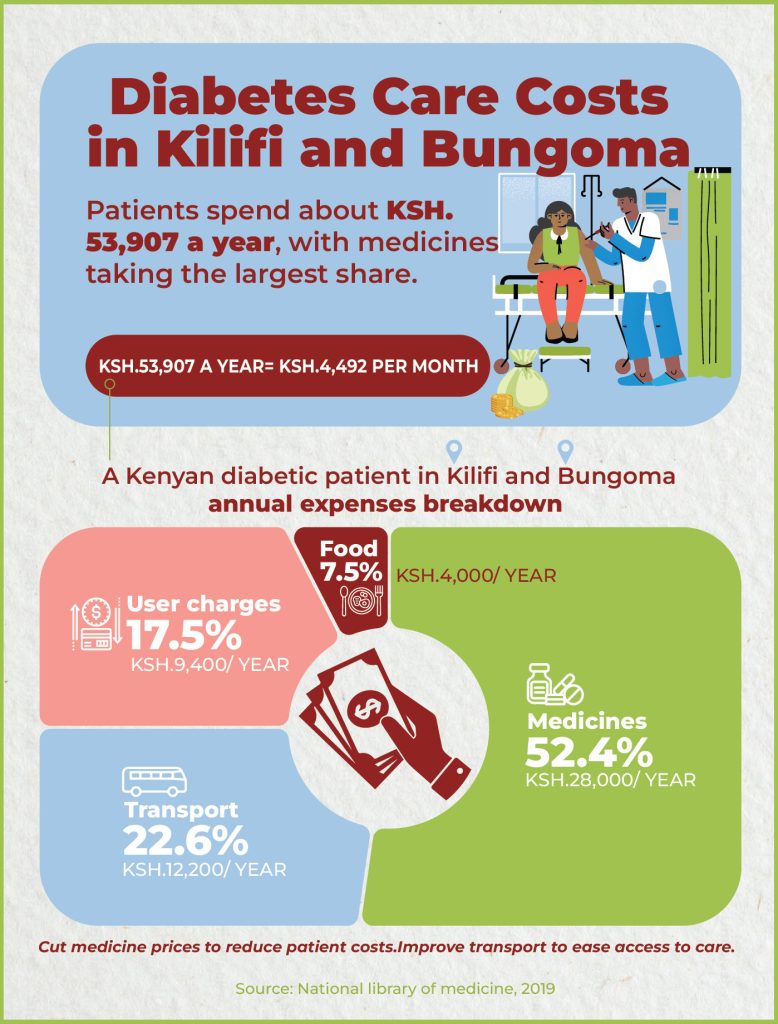
“The cost of medicine and the special diet is quite high, especially for families with limited resources,” she says. “One tablet costs about Sh100, which adds up to Sh3,000 a month. That is before you even think about food.”
Growing diabetes burden
Bwari’s experience reflects a challenge facing thousands of patients, not just in Kisii and Nyamira counties but across the country.
The International Diabetes Federation estimates that more than 800,000 Kenyans live with diabetes, while data compiled by Gendered Health Pathways, using STEPS surveys from the World Health Organisation and other international datasets, places prevalence among adults at 5.8 per cent.
The Ministry of Health says non-communicable diseases (NCDs), including diabetes, account for more than 50 per cent of hospital admissions and 39 per cent of deaths in Kenya.
Yet, only 20 per cent of Kenyans living with diabetes are enrolled in comprehensive care programmes, according to figures shared by Dr Ouma Oluga, Principal Secretary for Medical Services, at the 10th Annual Scientific Conference of the Kenya Diabetes Study Group (KDSG) in 2025.
“We see new cases every week,” says Moses Kibegwa, a clinical officer at the Nyamira Level Five Hospital. “But the tragedy is that most people come when it is too late, when complications like kidney failure or neuropathy have already set in.”
Kibegwa says stockouts of insulin, high medication costs and poor follow-up systems undermine the management of the disease.
“Patients are often told to buy insulin at private pharmacies, where prices are unaffordable for most. Others ration their doses or skip treatment entirely,” he says.
Amid these challenges, communities have found ways to support each other and navigate gaps in the formal healthcare system.
For Bwari, help came through Kanyimbo Community Unity, a women’s savings group in Kisii County.
What began in 2020 as a table-banking initiative with 11 women members to pool savings and share investment information has become a lifeline for people living with diabetes. Four men, who initially accompanied their wives to some of the meetings, have since joined the group.
“A neighbour, who is also diabetic, introduced me to the group,” says Bwari.
Today, members save money together, support each other during medical emergencies, and share practical advice on managing diabetes. Members learn to monitor blood sugar levels, plan balanced meals, and remind each other to take medication
“At least now I can buy food and medicine using the small amounts we save,” says Bwari. “I no longer have to borrow tablets from neighbours.”
More than a savings group
The turning point for Kanyimbo Community Unity came five years ago when three of its members were diagnosed with diabetes within months of each other. The news shook the group.
“We realised it was no longer about just saving money; it was about saving lives,” says Beatrice Moraa, the chairperson.
Moraa proposed that part of their pooled savings be set aside as a health emergency fund to cushion members needing insulin, transport to hospitals or specialised diets.
“Each member contributes Sh50 every Tuesday to this health fund in addition to their regular savings,” she explains.
The money helps members buy insulin, access treatment and cover transport costs to health facilities.
Soon after, health education and support became a part of their regular meetings.
“We realised we were all facing the same struggles revolving around food choices, hospital costs and loneliness,” Moraa explains. “By talking about it, we found strength.”
Mary Nyaboke, who initially joined the group to borrow money for her vegetable stall, says the support has been crucial.
“It has saved my life. When I could not afford insulin, the group stepped in. When I was too weak to work, they visited and supported me,” says the 58-year-old.
The emotional impact of diabetes can be just as devastating as its physical and financial toll. Beyond financial support, members have created a network of accountability and encouragement that is missing from formal healthcare.
Peer support
For 46-year-old Monicah Gesare, the group became a source of comfort after her husband died from diabetes-related complications.
“I used to cry every night. I thought I was cursed,” she says, “But when I joined the group, I realised I was not alone.”
Gesare now leads a subgroup focused on nutrition education. Every month, members prepare sample meals of arrowroot, sweet potatoes, millet porridge, and indigenous vegetables and share recipes for healthy, affordable diets.
Dennis Bosire, a nutritionist who volunteers with that group, says the members have learnt that traditional foods can manage diabetes effectively.
“By focusing on locally available foods, they are debunking myths that healthy eating is expensive,” he explains.
He adds that peer counselling and support help members manage depression and anxiety, which are common among diabetes patients but are often overlooked in rural healthcare.
Support for caregivers
The challenges of diabetes extend beyond those living with the condition, and caregivers also find support through the group.
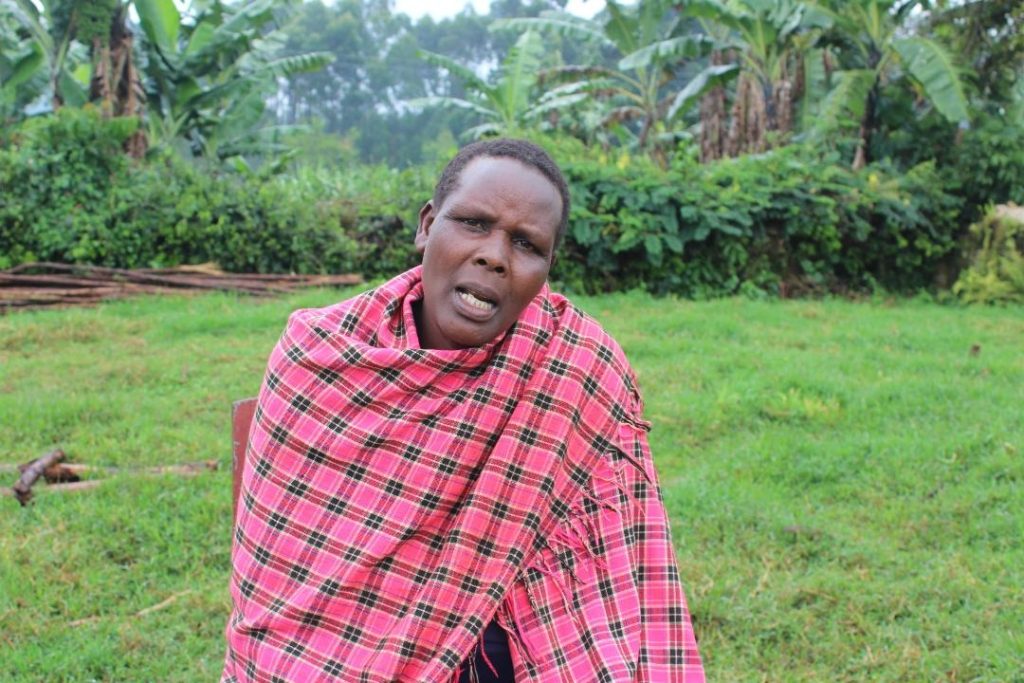
Rachel Ondeyo, the wife and caregiver of Robert, one of the men in the group, says caring for someone with diabetes is emotionally and financially draining. Her husband joined the group after learning it offered health education in addition to savings.
Getting the recommended food is challenging, and helping patients cope requires patience.
“You must follow their diet strictly and know how to calm them down when their sugar levels fluctuate,” she says.
Ondeyo says the group and community health promoters have improved their knowledge and confidence.
“They have taught us how to handle the condition, what to watch out for, and how to act in emergencies,” she says.
She appeals to the government to provide free or subsidised diabetes medication.
“The burden is too heavy for many families,” she says. “Imagine buying special food, taking care of children, and still struggling to buy drugs. It is overwhelming.”
Bridging the gap
The groups work closely with community health promoters (CHPs), who link members to formal healthcare.
Celine Nyasuguta, a CHP in Kisii, reports that among the groups she works with, the number of hospitalisations due to diabetes emergencies has dropped significantly.
Before, some women used herbs or stopped treatment when they felt better.
“Through these groups, they now understand their condition and follow up regularly,” she says.
“We track members’ sugar levels monthly, encourage clinic visits, and even help with referrals,” she adds. “It is community health in action.”
Peter Onchiri, another CHP, says members report improved consistency in insulin use and diet management.
He attributes this to health education and savings, which cover some medical costs and reduce financial stress.
“I used to skip medication when business was low, but now I have not missed my insulin in a year since the group supports me when I am short of finances,” says Nyaboke.
The success of these networks has drawn attention from local clinics, which now collaborate with the groups to conduct screening and awareness campaigns during market days.
When the system fails
Beneath these successes lies a troubling reality: the groups are filling a gap left by the health system.
“Insulin should be free or subsidised in public hospitals,” says Dr Eunice Nyorera, Deputy Coordinator for Cancer and Non-Communicable Diseases (NCDs) in Kisii County. “But because of limited funding and weak supply chains, facilities often run out.”
Dr Nyorera admits that while the county has developed an NCD strategy, its implementation has been slow.
“We need better data, dedicated NCD budgets, and consistent drug supply,” she says. “Instead, diabetes care is competing for attention with other priorities like malaria and maternal health.”
Similarly, the Kenya NCD Alliance notes that despite the existence of a National Strategic Plan for the Control and Prevention of NCDs (2021–2026), implementation at the county level remains weak.
Many counties lack adequate funding for screening, awareness campaigns, and specialised personnel.
“These women’s groups are doing what the system should be doing,” says Dr Joseph Oduor, a public health advocate with the alliance. “They are bridging the last mile, but they should not be doing it alone.”
Choosing between food and medicine
One of the toughest choices facing patients in rural areas is the trade-off between food and insulin.
“Most patients know what they should eat, but they simply cannot afford it,” explains Bosire. “You cannot tell someone to eat a balanced meal when they barely afford ugali.”
For this reason, the savings groups have ventured into small-scale income-generating projects, such as poultry rearing, vegetable gardens, and soap making, to raise extra income for members. The profits go into their collective fund, helping members buy food and medication.
The funds, however, are often insufficient to meet the medical needs of all members, especially during emergencies.
“Sometimes, two or three members fall sick at once,” Moraa says. “Our kitty runs dry fast. We do harambees (fundraisers) to help, but we wish the government would recognise and support us.”
Call for change
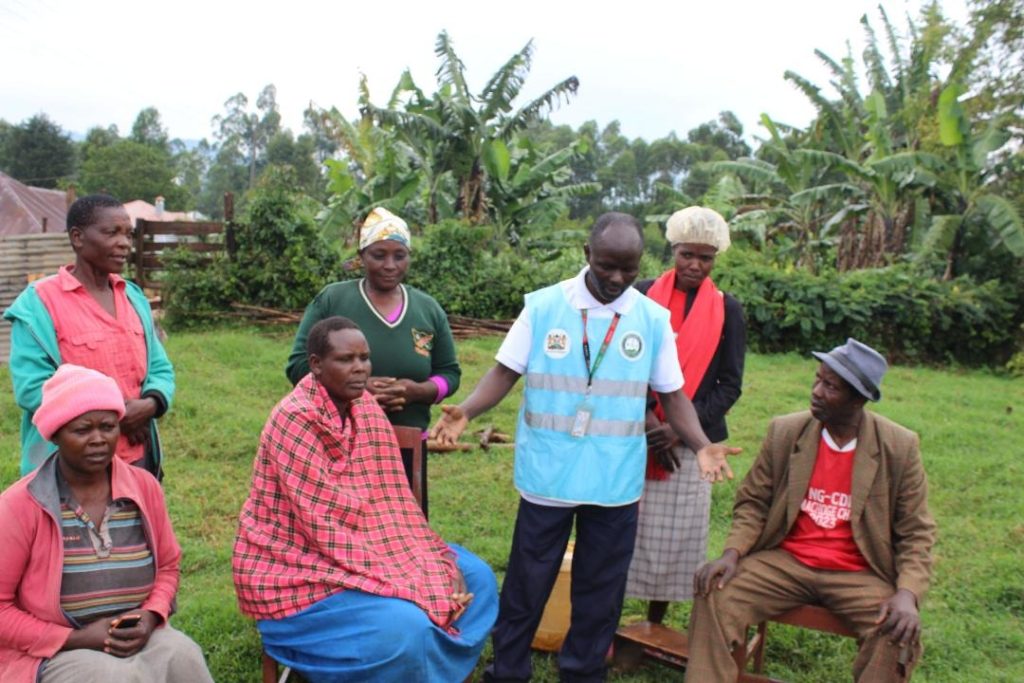
Dr Julie Nyamao, a physician in Kisii County, says early detection remains one of the biggest challenges in rural areas.
“Many patients dismiss early warning signs such as frequent urination, constant thirst, fatigue, and unexplained weight loss,” she explains. “By the time they seek care, complications like vision problems, nerve damage, or high blood pressure have already set in.”
She stresses the need for continuous public health education in villages, churches, and local markets to help communities recognise symptoms early and seek prompt treatment.
“Diabetes should never be a silent killer,” she says. “When communities understand the signs, lives can be saved.”
Dr Nyamao emphasises the importance of partnerships between health workers and community groups.
“What we are seeing here is a powerful model where community and health systems complement each other,” she says. “Health workers offer screening and medical guidance, while support groups provide emotional, nutritional, and financial safety nets.”
She says that if counties invest in training more community health promoters, subsidising testing tools like glucometers, and ensuring a stable supply of essential diabetes medication, Kenya could significantly reduce long-term complications.
“Prevention and consistent management are far cheaper than treating advanced diabetes,” she notes.
New lease of life
For Nyaboke, who once faced the darkness of despair, every meeting renews her strength.
“Before, I was just surviving,” she says, checking her blood sugar with a glucometer. “Now, I am living again with purpose and with people who care.”
As she tucks away her insulin pen and counts her savings, her eyes glow.
The women beside her nod, knowing that they are more than a group. They are a community of survivors, rewriting the story of healthcare, one meeting at a time.
This article was produced with the support of the Africa Women’s Journalism Project (AWJP).
Similar Posts by The Mt Kenya Times:
- Olise seals France win over Belgium in Nations League thriller
- Fatuma faces Senate scrutiny in PSC commissioner bid
- Birik: Lokichar first oil on course for December
- Eng Mwangi: Dangote refinery could reshape Kenya’s industry
- Mt Kenya Times ePAPER September 29, 2026
About the Author