Judiciaries’ Role in Harmonizing Environmental Protection and Economic Development
 The Mt Kenya Times
By Jerameel Kevins Owuor Odhiambo
Worth Noting:
- In the realm of case law, the Indian Supreme Court’s landmark decision in Vellore Citizens’ Welfare Forum v. Union of India (1996) stands as a beacon of jurisprudence on sustainable development. The court emphasized the need for a balanced approach, stating that “sustainable development means the development that meets the needs of the present generation without compromising the ability of future generations to meet their own needs.”
- The precautionary principle, a cornerstone of environmental law, provides a framework for judiciaries to address potential environmental risks proactively. This principle, as articulated in the Rio Declaration on Environment and Development (1992), calls for preventive actions to be taken even in the absence of scientific certainty when faced with threats of serious or irreversible environmental harm.
 As nations and societies progress especially on social front, the scales of environmental preservation and economic growth often find themselves in a delicate tug-of-war. On one end, the urgent need to safeguard our planet’s finite resources and fragile ecosystems tugs with unwavering resolve. On the other, the allure of economic prosperity, fueled by development and industrialization, exerts an equally compelling pull. It is within this intricate dance that the judiciaries of nations emerge as the ultimate arbiters, tasked with striking a harmonious balance between these two seemingly conflicting yet inextricably linked imperatives.
The principle of sustainable development, enshrined in various international treaties and national legislations, serves as a guiding light for judiciaries in navigating this complex terrain. This principle recognizes the inherent interdependence between economic development, social progress, and environmental protection, calling for a holistic approach that meets the needs of the present without compromising the ability of future generations to meet their own needs.
In the realm of case law, the Indian Supreme Court’s landmark decision in Vellore Citizens’ Welfare Forum v. Union of India (1996) stands as a beacon of jurisprudence on sustainable development. The court emphasized the need for a balanced approach, stating that “sustainable development means the development that meets the needs of the present generation without compromising the ability of future generations to meet their own needs.”
The precautionary principle, a cornerstone of environmental law, provides a framework for judiciaries to address potential environmental risks proactively. This principle, as articulated in the Rio Declaration on Environment and Development (1992), calls for preventive actions to be taken even in the absence of scientific certainty when faced with threats of serious or irreversible environmental harm.
The South African Constitutional Court, in the landmark case of Fuel Retailers Association of Southern Africa v. Director-General: Environmental Management, Department of Agriculture, Conservation and Environment, Mpumalanga Province (2007), upheld the precautionary principle, emphasizing the need to err on the side of caution in matters of environmental protection.
Environmental Impact Assessments (EIAs) have emerged as a crucial tool for judiciaries to evaluate the potential environmental consequences of proposed development projects. By mandating comprehensive assessments and public participation processes, judiciaries can ensure that economic activities do not come at an unacceptable cost to the environment.
The Kenyan judiciary has played a pivotal role in enforcing the provisions of the Environmental Management and Co-ordination Act (EMCA) of 1999, which requires EIAs for proposed development projects. In the case of Mui Coal Basin Local Community & 15 others v. Permanent Secretary Ministry of Energy & 17 others (2015), the High Court emphasized the importance of meaningful public participation and access to information in the EIA process.
Judiciaries can also leverage the polluter pays principle, which holds entities responsible for bearing the costs of preventing, controlling, and remedying environmental damage caused by their activities. This principle not only incentivizes sustainable practices but also ensures that the economic benefits of development do not come at the expense of environmental degradation.
The European Court of Justice, in the case of Essent Milieu Holding BV v. Provincie Limburg (2008), upheld the polluter pays principle, ruling that environmental protection costs should be borne by the polluter rather than the public at large.
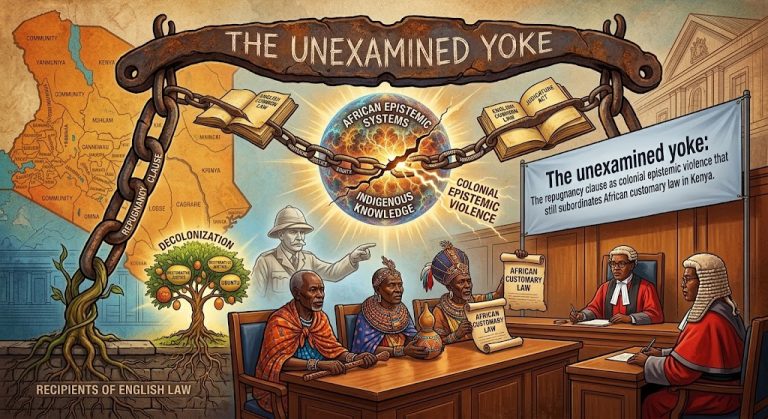
Furthermore, judiciaries can play a crucial role in recognizing and protecting the rights of indigenous communities and their traditional knowledge in environmental management. By acknowledging the inherent link between these communities and their natural environments, judiciaries can ensure that economic development does not come at the cost of cultural and ecological integrity.
The Inter-American Court of Human Rights’ ruling in the case of Kaliña and Lokono Peoples v. Suriname (2015) marked a significant milestone in the recognition of indigenous rights within international human rights law. In this landmark decision, the Court acknowledged the Kaliña and Lokono peoples’ inherent rights to their ancestral lands, highlighting the intrinsic connection between indigenous communities and their territories. This connection is not merely a matter of property ownership but is integral to the cultural, spiritual, and social fabric of these communities. The Court’s ruling underscored that the right to collective ownership of land and resources is essential for the preservation of indigenous peoples’ traditional ways of life, which encompass unique systems of governance, cultural practices, and subsistence activities. By recognizing these rights, the Court affirmed that states must take proactive measures to protect indigenous territories from external threats and encroachments, ensuring that any development projects or economic activities on these lands are conducted in consultation with and with the consent of the indigenous communities involved.
Furthermore, the Kaliña and Lokono decision set a critical precedent for balancing economic interests with the rights of indigenous peoples. The Court emphasized that while states have the right to pursue economic development, such pursuits must not come at the expense of violating indigenous peoples’ rights. It established that economic projects, such as mining, logging, or infrastructure development, must be subjected to rigorous assessments to ensure they do not harm the environment or infringe upon the cultural and subsistence needs of indigenous communities. Additionally, the decision reinforced the principle of free, prior, and informed consent (FPIC), mandating that states must obtain the consent of indigenous peoples before initiating any projects on their lands. This requirement aims to empower indigenous communities, allowing them to have a decisive role in the management and use of their territories. By setting these standards, the Inter-American Court’s ruling in the Kaliña and Lokono case serves as a guiding framework for other jurisdictions, promoting a more equitable and just approach to development that respects and protects the rights of indigenous peoples.
While the path to achieving a harmonious balance between environmental protection and economic development is fraught with complexities, the role of judiciaries remains paramount. By interpreting and applying principles of sustainable development, precautionary approach, environmental impact assessments, polluter pays, and indigenous rights, judiciaries can navigate this intricate landscape with wisdom and foresight. In doing so, they can ensure that the pursuit of economic prosperity does not come at an irreversible cost to our planet’s natural heritage, paving the way for a future where development and environmental stewardship coexist in a symbiotic embrace.
The writer is a legal researcher and lawyer.
Similar Posts by The Mt Kenya Times:
- Mt Kenya Times ePAPER September 22, 2026
- Ruto offers Kenya as test case on African risk
- Gachagua demands fuel deal accountability, accuses Ruto of deception
- Azimio is dead. Long live the Ukombozi Alliance
- Court frees former presidents to play politics
About the Author