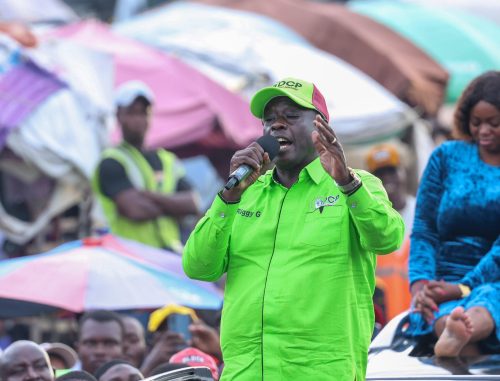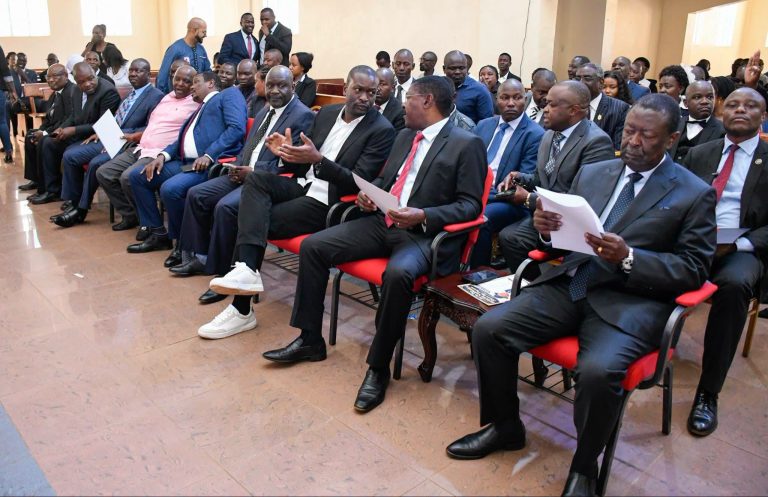
Wiper Patriotic Front leader Kalonzo Musyoka and Democratic Party leader Justin Muturi
The opposition takes its most audacious gamble yet — a joint rally deep in the heartland of their own coalition partner
By Kamande Muchiri
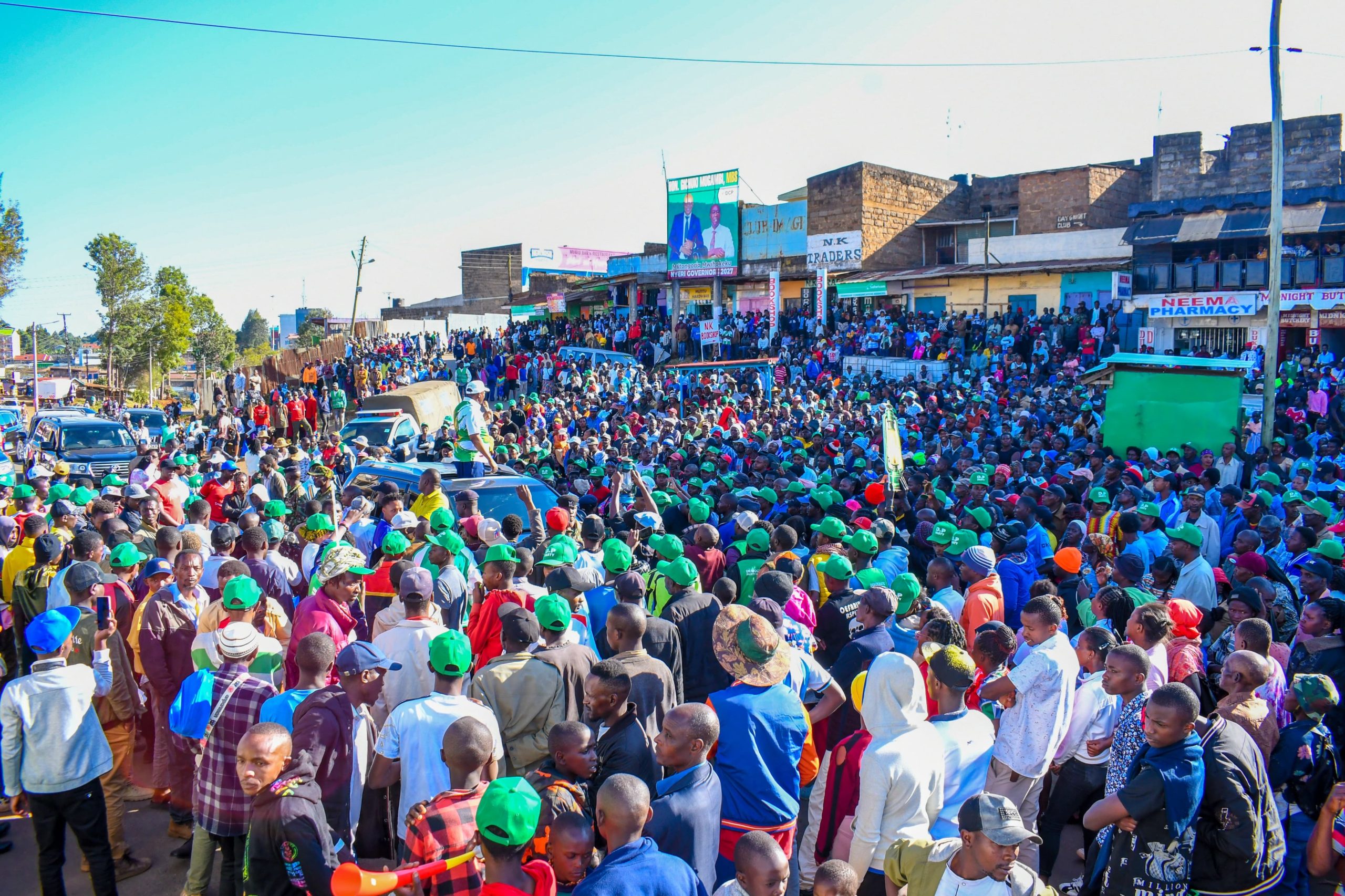
Wiper Patriotic Front leader Kalonzo Musyoka and Democratic Party leader Justin Muturi led a United Alternative Government delegation into Othaya, Nyeri County, yesterday, opening with a church service at St Paul’s ACK Church before addressing a public rally in the most symbolically loaded opposition visit to Central Kenya since the 2022 election.
The choice of Othaya was not accidental. This is the constituency that produced Rigathi Gachagua — the impeached former Deputy President, Democracy for the Citizens Party leader, and the man whose political network is supposed to be the United Alternative Government’s bridge into the Mount Kenya vote. By marching into Gachagua’s home turf while their coalition partner was thousands of miles away addressing Kenyans in Spokane, Washington, Kalonzo and Muturi were making a point that transcends courtesy. They were demonstrating that the opposition’s appeal in Central Kenya does not begin and end with one man, and that the coalition intends to own the ground, not merely borrow it.
The August 2027 general election, constitutionally fixed for the second Tuesday of that month, is eleven months away. In Kenyan political terms, that is an eternity and a heartbeat simultaneously — long enough for alliances to fracture and reform several times over, short enough that every rally now carries strategic consequence. The question that defines this pre-election period is not whether the opposition will challenge President William Ruto. It is whether the opposition can agree on who will lead that challenge, and whether whoever does can actually win.
Kalonzo, 72, is Kenya’s most experienced political bridesmaid. He served as Vice President under Mwai Kibaki from 2008 to 2013, has run for president three times without success, and has spent much of the past decade navigating the treacherous waters of opposition coalition politics with a combination of patience, tactical calculation, and a stubbornness that his allies admire and his opponents have consistently underestimated. He arrived in Othaya yesterday not as a supplicant seeking Central Kenya’s blessing, but as a man who believes the mathematics of 2027 are finally converging in his favour.
The coalition he is part of — the United Alternative Government — brings together a remarkable assembly of former rivals and allies: Gachagua’s DCP, Muturi’s Democratic Party, Martha Karua’s People’s Liberation Party, Eugene Wamalwa’s Democratic Action Party of Kenya, Fred Matiang’i’s Jubilee faction, and former Chief Justice David Maraga. Each brings a constituency. None, individually, is sufficient. The coalition’s collective wager is that the sum of these parts can produce a winning total against a sitting president who controls the state machinery, the treasury, and the patronage networks that have historically decided Kenyan elections.
Muturi’s role in Othaya yesterday was more than ceremonial. In July, speaking at a Nairobi church, he declared that if the presidential ticket were not to be his, he would back “my brother Dr Stephen Kalonzo Musyoka.” Kalonzo acknowledged the endorsement while carefully maintaining that he would equally support Muturi if the coalition coalesced around him. That mutual deference — each man publicly deferring to the other — is either a sign of political maturity or a choreographed holding pattern designed to keep both options alive while the coalition’s larger calculations are resolved. Probably both.
What is clear is that Muturi brings something specific to the Othaya visit. As the former Speaker of the National Assembly and former Attorney General, he carries institutional credibility that complements Kalonzo’s longevity. And in a Central Kenya electorate where anger at Gachagua’s impeachment remains raw, his presence alongside Kalonzo signals that the coalition’s legal and constitutional credentials are robust enough to be trusted with the country’s governance.
Kalonzo did not shy away from the gravity of the moment. Addressing the rally, he reached for both scripture and ancestral wisdom to frame his message. “To the Ruto regime, hear the words written on the wall long before we arrived at this hour: Mene, Mene, Tekel, Upharsin,” he said, invoking the biblical passage from the Book of Daniel — the divine warning to a king whose days were numbered. “Your days are numbered, and Kenya will not wait for you to count them.” He then turned to the Gikuyu proverb that resonated with particular force in a Nyeri crowd: “Gũtirĩ ũtukũ ũtakĩa — there is no night, however long, that does not end in dawn. Kenya’s night has been long. But dawn is coming, and together we shall rebuild Kenya.”
The deployment of a Gikuyu proverb by a Kamba politician on the soil of the Mount Kenya heartland was deliberate and deft. It said: I speak your language, literally and figuratively. I understand your culture. I am not here as an outsider extracting votes — I am here as a partner in a shared national project.
The opposition’s strategic problem in Central Kenya is well-documented. Ruto won the 2022 election partly on the strength of a sweeping Mount Kenya vote, delivered through his alliance with Gachagua. Gachagua’s subsequent impeachment in October 2024 fractured that arrangement and created a political opening that the opposition has been attempting to exploit ever since. But exploiting it requires more than rallying DCP supporters. It requires convincing ordinary Mount Kenya voters — many of whom have voted for Ruto twice and have institutional and business relationships with the Kenya Kwanza administration — that the opposition offers a credible alternative, not merely a vehicle for the personal grievances of an impeached deputy president.
Yesterday’s Othaya visit is the opposition’s answer to that challenge: show up, build relationships, make the constitutional and economic argument, and let the crowds draw their own conclusions. Senate Majority Leader Aaron Cheruiyot recently questioned whether Mount Kenya would back a Sifuna-led ticket. Othaya’s crowds yesterday added a quieter but equally significant answer of their own.
Eleven months remain. The ticket question is unresolved. The coalition is large, unwieldy, and held together by the shared conviction that Ruto must be a one-term president. Whether that conviction proves sufficient glue for what lies ahead will be answered not in Spokane or Othaya, but at the ballot box on 10 August 2027.
Similar Posts by The Mt Kenya Times:
- Tax relief for Kenyans: Will more money in our pockets make life easier?
- Poisoned bottle: Are we drinking ourselves into early graves?
- How Kenya and South Africa constitutionalized concentration while preaching the gospel of the disadvantaged
- Discipline begins at home
- Onana escapes serious injury in three-car crash
About the Author