Kenya breaks new ground as landmark deal channels institutional capital to nearly 24,000 smallholder farmers for the first time
By Diaspora Times Team
A transaction quietly closed in Nairobi last week may prove to be the most consequential development in African smallholder finance in a generation — not for its size, but for what it proves is now possible.
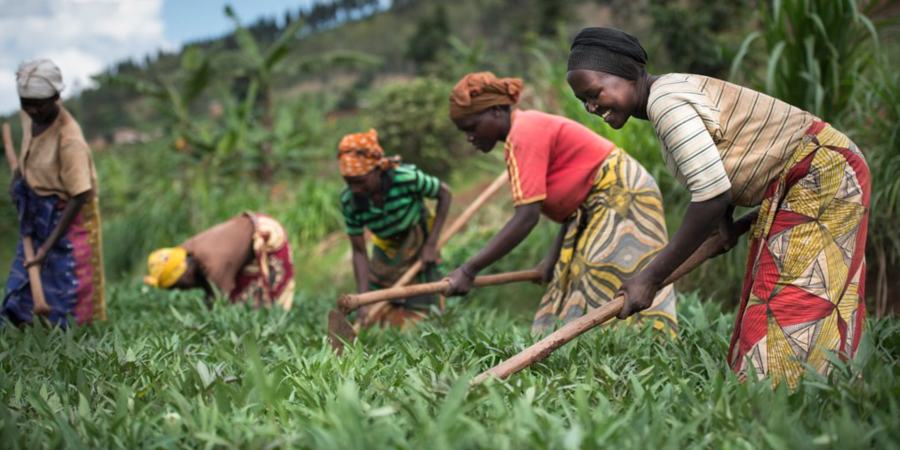
Kenya has completed its first private-sector local currency securitisation in the smallholder agriculture sector, a milestone that its architects say should fundamentally change how institutional investors view the creditworthiness of Africa’s rural poor. The transaction, structured by Indian fintech platform Kaleidofin in partnership with agri-finance company Apollo Agriculture and anchored by the IDH Farmfit Fund, mobilised KES 276 million — approximately $2.1 million — against a portfolio of agricultural credit receivables valued at KES 370 million, covering 23,839 smallholder farmers across Kenya.
The significance extends well beyond the numbers. Securitisation — the conversion of pools of loans into tradeable financial instruments sold to institutional investors — is a standard tool of sophisticated capital markets in Europe and North America. Its application to smallholder agricultural lending in sub-Saharan Africa is, by most measures, unprecedented in the private sector. The transaction received an investment-grade credit rating of BBB- from Agusto, a Lagos-based ratings agency, signalling to the market that farmers who have historically been deemed unbankable can, when assessed with the right technology, generate assets that institutional investors will buy.
At the heart of the deal is Apollo Agriculture’s credit technology stack — a system that combines satellite imagery of individual farm plots, machine learning models trained on agricultural yield patterns, and mobile-based data collection to build real-time credit profiles for farmers who have no collateral and no formal credit history. It is precisely this kind of data infrastructure that has made it possible to price and package smallholder risk in a way that satisfies institutional due diligence — something that aid grants and development bank loans, for all their value, have never been able to achieve at scale.
“This is a meaningful step in building efficient, scalable funding for smallholder agriculture and validates our tech-enabled business model. By converting receivables into working capital, we are able to lower our cost of funds and expand access to affordable, local currency financing for farmers.”
— Eli Pollak, CEO, Apollo Agriculture
The currency dimension is not incidental — it is central to the deal’s developmental logic. Financing extended in Kenyan shillings rather than dollars protects farmers from the foreign exchange volatility that has historically turned manageable debt into unrepayable burdens when the shilling weakens. For a smallholder whose income is entirely local, a dollar-denominated loan is a hidden risk that no harvest can fully hedge against. By structuring the transaction in local currency throughout, the deal removes that vulnerability at its source.
Kaleidofin’s role was to provide the market infrastructure through its ki platform — a dedicated debt capital market system that allows granular agricultural loans to be aggregated, risk-segmented, and packaged into instruments suitable for institutional investors. The platform’s proprietary ki score uses artificial intelligence to assess borrower risk from loan transaction data, credit bureau records, and alternative data sources, reducing the information asymmetry that has long kept institutional capital away from rural lending.
“We designed the Kaleidofin platform to function as scalable market infrastructure for traditionally excluded customer segments such as smallholder farmers, women entrepreneurs, clean energy and small business. By enabling customised structuring and data-driven risk insights via ki score, we are building the foundations for institutional capital to flow into sectors such as smallholder agriculture in a sustainable way.”
— Sucharita Mukherjee, co-founder and CEO, Kaleidofin
Of the 23,839 farmers whose loan receivables underpin the transaction, 51 per cent are women and approximately 22 per cent are first-time borrowers — a profile that, in conventional credit markets, would disqualify most applicants from any formal financing whatsoever. The fact that this portfolio achieved a BBB- investment-grade rating ought to force a fundamental reassessment of assumptions that have kept African women farmers outside the banking system for decades.
The enabling architecture extended well beyond the three principal parties. FSD Africa, a specialist development agency established by the UK government, provided support across legal and regulatory structuring and investor engagement. The UK’s MOBILIST programme contributed tax and structuring guidance. British International Investment — the UK’s development finance institution — delivered technical assistance to Apollo Agriculture through its BII Plus facility, strengthening the company’s reporting and technology capabilities. The Gates Foundation supported FSD Africa’s work with an explicit focus on mobilising domestic capital for women’s economic empowerment.
“This transaction showcases how well-functioning market infrastructure can catalyse institutional capital for sectors traditionally considered high-risk, like smallholder agriculture. We see this as a blueprint for how structured finance can unlock sustainable, large-scale funding for inclusive growth across Africa.”
— Dr Evans Osano, chief financial markets officer, FSD Africa
The IDH Farmfit Fund, which acted as anchor investor, framed its participation as precisely the kind of risk-absorbing intervention that blended finance is designed to perform — taking the highest-risk position in the capital structure to crowd in investors who would otherwise stay on the sidelines.
“This transaction demonstrates how innovative financial structures can unlock capital for smallholder farmers at scale. Building investable opportunities in agriculture requires both capital and enabling infrastructure, and this partnership brings those elements together.”
— Roel Messie, CEO, IDH Investment Management
The transaction is designed to be the first of many. The broader multi-year securitisation programme of which it forms part is projected to mobilise approximately KES 2.37 billion and reach more than 130,000 farmers over time. Kaleidofin, which has already enabled more than $10 billion in productive credit for over 11 million customers across Africa and South Asia, expects the Kenya model to be replicated across other emerging markets where smallholder agriculture suffers the same chronic financing gap.
The scale of that gap is not in dispute. The International Finance Corporation estimates that smallholder farmers in sub-Saharan Africa face a financing shortfall of more than $65 billion annually. Traditional development assistance has made inroads, but it has never come close to bridging a gap of that magnitude, nor can it — the volumes required demand the mobilisation of institutional and private capital at scale, which in turn demands exactly the kind of credible, rated, locally denominated financial infrastructure that this transaction has now demonstrated is achievable.
When the history of African agricultural finance is written, KES 276 million may seem a modest sum — but the principle it has proven, that the loans of Africa’s smallholder farmers are investable assets worthy of institutional capital, is worth considerably more than any single transaction can measure.
Similar Posts by The Mt Kenya Times:
- Mt Kenya Times ePAPER October 1, 2026
- Museveni backs Lamu but keeps Uganda’s money at home
- Sifuna’s party wins its name — and Kenya’s opposition race begins in earnest
- Lamu’s $16B gamble: Africa’s biggest refinery divides the region
- Ruto launches KSh2.2 trillion Lamu refinery in East Africa’s biggest energy bet
About the Author