Kenya Launches Landmark 10-Year Plan to Rescue the World’s Rarest Tortoise

National Recovery Strategy Aims to Save the Critically Endangered Pancake Tortoise
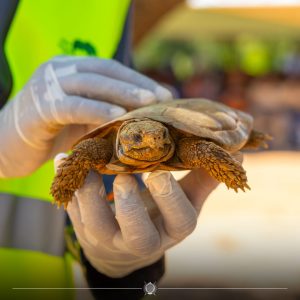
In a historic move to prevent the extinction of the pancake tortoise (*Malacochersus tornieri), Kenya last Friday unveiled an ambitious 10-year National Pancake Tortoise Recovery Plan (2025–2035) on World Endangered Species Day. The initiative, one of Africa’s most comprehensive conservation efforts, solidifies Kenya’s leadership in protecting biodiversity.
Affectionately known as kobe kama chapati for its uniquely flat, flexible shell, the pancake tortoise is a biological marvel—capable of squeezing into narrow rock crevices for protection. Yet this same adaptation has made it a prime target for illegal pet traders, pushing the species toward extinction. Fewer than 10,000 remain in the wild, with over 95% found in Kenya across nine counties (Kitui, Embu, Meru, Tharaka-Nithi, Laikipia, Samburu, Isiolo, Marsabit, and Tana River), as well as in Tanzania and Zambia.
The event was graced by among others; Kenya Wildlife Service (KWS) Director General Prof. Erustus Kanga, Tharaka-Nithi County Deputy Governor Nyaga Muisraeli, KWS Board of Trustees member Chachu Ganya and Tharaka University Vice Chancellor Prof. Peter Muriungi.
Some Of The Moments As Captured In Pictures











Similar Posts by The Mt Kenya Times:
- Violence mars Meru Mashujaa Day as Mwangaza motorcade attacked
- Ghost hospitals and Kenya’s healthcare crisis
- Eldoret hosts Kenya’s 63rd Mashujaa Day in historic North Rift celebration
- No matter how long the night, the day will come
- Why university students wear crocs and pyjamas
About the Author