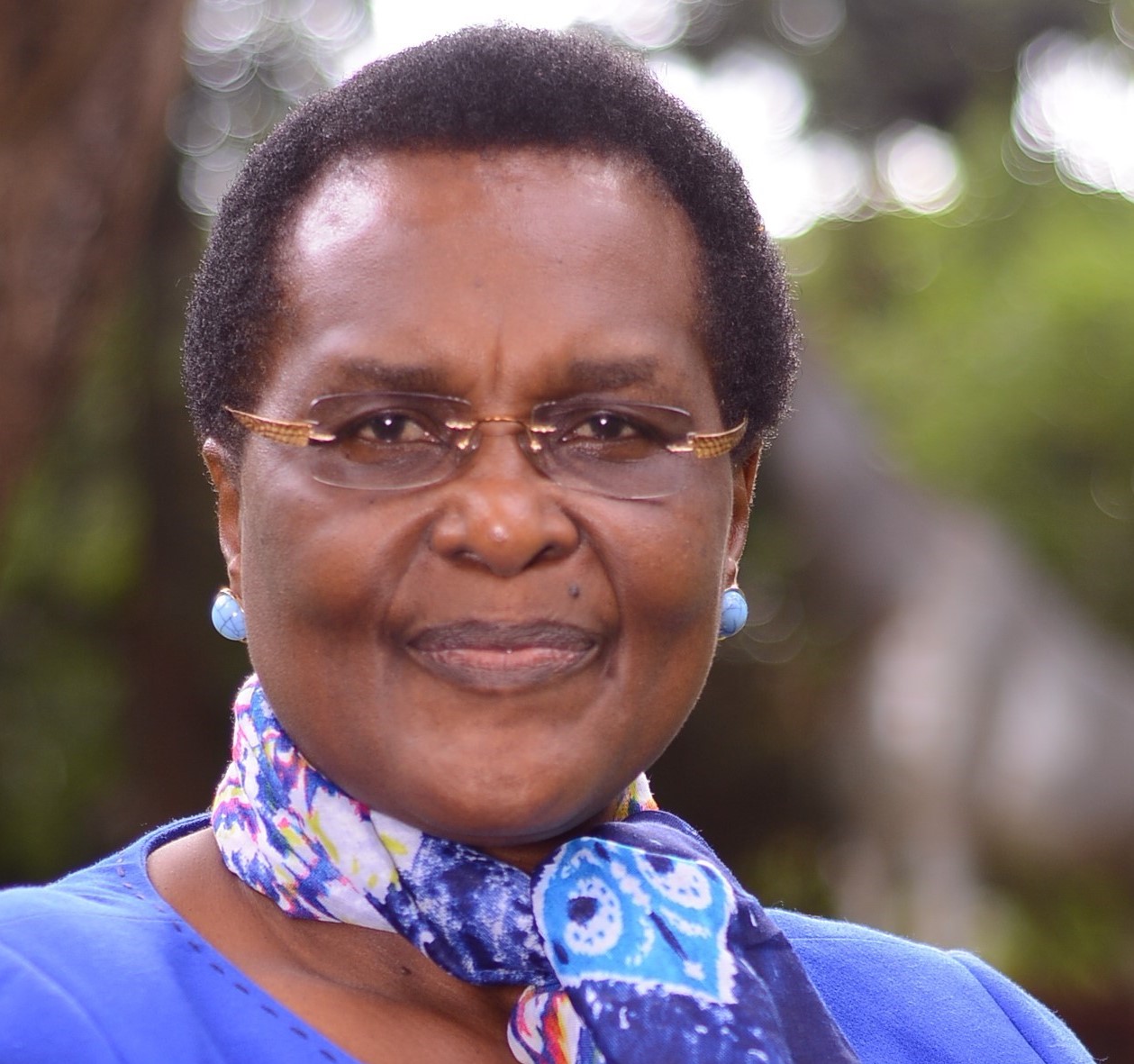
Ambassador Nancy Karigithu, Special Advisor on Blue Economy at the Executive Office of the President of Kenya

As The World Marked International Maritime Day On Thursday, It Emerged That The Country Is Struggling To Reap From The Resources In The 31 Extra Counties Offered By Its Seas And Oceans
By James Wakahiu
Worth Noting:
- According to the Secretary-General, International Maritime Organization (IMO) Arsenio Dominguez this year’s World Maritime Day theme: “Navigating the future: safety first!” calls for collective effort to ensure we keep pace with the ongoing transformation in shipping”.
- “And at IMO, we must ensure the continued development and implementation of the regulatory regime to prioritize safety as we steer towards tomorrow,” he said in a statement.
- Karigithu said Kenya has are incredible resources with opportunities to exploit food, tourism, transport, aqua culture which can create jobs and boost exports among others.
- For instance, the upwelling conditions in the Indian ocean often dumps fish from as far as Australia on Kenyan shores”.
Kenya is just nibbling at the shipping, fishing, mining, tourism and sports opportunities offered by its seas, lakes and ocean access, equivalent to more than 31 extra counties in surface area.
Ambassador Nancy Karigithu, Special Advisor on Blue Economy at the Executive Office of the President of Kenya, says the Indian Ocean waters bodies stretch from the shore line; as per international conventions and could mean an area equivalent to 31 more counties.
“We are ignoring a big chunk of our resources,” she said.
Other liquid estates include Lake Victoria, the third largest fresh water lake in the world; after Caspian Sea in Russia and Lake Superior in Canada and United States.
Lake Turkana, also called the Jade Sea, has a lot of unexploited resources – enormous potential in tourism and fisheries.
“We have unique water bodies that remain unexploited,’ she said.
She spoke on a TV47 interview as world marked the International Maritime Day on Thursday.
According to the Secretary-General, International Maritime Organization (IMO) Arsenio Dominguez this year’s World Maritime Day theme: “Navigating the future: safety first!” calls for collective effort to ensure we keep pace with the ongoing transformation in shipping”.
“And at IMO, we must ensure the continued development and implementation of the regulatory regime to prioritize safety as we steer towards tomorrow,” he said in a statement.
Karigithu said Kenya has are incredible resources with opportunities to exploit food, tourism, transport, aqua culture which can create jobs and boost exports among others.
For instance, the upwelling conditions in the Indian ocean often dumps fish from as far as Australia on Kenyan shores”.
Karigithu has more than 37 years’ experience in the maritime sector, having formerly worked as a Principal Secretary, State Department for Shipping and Maritime affairs after serving as Director-General and Chief Executive at Kenya Maritime Authority (KMA).
She described the Blue Economy as a generic term that describes economic exploitation of oceans, inland water bodies and seas.
“The world should be called Planet Ocean and not Planet Earth. About 71 per cent of the world is water even when you exclude inland waters. We are told that we don’t know half of the resources available under the sea, both living and non-living assets,” she said.
Karigithu said as Kenyans, we have turned our backs the sea concentrate on real estate and agriculture. “Everyone is focusing on the sea… we had a slow start – realisation has been slow, came late. The island nations have been faster because they do not have excess land. But in our region, land is now becoming very scarce,” she said.
Going forward, there are so many opportunities in the global blue economy for Kenyans. “How can we gain from it? We have come of age as a maritime nation.
Global events indicate it is time Africa reaped from its maritime resources, and Kenya should be the springboard to show what Africa can do,” she said.
Unfortunately, there has been too much focus on brick and mortar investments. “Investors should now look into the water economy investments.
There are demographic dividends to reaped; Kenyans already speak English well, the language of the safety globally. Our youth are techno savvy, but we need more training in the maritime sector,’ she said.
She congratulated Mount Kenya University (MKU) for gaining accreditation of its new Malindi Maritime Academy from the Kenya Maritime Authority in Malindi town.
She appealed to the private sector to do feasibility studies on investment opportunities in water bodies, such as cottage industries to support this sector.
“We are headed for automation, but there is still a demand for skilled workers,” she added.
When Covid-19 shut the whole world in 2020-22 some crews could not travel or take leave and shippers were desperate for ports open for crew change.
The Russia-Ukraine conflict also cut off 14 per cent of the supply of shipping crews. Global shipping is looking for crew changes in Africa,” she said.
Karigithu said young people in the shipping industry are not judged on university cut off points. Most immigrant professionals have to under bureaucratic exams and supervisions in the developed world, but in shipping there are no such barriers.
“A ship captain with 36 years’ experience says he started off as a cook. Let’s open the world to our youth,” she said.
On gender, Karigithu said the shipping industry has been a man’s world. Only two percent of seafarers globally are women, yet the world cannot transform with only men; half the gender.
She said South Korea’s industrialization relied heavily from the experiences, connections, training and investments from its workers in the global maritime industry.
Challenges
Karigithu admitted that there are many drawbacks in the sector.
“Most seas are under no man’s jurisdiction and there governance issues. There is ongoing digitization and cybersecurity issues.
How do we navigate into the future while keeping an eye on the ball?”
For instance, in June 2017, a Cyberattack on logistics company Maersk affected shipping terminals worldwide and even led to the shutdown of the Port of Los Angeles, one of the largest cargo terminals, in the world for a few days. Operations were disrupted, ports closed and Maersk resulted to conducting business on paper just to get goods moving from ships to the shore again. The attack cost the Danish shipping giant $300 million (Ksh38.7 billion), and it has definitely changed the way the shipping industry looks at cybersecurity.
“We are interconnected as a global community and shipping is vital,” Karigithu observed. In March 2021, the Suez Canal was blocked for six days by the Ever Given, a container ship that had run aground in the canal.
By 28 March, at least 369 ships were queuing to pass through the canal, stranding an estimated US$9.6 billion worth of trade. Kenya’s imports and exports delayed, causing millions in losses.
Technology Transfer Issues
Karigithu said there is a whole lot of research that will involve experts in future (maritime workers) which Kenya lacks at the moment.
Ongoing technology changes in the shipping industry means training and re-training of staff. “Changes are needed in all countries so that we can all move together.
For instance, current fleets are on fossil fuels but the future means retro-fitting, changes on propulsion systems and making the systems and infrastructure at ports ready. Staff must be trained to work with new fuels. There are whole new arears of infrastructure both on shore and off shore to work on,” she said.
And whereas the future is in clean and green fuels, information is lacking. The new fuels means the transportation, production, storage and the whole supply chain changes. We need new standards at the ports.
A whole new research on the implications for Kenya is needed.
“We may not the resources as the developing world, so IMO (International Maritime Authority, the global maritime standards and rules setting body) must come up with a balance of changes and time limits so that the developed and undeveloped countries move together. Unfortunately, Africa is caught up in international funding bottlenecks that limit access to finance.
Similar Posts by The Mt Kenya Times:
- The strategic importance of social work in preventing harmful habits among young people
- How Mitei has steadied the ship at TSC
- Breaking the silence: How Kenya’s schools can heal the hidden wounds of mental stress
- When the seller roars and the buyer whispers: Kenya’s competition law and the uneven hunt for market tyrants
- Kane ends England’s 25-year Ballon d’Or wait with record-breaking Bayern season
About the Author