By MKT Reporter
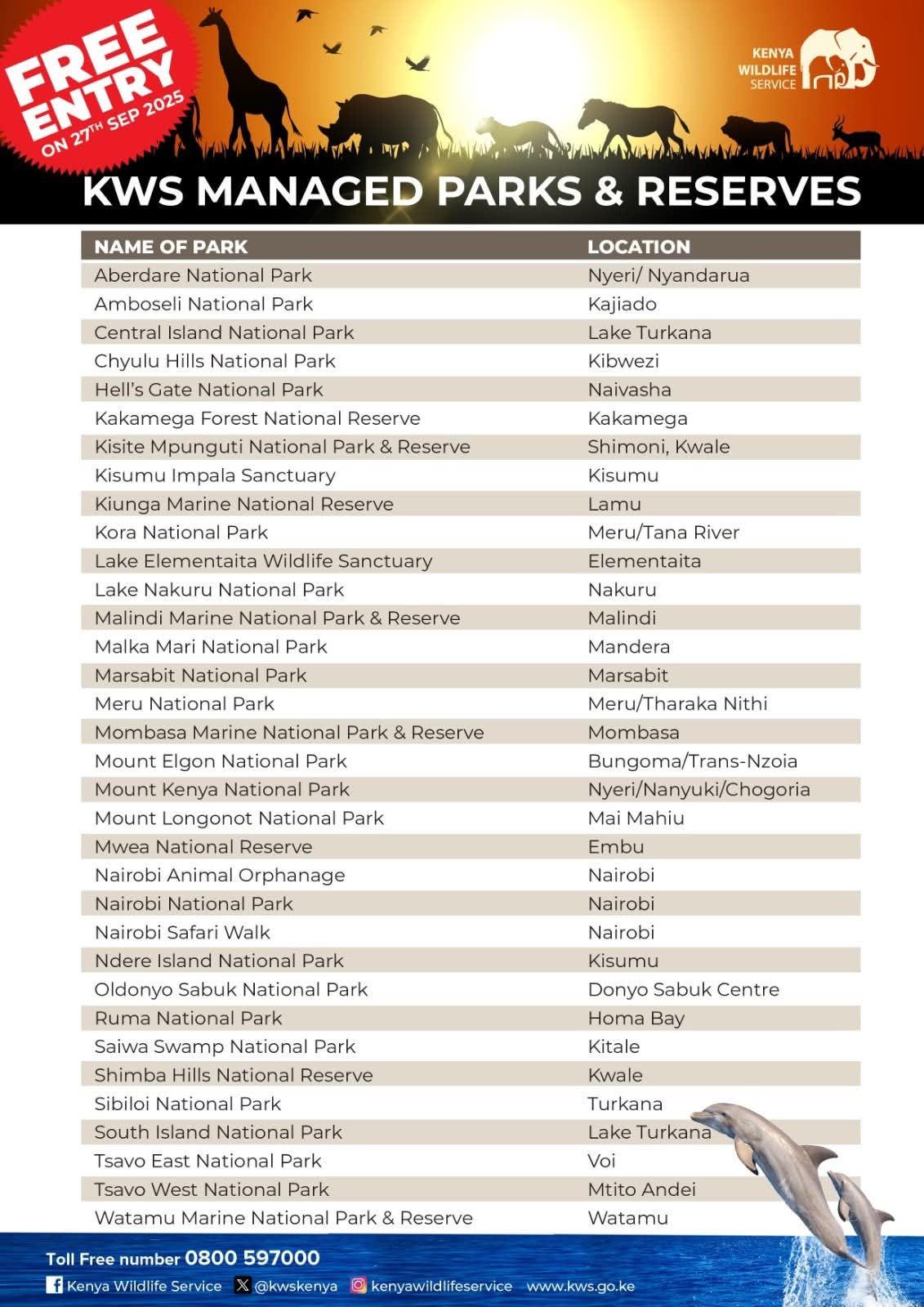
Kenyans will have a chance to visit national parks, reserves and sanctuaries managed by the Kenya Wildlife Service (KWS) at no cost on Saturday, September 27, 2025, as part of celebrations to mark the United Nations World Tourism Day.
Tourism and Wildlife Cabinet Secretary Rebecca Miano announced the move on yesterday, describing it as an opportunity for citizens to engage directly with the country’s natural heritage. She said the government hopes the initiative will encourage Kenyans to reconnect with wildlife, foster a stronger culture of conservation and inspire domestic tourism.
World Tourism Day is observed globally every September 27, with each year’s theme highlighting an aspect of tourism’s contribution to society. This year’s theme, “Tourism and Sustainable Transformation,” focuses on the potential of the sector to support local communities, safeguard the environment and contribute to economic development. Kenya, long recognised as one of Africa’s top safari destinations, is aligning its celebrations with the global call for more sustainable practices.
Kenya is home to some of the continent’s most famous protected areas, including Nairobi National Park, Amboseli, Tsavo and the Maasai Mara, which attract hundreds of thousands of international visitors each year. Yet domestic tourism has increasingly become a priority for the government, especially in the wake of the Covid-19 pandemic, which exposed the vulnerability of relying heavily on foreign arrivals. Opening the gates of KWS-managed sites for free, officials say, is meant to remind Kenyans that these spaces belong to them and that their support is critical for long-term conservation.
Miano noted that conservation and tourism are closely linked, and that encouraging Kenyans to experience the country’s biodiversity firsthand helps build a sense of ownership. “When citizens visit and appreciate our natural heritage, they become more invested in protecting it,” she said. According to the ministry, increased domestic visitation also helps spread awareness among young people, schools and communities, reinforcing the message that wildlife is not just a tourist attraction but an integral part of national identity.
The government has also pointed to the economic benefits of a vibrant domestic tourism market. Data from the Ministry of Tourism shows that Kenyans now account for a significant share of bed nights in hotels and lodges across the country. While international arrivals remain key, officials argue that strengthening local tourism cushions the sector against global shocks and provides a more reliable base of support for conservation areas.
The Kenya Wildlife Service has encouraged families, students and community groups to take advantage of the free entry, while also reminding visitors to respect park regulations and maintain the integrity of wildlife habitats. Guidelines on how to access the parks during the day are available on the KWS website at www.kws.go.ke, through official social media channels, via the toll-free customer service number 0800 597 000 or through WhatsApp on 0726 610 509.
Conservationists have welcomed the announcement, noting that many Kenyans rarely get the chance to visit parks due to cost barriers. They argue that opening the gates, even for a day, can have lasting effects by creating memories and inspiring future conservationists. Some, however, caution that the government will need to manage crowding and ensure that increased traffic does not harm sensitive ecosystems.
As the world marks World Tourism Day, Kenya’s gesture carries both symbolic and practical weight. It underscores the idea that tourism should not only be measured by international arrivals and revenue but also by how it connects citizens to their natural heritage. For many Kenyans, the Saturday celebration may be their first chance to see lions, elephants or rhinos in the wild — experiences that could shape their views on conservation for years to come.
In offering free access to parks, reserves and sanctuaries, the government is betting that bringing people closer to nature is one of the most effective ways to secure its future. Officials hope that the celebration will not only mark a global tourism calendar event but also reaffirm Kenya’s long-standing commitment to sustainable tourism and wildlife protection.
Similar Posts by The Mt Kenya Times:
- Polycystic Ovary Syndrome: Diagnostic Challenges And Its Impact On Reproductive Health
- Understanding parentification and its impact on learning
- Gachau bows out, but the passion stays
- AI Curse or boon: The Future of Intelligence: Artificial or Emotional?
- Dr. Ekrah Ndung’u wins TVET advocacy award after 12 years
About the Author