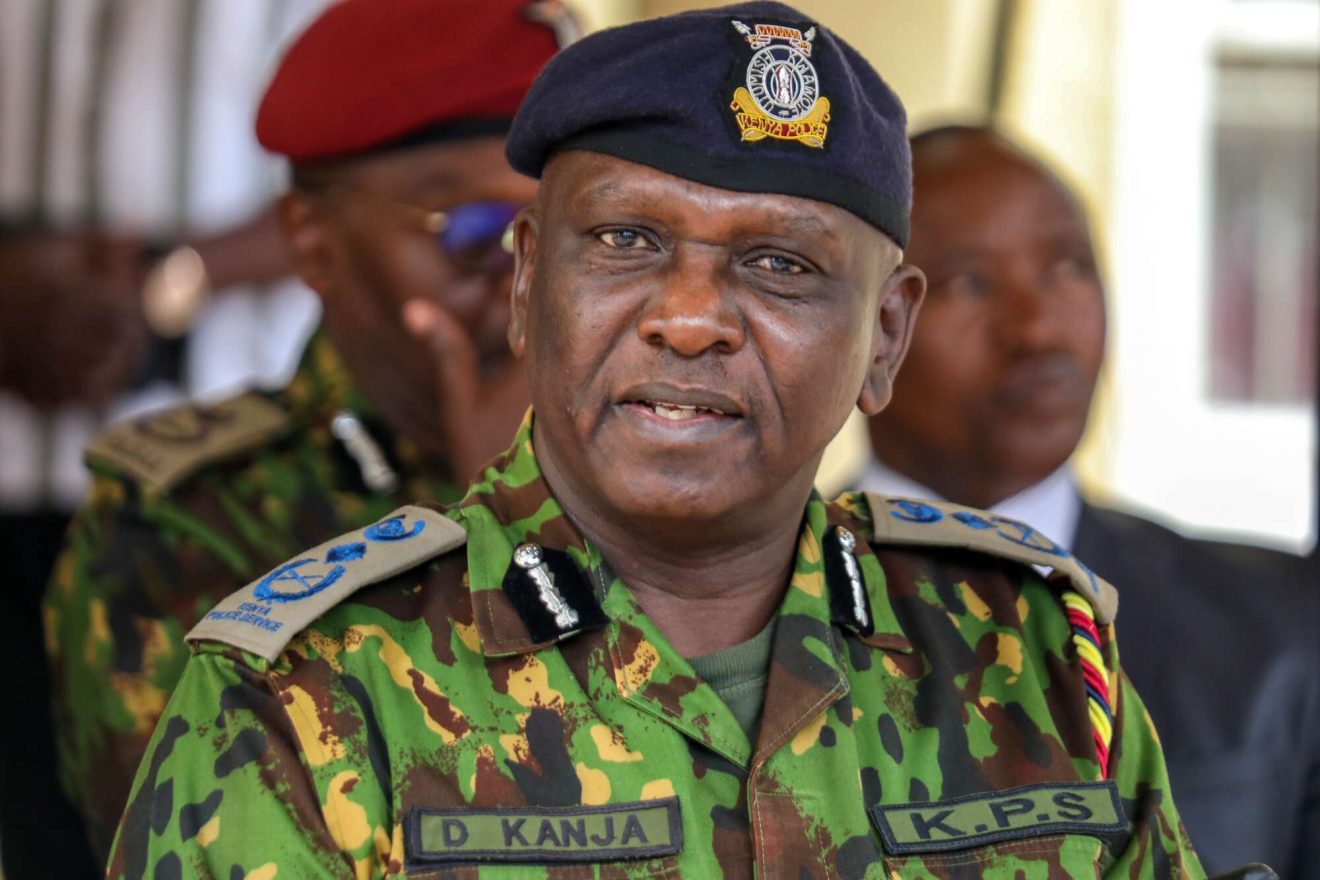
Inspector-General Douglas Kanja
Inspector-General Douglas Kanja has gazetted four specialised units in the most significant restructuring of the National Police Service in nearly a decade — and the implications for how Kenya is policed are profound
By David Kimani
Kenya’s National Police Service yesterday unveiled four new specialised police formations — the Nairobi Metropolitan Police, the Judiciary Police Unit, the Kenya Police Quick Response Unit and the Kenya Police Marine Unit — in the most sweeping reorganisation of the country’s policing architecture since the 2017 Standing Orders.
The changes, published in Legal Notice No. 138 in the Kenya Gazette on 30 July, form part of ongoing efforts to reform the National Police Service, strengthen its organisational structure and improve operational efficiency. Inspector-General Douglas Kanja signed the amendments, which repeal Chapter 7 of the 2017 Service Standing Orders and replace it with a new framework governing how police formations, units and components are structured, deployed and held accountable.
“The National Police Service has introduced a new organisational structure following the publication of the National Police Service Standing (Amendment) Orders, 2026. The changes form part of ongoing police reforms aimed at reorganising the Service to improve efficiency, coordination, accountability and operational effectiveness,” the NPS said in a statement.
The centrepiece of the reforms is the Nairobi Metropolitan Police — a formation that has been months in the making and whose creation reflects the government’s growing recognition that Kenya’s capital can no longer be policed the way it was a generation ago. Nairobi has grown into a major regional, commercial, financial and diplomatic hub, and its security needs have grown right along with it. President William Ruto has described the new unit as a community-led security model that will improve collaboration between law enforcement agencies and Nairobi residents, bringing together community leaders, the National Police Service, Nairobi County Government and other key stakeholders to jointly identify security priorities.
The operational blueprint is ambitious. Kamukunji Police Station has been identified as the proposed headquarters of the unit, which will anchor an Integrated Command and Communication Centre — known as IC4 — to coordinate operations in real time, alongside a Multi-Agency Liaison Office to strengthen coordination with other national and county security actors. The government is also upgrading Nairobi’s entire surveillance network from NC3 to NC4 to expand the system’s analytical reach and data-processing power, with Artificial Intelligence playing a central role in helping police identify crime hotspots and enabling a smarter, more targeted approach to enforcement.
The scale of the deployment is considerable. At least 2,500 officers from Nairobi County inspectorate will join the Nairobi Metropolitan Police Unit once it is unveiled, according to Nairobi Governor Johnson Sakaja, with all officers undergoing specialised training before deployment. Construction at Kamukunji to accommodate the expanded workforce is scheduled to begin in August.
The groundwork for this moment stretched across several continents. Interior Cabinet Secretary Kipchumba Murkomen and Inspector-General Kanja carried out a series of benchmarking tours of the New York Police Department and London police units, as well as the Japan National Police Agency and the Tokyo Metropolitan Police Department. Kanja led a high-level delegation to Japan in June, holding consultations with the Japan National Police Agency and the Tokyo Metropolitan Police Department as the government studied how major metropolitan forces manage rapid urbanisation, high-density populations and the increasingly sophisticated nature of urban crime. Those lessons are now being written into Kenyan law.
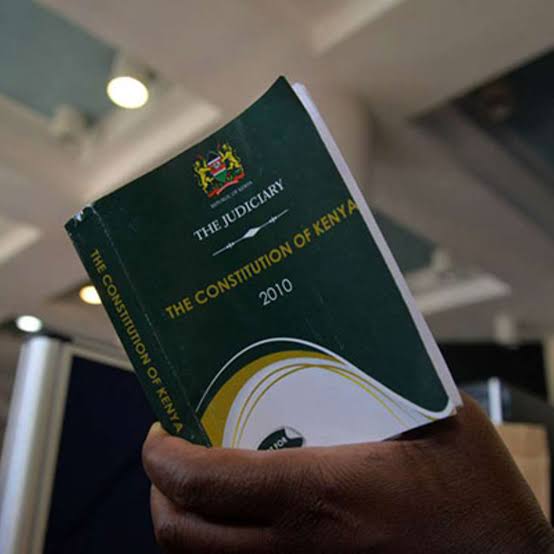
Beyond Nairobi, the reforms address two other critical gaps that have long drawn criticism from legal professionals and security analysts alike. The Judiciary Police Unit has been created to enhance security within the Judiciary by providing dedicated protection for courts, judicial officers, court users and judicial facilities — an acknowledgement that Kenya’s courts have operated without adequate or consistent security cover, leaving judges, magistrates and witnesses unnecessarily exposed. The unit sits within the Administration Police Service and its creation signals that the state now treats the protection of judicial independence as an operational priority, not an afterthought.
The Quick Response Unit will serve as a rapid deployment team to respond to emergencies, high-risk incidents and other situations requiring immediate police intervention, while the Kenya Police Marine Unit will strengthen security and law enforcement along the country’s coastal waters, lakes and other inland waterways, supporting efforts to combat marine crime. The marine unit addresses a dimension of Kenyan security that has historically been under-resourced — illegal fishing, smuggling, cross-border criminal activity on Lake Victoria and security risks along the Indian Ocean coastline have all grown in recent years without a dedicated enforcement response.
The amended Standing Orders also significantly consolidate the Inspector-General’s authority. Under the new framework, Kanja gains the power to integrate, merge or reorganise police formations, units, investigative commands and bureaus — with any such direction required to be issued in writing. He must also approve all operational guidelines and standard operating procedures before implementation, and will be responsible for resolving conflicts where different formations have overlapping mandates. The Deputy Inspectors-General, meanwhile, will determine command structures and deployment for their respective services in consultation with the Inspector-General.
The Directorate of Criminal Investigations retains its own distinct command architecture. The amended orders preserve key DCI formations including the Counter-Terrorism Bureau, National Anti-Narcotics Investigations Bureau, Crime Research and Intelligence Bureau, National Police Service Forensic Laboratory and the INTERPOL National Central Bureau — all of which continue to operate under the DCI’s direction, in consultation with the Inspector-General.
The creation of specialised formations such as the Nairobi Metropolitan Police, Judiciary Police Unit, Quick Response Unit and Kenya Police Marine Unit is expected to strengthen rapid response capabilities, enhance the protection of key national institutions and critical infrastructure, and improve the Service’s ability to address increasingly complex security challenges across the country.
Whether the ambition survives contact with the realities of funding, political will and institutional culture remains the question that Kenyans — and the criminals who prey on them — will be watching closely. The gazette notice is the beginning, not the end. What matters now is execution.
Similar Posts by The Mt Kenya Times:
- Mt Kenya Times ePAPER September 17, 2026
- Ruto and Uhuru: The rupture at the heart of Kenya’s 2027 election
- Gakoromone traders and rights group demand closure of sewage discharge
- Retirement is not disenfranchisement: Reclaiming the constitutional rights of Kenya’s former presidents
- Kenya’s 2027 election: Can technology strengthen democracy or manipulate voters?
About the Author