Kenya’s youth are the vanguard of the fourth industrial revolution


By: John Wangai
Since time immemorial, human civilization has continually adapted to and embraced new developments aimed at improving the well-being of humankind. The world’s earliest civilizations are believed to have existed during the pre – industrial epoch which was largely characterized by hunting and gathering before gradually transitioning to the use of simple homemade tools and mechanization during the First Industrial Revolution.
During the Second Industrial Revolution, electricity was discovered, making mass production possible and greatly reducing the use of manual labour. It was during the Third Industrial Revolution that computers were invented, leading to automation and digitization, which made work more effective and efficient.
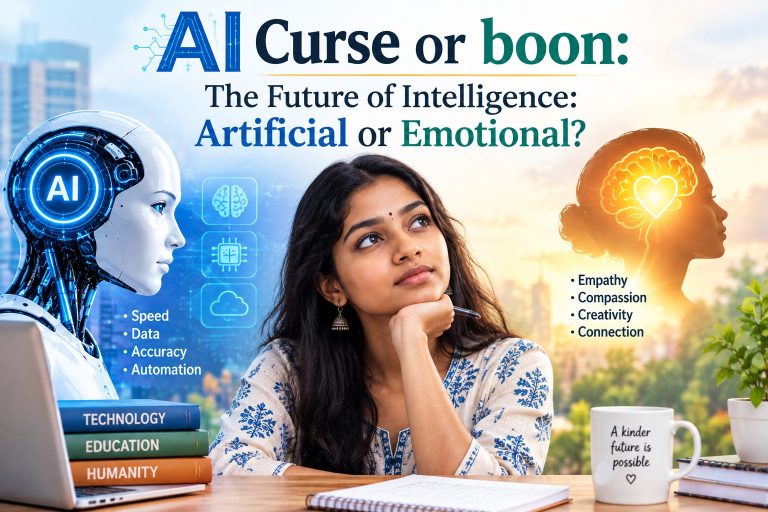
We’re currently in the Fourth Industrial Revolution which is largely characterized by the adoption and widespread use of Artificial Intelligence, robotics, block chain technology, Internet of Things (IoT), virtual and augmented reality, autonomous vehicles, nanotechnology, biotechnology, neurotechnology and other emerging technologies.
According to the Kenya National Bureau of Statistics, approximately 75% of Kenya’s population is under the age of 35, with about 30% falling within the youth age bracket. Article 260 of the Constitution of Kenya defines youth as all individuals who have attained the age of eighteen years but have not attained the age of thirty-five years.
Kenya is also among the leading nations in Africa with a highly tech-savvy youth population. A report from the Communications Authority of Kenya indicates that over 80% of Kenyan youth own a smart phone, while more than 60% have access to and regularly use the internet. Furthermore, according to a recent DataReportal report, Kenya ranked first in AI adoption and usage, with over 90% of the youth reported to be using either one or more AI tools regularly.
Notably, Kenyan youth have continued to stand out on international and regional platforms by developing innovative and creative technology-driven solutions to practical challenges in key sectors including agriculture, healthcare, transport, fintech, education and security.
In bid to harness the enormous untapped talent, the Kenya National Intelligence Research University organized the National AI Hackathon earlier this year and invited innovators to submit AI projects focused on addressing challenges in threat detection, cybersecurity, predictive policing , efficient and effective public service delivery, healthcare, education and governance.
Remarkably, the event attracted over 5,600 participants and received more than 2,500 AI project submissions. The top award went to Caroline Gakii, Daniel Maitethia and Ezekiel Otieno, students from Meru University of Science and Technology who developed a low-cost, AI – powered digital microscope for cancer and malaria diagnosis. The second-place award was presented to Joshua Radula from Strathmore University, who developed an AI tool that translates speech and text into sign language and in third place was Kelvin Mulama who developed an autonomous financial fraud detection system.
It is therefore, incontrovertible that Kenya is a sleeping giant with vast unexplored capabilities which, if utilized prudently can not only accelerate economic transformation but also fast-track the achievement of our national development blueprints.
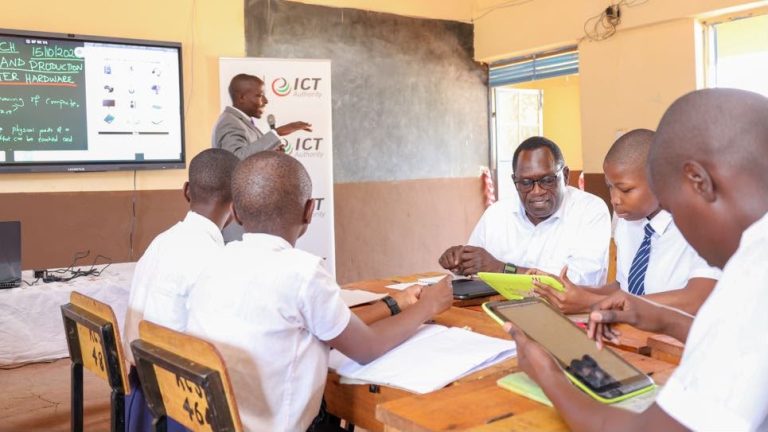
Consequently, to achieve one of the core aspirations of Kenya Vision 2030, which is to be a leading technology hub in the continent as Africa’s Silicon Savannah, we must be intentional about it and initiate a raft of reforms including restructuring the education curriculum to focus on skills that will be required in the future, implementing nationwide AI literacy programs and initiating inclusive and progressive legislative reforms to safeguard human and digital rights.
Finally, to adequately prepare the next generation to proficiently propel our nation forward in this age of intelligence, the youth must be actively included at all levels of governance and decision-making bodies. Also, they must be actively engaged in the legislative process to enable them shape the future they envision, as they are the generation that will live with the implication of today’s decisions for the longest time.
John Wangai
Public Interest Litigation Lawyer
Similar Posts by The Mt Kenya Times:
- NTSA calls for road safety to be declared a national disaster after 24 die in Mtito Andei crash
- Ruku turns on Waiguru over deputy president ambitions: ‘That seat is not being contested for’
- Instruments required for professional oral hygiene procedures and the requirements for these instruments
- Ruto courts Ukambani with roads and a KSh70B clinker plant as 2027 political contest heats up
- Kalonzo and Gachagua to hold presidential ticket talks today as 2027 opposition race takes shape
About the Author