Marcos Llorente
The versatile Atlético midfielder steps away from international duty on his own terms, a World Cup winner
By Pascal Okoth
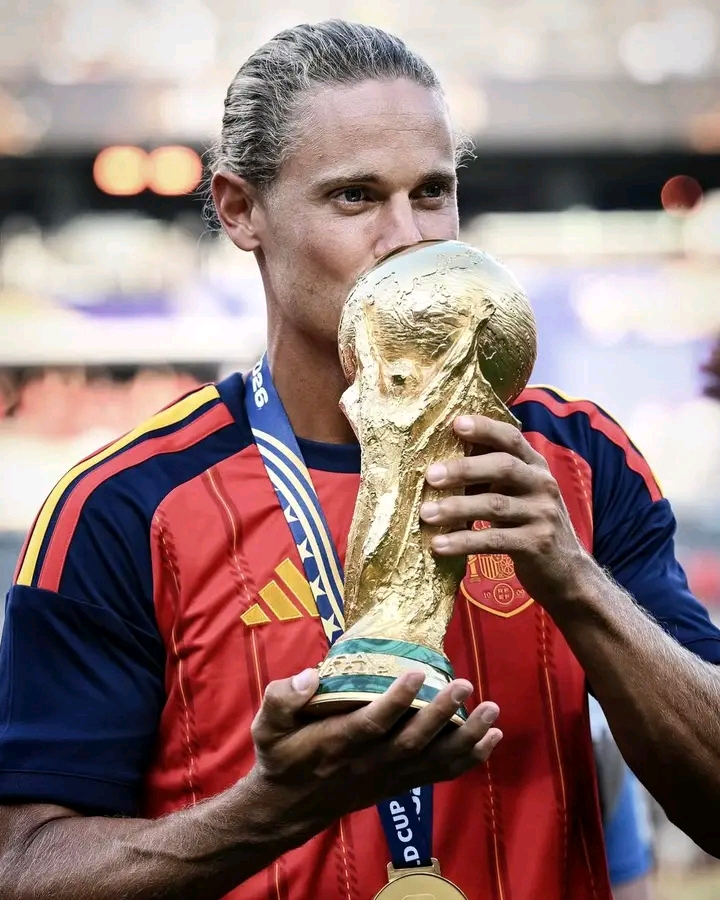
Marcos Llorente announced his retirement from international football yesterday, bringing an emotional close to his journey with the Spanish national team at the age of 31.
The Atlético Madrid midfielder confirmed the decision in a personal statement, making clear that his age played no part in the choice. “I have decided to bring my time with the Spanish national team to an end despite being aware that I am still young,” Llorente said. “It is a personal decision, one I have thought about very carefully and, above all, one that comes from the heart.”
Llorente spent considerable time weighing his future with Spain before arriving at the decision, describing it as deeply personal rather than driven by form, fitness or the prospect of fading opportunities. He also took time to acknowledge what the experience had meant to him. “It has been an honour to represent my country,” he said.
The retirement will come as a surprise to many. Players of Llorente’s quality and age frequently remain available to their national teams well into their mid-thirties, and his tactical versatility — equally comfortable in central midfield, wider positions or deeper defensive roles — made him a reliable option for successive Spain managers.
That adaptability defined much of his international career and allowed him to contribute across different systems and tournaments. The pinnacle came with a World Cup winner’s medal, one of the sport’s rarest distinctions and a memory that will endure long after his final appearance in a Spain shirt.
His departure marks the end of a significant chapter for a generation of players who sustained Spain’s standing among the world’s leading football nations. For supporters, the emotions are likely to be mixed — disappointment at losing an experienced, committed servant of the team alongside recognition of everything he gave.
At club level, Llorente’s career continues. Stepping away from international duty at this stage may allow him to manage his workload more carefully and extend his years at the highest level of the club game, where his experience and positional intelligence remain considerable assets.
He leaves the international stage having represented his country with distinction, collected the sport’s ultimate prize, and chosen, on his own terms, precisely when to go.
Similar Posts by The Mt Kenya Times:
- Mt Kenya Times ePAPER October 22, 2026
- Ruto heads to Harare for COMESA summit on trade and regional security
- Mudavadi and Wetangula walk out as Sifuna speaks at Nabwera memorial
- Police accountability on trial as seven officers face probe over journalist’s arrest
- Learners, teachers graduate from thrive for good organic farming training
About the Author