MAKING BOOKS WORTH WHILE IN TWENTY FIRST CENTURY: Sound Voices in Nigerian Literature. A Conversation with Ikonne Kelvin A.
 The Mt Kenya Times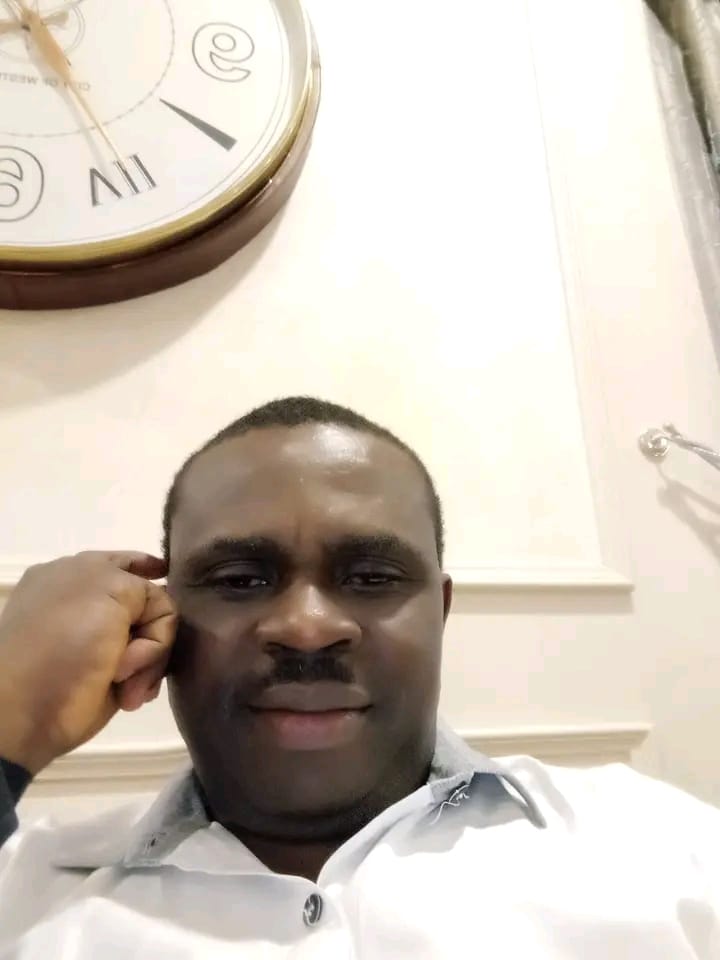
Ikonne Kelvin A.
MAKING BOOKS WORTH WHILE IN TWENTY FIRST CENTURY: Sound Voices in Nigerian Literature. A Conversation with Ikonne Kelvin A.
1) Q: Briefly, who are you?
How did you craft your name?
A: My name is Kelvin Azubuike Ikonne. I am a writer and author of books. I am from the Eastern region of Nigeria, in West Africa. As a matter of fact, my name didn’t change when I began writing, unlike some authors who have what they call “pen names”. There are people who probably found their “otherselves” along the journey of life and began to make books with different names; mine was a different situation. I grew up having folks called me “Kelvin the story teller” and these stories were expressed through different medium: I was into music, writing, and sometimes I just sat with friends and told them stories. I guess I narrated them so well that I had more people who came to me whenever they wanted to hear, not just good stories, but also, true stories. I soon became the official newscaster of our large family-where most people, including our parents, would invite me to tell them what happened in their absence. So, in 2011 when I began writing professionally, it became necessary to continue with my given name.
2). Q: What inspired you to write?
A: Good question. Like I said, I usually love to tell stories, but what drove me to writing was not necessarily the hunger to be read, nor the desire to win people to myself. It was hugely driven by a desire to ‘tell it like it is’. I realised then that there was somewhat succeptible flattery when people tried to narrate events. They just didn’t want to capture the truth as much as they loved to capture the hearts of men. As a young boy, I remember always shouting: “that’s not what happened…this is what happened…” Now that I am grown, I noticed, with huge surprise, that the same gap still exists in our daily communications, which sometimes form our belief system. What people are meant to believe and live by are sometimes ideologies that emanated from selfish desire. I then decided to take up the pen. Now, why do I write? I write to lend a voice in the fight to correct the errors of Arts and History. Errors that seem to have eaten so deeply into the consciousness and coscience of mankind-especially in Africa. I began writing as a freelance writer -dedicating over 90 short stories for almost nothing, just to prove a point. To make it clear that I wasn’t as interested in the money, as I was in having my points accross. I have today been called a “Philanthropic Writer” by some newspapers in Nigeria. What else can I ask for?
3).Q: Do books yield income?
A: Of course, books yield income. One of the richest men in the world today, Jeff Bezos, founded Amazon just to sell books accros the world. Books have paved ways for authors in the past and in the present, but one must be careful as to what drives the passion. When money becomes the sole reason for writing, then there’s a problem. Anyone who desires quick money should get a job, not writing. Writing is a calling, and as such, the rewards come almost without notice. Basically, the reward of a writer is not only in monetary terms. For instance, no amount of money can replace the joy I feel when children call to express how much my books have impacted them.
4).Q: Literacy in Africa, do people read in general?
A: This is a very critical question and it can not be dealt with decisively in one page. First of all, who introduced the notion that “Africans do not read?” Would it be of any interest to you that since we began a publishing firm in 2017 till now, we have sold millions of copies and our readers are marjorly Nigerians and other neighbouring West African countries. We have only intermittently sold in America and in the UK. The problem is not whether Africans read books or not, the problem, in my view, is whether there are good books for them to read. In the same vein, African children do not have a problem of learning, where the problem is, in my opinion, is who is teaching them? We heard a story of the Chinease guy in 2020, who traveled to Malawi to make videos of innocent children calling themselves unprintable names in Mandarin, which the guy had taught them, in order to make money through selling of these videos. Were their parents not there? Of course they were, and even praised the Chinease guy for coming to Africa. Africans must decide what they want, and that includes what they read, and who must influence them.
5)Q: What can one do to increase sales in Africa?
A: I think Africans need to unbundle the stiffness meted out to each other in the guise of sovereignty. Before now, we used to supply books regularly to Ghana, but for about a year now, it has become almost impossible to do so. Its either there is a closed border, or there is misunderstanding between two countries that affect businessess and transactions. Another thing is for book makers themselves to come together and form alliances that can help to promote each other’s work in different countries. But how can this be possible without trust? I will also mention the issue of technology: in my company, we have attempted to sell books online for the past five years, but each time we try, the issue of payment gateway comes up. I was shocked to realise that most online payment solutions do not work in Nigeria. That brings us to the fact that Africans still have so much work to do…
6).Q: Do you feel fulfilled when people buy your books?
A: Of course I do, who would’nt? Actually, I feel better and more fulfiled when a child calls to say, “I love your story… I learned this and that from your story…” That’s always a moment of victory for me-knowing that I’m able to influence the younger generation of Africans. Nothing comes close to that.
7).Q: Can you encourage upcoming authors to write? Do you see a future for authors?
A: Let me put it this way: if you have the gift to write, please keep writing. What I do not subscribe to, is encouraging younger ones to write because they need money. That’s destructive. For example, if you look at the world today, you would probably agree with me that immorality is ruling the hearts of the youths. Now, if you encourage them to write for money, trust me, that would be a license to push them into destructive contents since that’s what their mates are happy to read. I think its better to make them see and know how writing can change the world and make it better. Let them know, also, that by bringing succor and solutions through writing, they can make money, just like scientists who bring solutions for diseases. In a simple term: I see a great future in writing, for an African child.
8). Q: Has there been any support from your local authorities towards your work? How have they helped in promoting your work?
A: Yes, I must say that I have enjoyed some special blessings in that regard. In 2015 when my works were published by an agent, I got into the booklist of my state. They had asked me to send some of my books for consideration and I forwarded 17 titles to them. Surprisingly, they adopted all of them into upper and lower basic classes; something that had never happened in the history of book reviews in my state. I really thank God for that. It has also helped in promoting my name to a point that I was awarded a Youth Ambassador in 2016. Also, in 2021, 3 of my books made it to the Lagos state booklist. I am particularly happy and overjoyed because I live in Lagos, and I know that the system here is quite different. They consider books strictly on merits. I have also written for other people and their books made it to the list.
9).Q: Do you have any endorsements? What is the importance of networking in book world?
A: No, I don’t have any endorsement yet. I am hoping for one, though. I know that God’s blessings make rich and adds no sorrow. I think there are enormous benefits in book networking just as I have explained in my earlier response. I have not known nor read of any successful author who rose to prominence without networking. I was one of the recipients of the African Honorary Awards in South Africa in 2021, but I do not remember ever meeting the organisers. It was made possible through networking. I sincerely hope we could partner more.
10). Q: Ebooks vs hard copies, do you think technology has come to kill the traditional hard copy or is it simply a continuation of the reading culture?
A: I think technology has only come to ease up the process of doing things, not just in books, but in almost everything. As for books, I think technology has only come to make things better and easier. I have people who contacted us for our books through social media, and even the online market we had hoped to establish, was just to make the process of reading, simpler.This is why I am demanding proper structures to be in place, such as payment gateways that truly work in African countries.
11). Q: Your parting short?
A: We all have come to this world bearing seeds that need to be nurtured and processed. I may have been blessed to discover mine early, but the time of discovery may not be as important as the time of recovery. There are so many things waiting to be said. So much waiting to be read. If you have that thing itching in your brain and you cannot seem to find it anywhere despite how often you have searched…Then pick up your pen, and write it.
Similar Posts by The Mt Kenya Times:
- Mt Kenya Times ePAPER October 24-25, 2026
- Muturi calls on IEBC to keep election technology tender clean and on schedule
- Ruto meets UAE minister in push to deepen trade ties
- Gideon Moi breaks silence on Ruto fallout, cites broken promises
- The doctor who refused to abandon a sick Uganda
About the Author