Moles, millions and Mount Kenya: The war within Kenya’s opposition
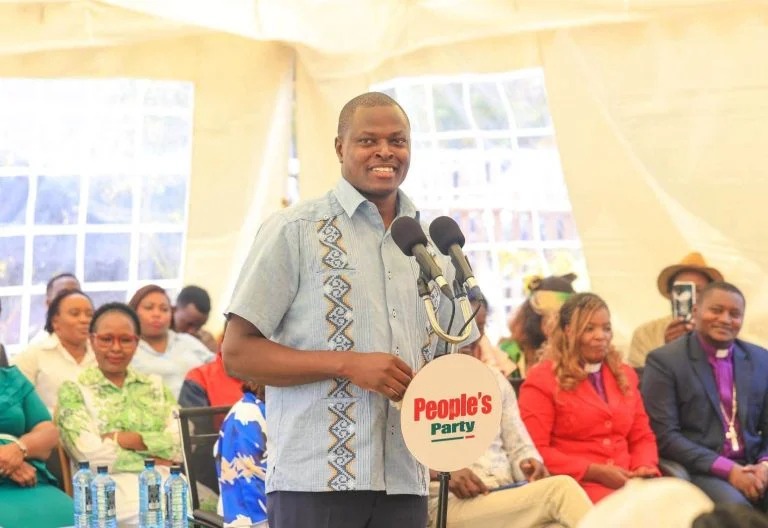
Kiharu Member of Parliament Ndindi Nyoro
A bitter public clash between Ndindi Nyoro and Rigathi Gachagua exposes the fault lines threatening to fracture the region that will decide the 2027 election
By James Mwangi
Kiharu Member of Parliament Ndindi Nyoro yesterday fired back at former Deputy President Rigathi Gachagua, flatly denying claims that he had accepted KSh200 million from President William Ruto to destroy the Democracy for the Citizens Party and divide the Mount Kenya vote ahead of the August 2027 general election.
Speaking at the People’s Party of Kenya headquarters in Nairobi, Nyoro did not name Gachagua directly but left no doubt about his target. “If he needs that money, let him go back to Ruto and ask for it himself,” Nyoro said, dismissing the allegation as baseless and born of political insecurity. He then issued a pointed challenge, urging Gachagua to confront him directly rather than deploying proxies to attack him in public. “Stop sending people to insult me,” Nyoro said. “Face me.”
The exchange is the most visible eruption yet of a simmering conflict inside Mount Kenya’s fractured political landscape — a conflict that has profound implications for Kenya’s 2027 presidential contest and for the opposition’s broader ambition to unseat Ruto.
At the heart of the dispute is a question of political territory and legitimacy. Gachagua, since his dramatic impeachment as deputy president in October 2024, has positioned himself as the undisputed voice of Mount Kenya. His Democracy for the Citizens Party has moved aggressively — winning the Ol Kalou parliamentary by-election in July, pulling 24 Members of County Assembly from Laikipia and Nakuru into its ranks, and conducting a sweeping consultative tour of Meru, Embu and Nyeri counties. Gachagua has spoken openly of his ambition to deliver DCP 130 parliamentary seats and 20 county governors by 2027. He has also claimed the region can mobilise up to 7.1 million votes for a united opposition candidate — a figure that, if accurate, would make Mount Kenya the decisive bloc in the next presidential race.
Into that carefully constructed narrative, Nyoro arrived in August. On 17 August, the Kiharu MP formally left the ruling United Democratic Alliance and took over the leadership of the People’s Party of Kenya, declaring himself and his supporters members of the opposition. His entry was welcomed by senior opposition figures, including James Orengo, who attended his announcement. Nyoro subsequently declared a presidential ambition for 2027 and called on opposition parties to agree on a single candidate, a single running mate and a unified campaign.
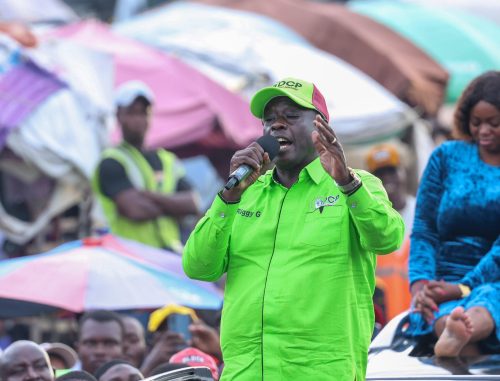
Gachagua’s camp interpreted the move differently. DCP Secretary-General John Methu described PPK as a “wheelbarrow party” designed by State House to fragment the Mount Kenya vote. Kiambu Senator Karungo Thang’wa went further, labelling Nyoro “a coward, a mole and a double-speaker,” and claiming he had previously worked alongside Ruto to undermine Gachagua’s authority as deputy president. “Gachagua’s problems started with Ndindi Nyoro,” Thang’wa said in a radio interview. “He was moving across the country contributing millions to undermine the deputy president’s office.”
Nyoro has a ready counter-narrative. He points out that he was among the most vocal supporters of Gachagua’s selection as Ruto’s running mate in 2022, a choice that passed over Nyoro himself, who had been widely regarded as a frontrunner for the position. He also notes that when the impeachment motion came to the National Assembly floor in 2024, he refused to participate — a decision he credits with costing him the chairmanship of the powerful Budget and Appropriations Committee. His removal from that role, he argues, is the clearest evidence that his relationship with the Ruto administration had already broken down long before his formal defection. “It is crystal clear that we parted with this government a long time ago,” Nyoro told Citizen TV’s JKLive on 2 September.
The Gachagua camp is not entirely united on how to handle Nyoro. Kirinyaga gubernatorial aspirant Wangui Ngirici, a recent DCP recruit, publicly distanced herself from Gachagua’s mole accusations. “Although he is my party leader, we do not always share the same political school of thought,” Ngirici said, calling for political tolerance and respect for different party choices. Former Nyeri Town MP Ngunjiri Wambugu was blunter. “As long as you are independent and don’t kneel before him, he will call you a mole,” Wambugu wrote on Facebook, adding that Gachagua’s reaction to Nyoro had confirmed everything he had long said about the former deputy president’s approach to political competitors.
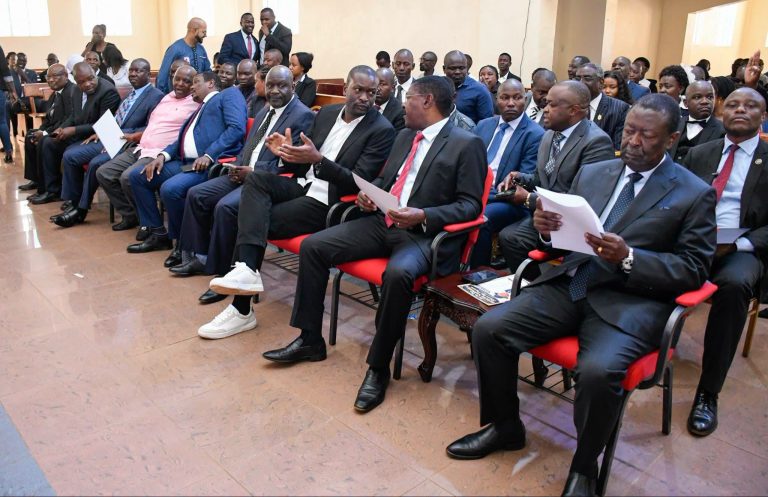
The eruption between Nyoro and Gachagua is symptomatic of a deeper crisis within Kenya’s opposition. The opposition principals — Gachagua, Kalonzo Musyoka of the Wiper Patriotic Front, Martha Karua of the People’s Liberation Party, Fred Matiang’i of Jubilee and Eugene Wamalwa of DAP-K — held their second round of consultations on 1 September. Gachagua, who was abroad, was represented by former Kakamega senator Cleophas Malala. The gathering produced no candidate, no coalition name and no agreed timeline. DAP-K’s Wamalwa was candid about the pace: “We can meet one day for lunch, and before dinner we have a candidate,” he said, suggesting a decision on a joint presidential flag-bearer could wait until after Christmas.
For Ruto’s strategists, the spectacle of Gachagua and Nyoro publicly trading accusations provides a political dividend. Mount Kenya contributes approximately 30 percent of the national presidential vote, a share large enough to determine the outcome of a close contest. A region divided between DCP, PPK and residual UDA loyalists would be far easier for an incumbent to navigate than a unified bloc marching in one direction. Gachagua’s own assessment — that Ruto is deliberately funding smaller parties to fragment the region — reflects an awareness that division is Ruto’s most effective defensive strategy in the heartland he carried convincingly in 2022.
What Nyoro’s emergence has complicated is the assumption that Mount Kenya’s opposition voice belongs to Gachagua alone. The Kiharu MP arrives with credibility, a Mount Kenya pedigree, a declared presidential ambition and a willingness to absorb attacks without folding. He has also called explicitly for opposition unity rather than fragmentation, positioning himself as a coalition builder rather than a spoiler.
The election is eleven months away. Mount Kenya’s eight million voters are watching — and the men seeking to speak for them are not yet speaking to each other.
Similar Posts by The Mt Kenya Times:
- Mt Kenya Times ePAPER October 23, 2026
- Ruto’s parting COMESA call: Remove the barriers, honour the commitments
- Direct hospital access to KEMSA cuts drug delays, says PS
- Africa can’t wait: Continent seeks $1 trillion for climate adaptation
- Ruto passes the baton as Africa’s trade bloc faces a fragmenting world
About the Author