Mt Kenya’s UDA exodus: How Ruto lost the region that made him president
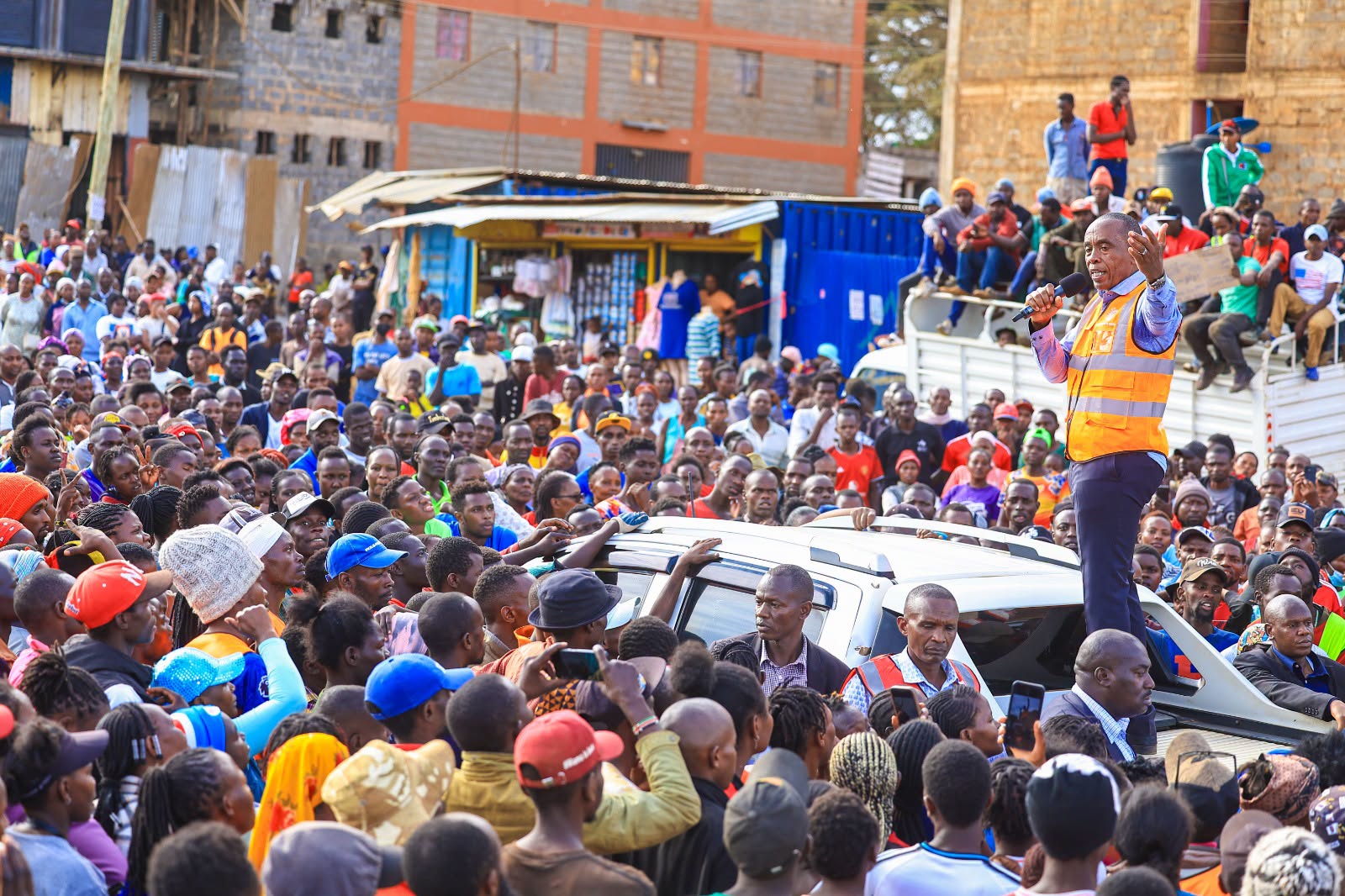
Kiambu Governor Kimani Wamatangi addresses wananchi in Ruiru Town during a development tour
Three sitting governors and a growing band of MPs have abandoned the ruling party in the mountain heartland, with the 2027 election threatening to deliver a reckoning President Ruto cannot afford to ignore.
By David Kimani
Kiambu Governor Kimani Wamatangi has formally declared that he will not seek re-election on a United Democratic Alliance ticket, becoming the third sitting governor from the Mt Kenya region to publicly break with President William Ruto’s ruling party ahead of the 2027 General Election.
Speaking over the weekend in Kiambu, Wamatangi made no attempt to soften the message. “I have decided not to engage in early campaigns to finish the pending development work we promised until around December,” he said. “But, like everyone else, we are sure which political party we cannot use.” He added that he will reveal his new political vehicle in December, leaving the precise destination unstated but the direction unmistakable.
The announcement marks the latest and perhaps most symbolically significant rupture in what has become a sustained collapse of UDA’s standing across the mountain counties. The region that delivered Ruto his margin of victory in the 2022 presidential race is now home to his most organised political opposition.
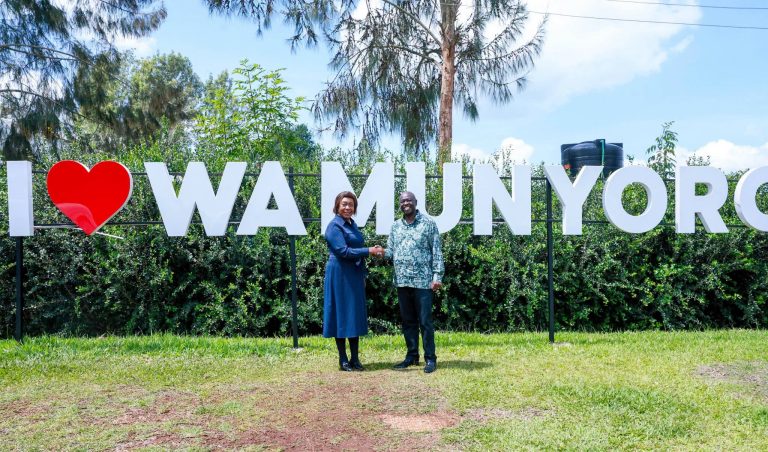
Wamatangi will be the third sitting Mt Kenya governor to ditch UDA, following Murang’a’s Irungu Kang’ata and Nyandarua’s Kiarie Badilisha, both of whom have formally joined former Deputy President Rigathi Gachagua’s Democracy for the Citizens Party. Gachagua, impeached in October 2024 and since repositioned as the region’s most prominent political broker, received Kang’ata at his Wamunyoro home in Nyeri in July this year — a carefully staged ceremony that announced the consolidation of an alternative Mt Kenya bloc with unmistakable clarity.
Kang’ata made reference to what had befallen Gachagua himself, Wamatangi and former Meru Governor Kawira Mwangaza, arguing that such political hostility from the centre was strengthening the opposition at the expense of the ruling party. He said the decision had followed internal efforts to resolve differences within UDA, including a direct engagement with President Ruto that failed to yield a consensus. “UDA has steadily lost political ground in the Mt Kenya region,” Kang’ata said, expressing doubt about whether the party could recover public confidence in time for 2027.
The governors’ departures do not stand alone. Gatundu South MP Gabriel Kagombe announced his own exit from UDA in August, citing an inability to convince constituents given the party’s growing unpopularity. Kieni MP Njoroge Wainaina followed, leaving UDA for the Ufanisi Kenya Party. Nakuru Senator Tabitha Karanja announced her departure and plans to contest the Nakuru gubernatorial race on a DCP ticket. Kiharu MP Ndindi Nyoro has also shifted away from UDA, aligning with alternative platforms including the People’s Party of Kenya. Githunguri MP Gathoni Wamuchomba formalised her exit from UDA in October, and has said the ruling party is not an option she will consider for 2027. The cumulative effect is a cascade that party officials in Nairobi have so far failed to arrest.
The backdrop against which these departures are occurring is not merely electoral calculation. Wamatangi has cited political persecution as a central grievance. In April 2025, Ethics and Anti-Corruption Commission detectives accompanied by armed officers searched his home in Kabete. The commission said he was being investigated over alleged corruption linked to KSh1.5B in procurement transactions in Kiambu County. Wamatangi has since said the state is using corruption cases to derail him politically, suggesting the investigations are instruments of intimidation rather than genuine accountability.
For its part, UDA has not been silent. Lands Cabinet Secretary Alice Wahome and Maragua MP Mary Wamaua publicly attacked Kang’ata at the time of his exit, with Wamaua accusing him of cowardice. The party has sought to frame the departures as the choices of individuals rather than evidence of systemic failure. Those arguments are increasingly hard to sustain when governors — the most visible representatives of a party’s governing record at county level — are the ones walking out the door.
The numbers provide context that party rhetoric cannot easily explain away. In the Ol Kalou by-election on July 16, DCP secured 85 per cent of the vote in a constituency that sits within the Mt Kenya bloc. That result, in a race that was widely read as a proxy contest between Gachagua’s emerging movement and Ruto’s incumbent machinery, sent an unambiguous signal about where the region’s political loyalties are heading. The government has responded by sharply increasing Deputy President Kithure Kindiki’s presence across Mt Kenya counties — over 30 visits in ten months, concentrated in Meru, Tharaka-Nithi and Embu — in what amounts to an open acknowledgement that the ground is shifting.
What makes the current exodus so politically consequential is who is leaving. These are not fringe figures or disgruntled backbenchers. Wamatangi, Kang’ata and Badilisha were among Ruto’s most trusted allies and key architects of his 2022 presidential victory in the region. Their departures carry a weight that cannot be measured in defection statistics alone — they represent the unravelling of a political compact that was central to how Ruto built his path to State House.
Wamatangi himself has not been restrained in describing what he has delivered for Kiambu. “We have delivered on 512 ECDEs, 32 new hospitals, installed 12,000 solar lights, provided water, supported agriculture and many other areas,” he said while inspecting road works in Riabai Ward. His pitch for re-election will be built on that record — but not under the banner of the party he helped put in power. He plans to let the residents of Kiambu tell him which party to wear. That, in itself, is a political statement.
For UDA, the message from Mt Kenya is blunt: the party that swept the region in 2022 is no longer the natural home of the leaders who made that sweep possible. With Gachagua consolidating his alternative bloc and 2027 approaching, the ruling party faces the prospect of contesting its political heartland against the very governors it once relied upon to deliver it.
Similar Posts by The Mt Kenya Times:
- Mt Kenya Times ePAPER November 4, 2026
- Kenya discharges first five Ebola patients as outbreak response gains ground
- Autopsy finds stab wounds killed Regina Re’s 86-year-old mother
- Kenya’s Okowa wins full ICJ term in historic diplomatic victory
- Kenya in the dock: The fight to find a missing Tanzanian activist tests the country’s reputation as a safe haven
About the Author