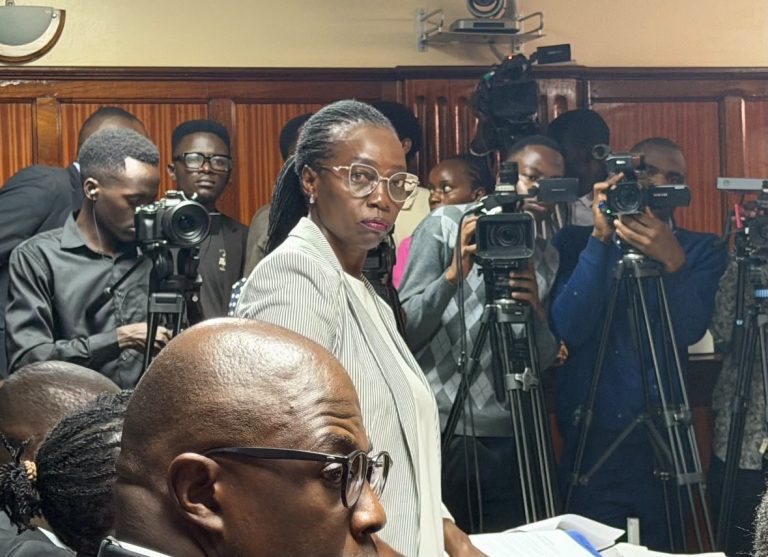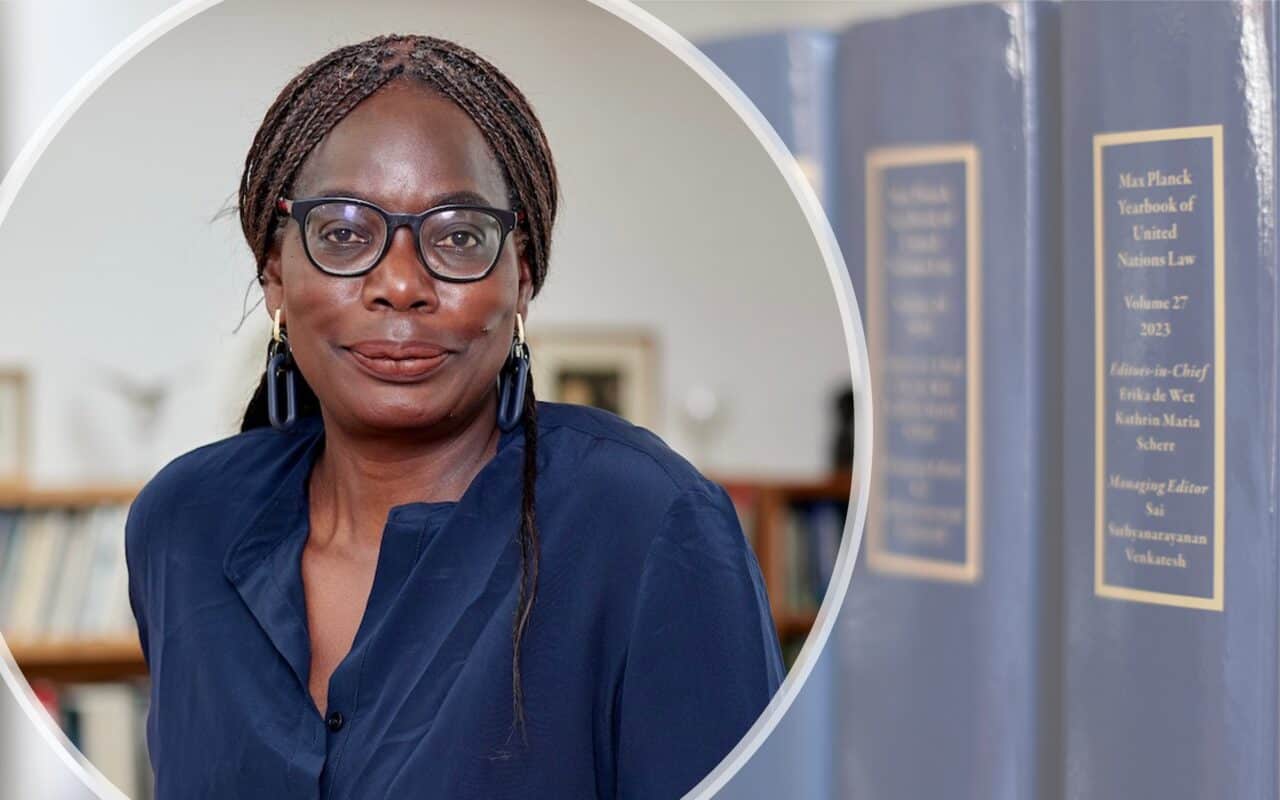
Professor Phoebe Okowa
Professor Phoebe Okowa’s re-election to the International Court of Justice for the 2027–2036 term cements Kenya’s standing in international law and signals growing African influence at the world’s highest judicial forum.
By David Kimani
Professor Phoebe Okowa has been re-elected judge of the International Court of Justice for a full nine-year term covering 2027 to 2036, securing the required absolute majority in both the United Nations General Assembly and the UN Security Council in New York on Tuesday.
The November 2026 elections, held during the 81st session of the UN General Assembly, were the culmination of a year-long diplomatic campaign by Kenya to secure Okowa a full mandate — one that began immediately after she first took her seat on the bench. That she has now won that mandate, in a competitive field, is both a personal and a national achievement of the highest order.
Foreign Affairs Principal Secretary Korir Sing’Oei confirmed that Okowa had garnered the highest number of co-nominations ever received by an African candidate in the history of ICJ elections — a measure of the breadth of international confidence her candidacy attracted across regions. Welcoming the result on Tuesday, Sing’Oei said the outcome reflected the trust the international community places in Kenya’s contribution to global justice. “It is with immense pride that I welcome the election of Judge Phoebe Okowa to the International Court of Justice for the 2027–2036 term,” he said. “Judge Okowa’s election reflects the confidence of the international community in her capacity to serve the Court at this consequential time.”
The significance of the result extends well beyond diplomatic formality. Okowa, who joined the court in November 2025, became the first Kenyan and the first African woman to sit on the world’s highest court, and is only the eighth woman in history to serve on the ICJ bench. Her re-election to a full term ensures that landmark representation is not a brief footnote in the court’s history, but a durable presence through one of the most consequential periods the institution has faced.
Okowa is Professor of Public International Law and Director of Graduate Studies at Queen Mary University of London — an academic career that has run alongside decades of international legal practice, including her historic election in 2021 as the first African woman to serve on the United Nations International Law Commission. Her tenure on the Commission, which runs from 2023 to 2027, has seen her chair its Drafting Committee — a role that placed her at the technical centre of some of the world’s most complex legal drafting processes.
Her path to the ICJ full term was not straightforward. Kenya finished its public campaign well aware that the hardest part lay ahead: translating diplomatic support into actual votes across two separate UN bodies, each voting concurrently but independently, with an absolute majority required in both — a threshold that has ended the ambitions of better-known candidates before her. Regional solidarity, shared legal networks and quiet bilateral understandings all shape such contests, and Kenya worked them methodically.
In July 2026, Sing’Oei announced that 26 countries had formally endorsed Okowa’s candidacy ahead of the November vote — a cross-regional coalition spanning Africa, Asia, Europe and Latin America, and the broadest co-nomination footprint ever assembled for an African ICJ candidate. The Law Society of Kenya publicly backed her candidacy, as did Foreign Affairs Cabinet Secretary Musalia Mudavadi, who personally rallied African delegations behind her bid during a continental diplomatic push earlier in the year.
President William Ruto, who had celebrated Okowa’s initial election to the court, framed her re-election in terms that reached beyond national pride. “Her re-election isn’t just a win for Kenya; it is a commitment to a fair, diverse, and rules-based international order,” Ruto said, in a message that acknowledged both the institutional weight of the ICJ and the moment’s broader meaning for the continent.
The ICJ that Okowa returns to for a full nine-year term is under greater demand than at almost any point in its history. The court is the United Nations’ main judicial body for disputes between states, and its caseload has grown sharply in recent years, with cases involving Gaza, Ukraine and Myanmar generating intense international debate and placing the institution at the intersection of law, geopolitics and global conscience. Chatham House has observed that approximately 20 per cent of all cases brought before the court since its founding in 1945 have been filed in the past decade alone — a statistic that speaks to both the court’s growing relevance and the burden it now carries.
The ICJ’s current composition spans 15 judges elected to staggered nine-year terms, drawn from across the world’s legal traditions, with the bench required by its statute to represent the main forms of civilisation and principal legal systems. Africa currently holds three seats on the court, and Okowa’s full term ensures the continent’s voice remains present and credible through cases that will shape the architecture of international law for a generation.
She has earned this moment through scholarship, service and a career built on the conviction that international law is not merely an academic exercise but a living instrument through which justice can be sought and sometimes won. The Hague now has her for nine more years.
For Kenya, for Africa, and for the many states that placed their confidence in her candidacy, that is exactly as it should be.
Similar Posts by The Mt Kenya Times:
- Kenya discharges first five Ebola patients as outbreak response gains ground
- Mt Kenya’s UDA exodus: How Ruto lost the region that made him president
- Autopsy finds stab wounds killed Regina Re’s 86-year-old mother
- Kenya in the dock: The fight to find a missing Tanzanian activist tests the country’s reputation as a safe haven
- Vocal Trans Nzoia MCA arrested as Linda Mwananchi demands his release
About the Author