Murkomen’s bold message: Is Ruto truly restoring hope where Kenya had been forgotten?
 The Mt Kenya Times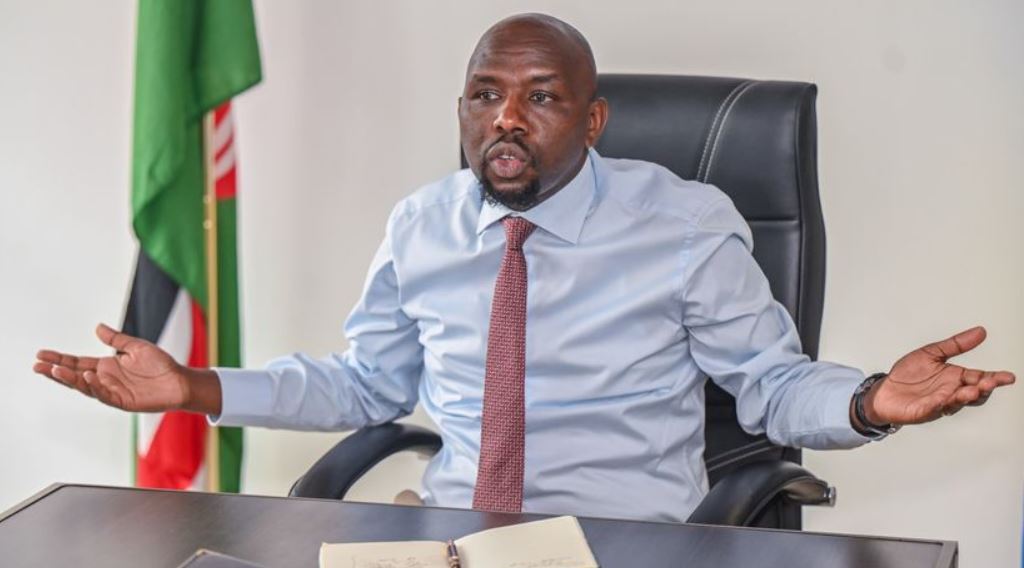
Interior Cabinet Secretary Kipchumba Murkomen..
Interior CS Kipchumba Murkomen has staked the Kenya Kwanza administration’s reputation on a claim that President William Ruto is delivering development to communities long neglected — but not everyone is convinced.
By Hadassah Karangu
Politics in Kenya rarely lacks drama, but every so often a statement emerges that captures the attention of the nation. Interior Cabinet Secretary Kipchumba Murkomen has once again found himself at the centre of political debate after passionately defending President William Ruto’s leadership, insisting that the head of state is taking development back to communities that had waited years to see meaningful government investment.
His remarks have ignited conversations across the country. Supporters see them as recognition of a government determined to fulfil its promises, while critics dismiss them as political rhetoric designed to shore up support ahead of the 2027 General Election. Yet beneath the heated exchanges lies a larger question that many Kenyans continue to ask: are citizens witnessing genuine transformation, or are they simply hearing another campaign narrative?
Murkomen painted the picture of an administration committed to reaching every corner of the country. According to him, Ruto’s government is determined to ensure that no region is left behind on roads, electricity, education, healthcare and economic opportunity. He argued that development should not depend on political affiliation but should be the right of every Kenyan, regardless of where they live.
For many residents in rural Kenya, such promises carry enormous weight. Communities that have endured poor roads, unreliable water supplies, limited healthcare and chronic youth unemployment naturally welcome any sign of government attention. Every new road, classroom, health facility or electricity connection becomes more than just another project — it becomes a symbol of hope for families that have waited years to be noticed.
Yet politics in Kenya has taught citizens to be cautious. Grand promises have been made before. Every election cycle has brought assurances that forgotten communities would finally receive their fair share of national resources. Some projects have indeed been completed; others have stalled or quietly disappeared once the excitement of political rallies faded.
That is why Murkomen’s remarks have sparked intense debate. His supporters argue that Ruto deserves credit for pushing development projects despite the economic headwinds facing the country. They point to infrastructure, affordable housing, digital initiatives and agricultural programmes as evidence that the administration is working to deliver on its manifesto.
Critics, however, maintain that development should not be measured by announcements and launches alone. They argue that ordinary Kenyans continue to struggle with a high cost of living, unemployment and increased taxation. For them, true progress is reflected in improved household incomes, affordable food, accessible healthcare and quality jobs — not political speeches.
This divergence illustrates the central challenge facing the Kenya Kwanza administration. While government leaders highlight ongoing projects and investments, many citizens judge success by the realities they encounter every day. If life remains difficult despite visible projects, convincing the public becomes an uphill task.
Murkomen’s defence of Ruto also reflects a sharpening political contest as the country gradually turns its attention towards the next election cycle. Every statement by a senior government official is now being read through the dual lens of governance and political strategy. Development has increasingly become one of the strongest tools in a politician’s arsenal, with leaders racing to demonstrate tangible achievements to voters.
Ultimately, the debate should not revolve around personalities alone. The real issue is whether development reaches the people who need it most. Roads should connect farmers to markets. Hospitals should save lives. Schools should equip children with better opportunities. Water projects should ease the daily burden on families. These are the achievements that endure long after political rallies have ended.
As Murkomen continues to defend Ruto’s record, Kenyans will keep asking tough questions — comparing promises with reality, speeches with completed projects and political declarations with their own daily experiences. In a democracy, that scrutiny is not only expected; it is essential.
Whether history remembers this administration as one that genuinely transformed forgotten regions, or one that simply mastered the language of political persuasion, will depend not on speeches but on results that every Kenyan can see, touch and benefit from. In the end, development is the most powerful campaign message — but only when it changes lives.
Similar Posts by The Mt Kenya Times:
- How Mitei has steadied the ship at TSC
- Breaking the silence: How Kenya’s schools can heal the hidden wounds of mental stress
- When the seller roars and the buyer whispers: Kenya’s competition law and the uneven hunt for market tyrants
- Kane ends England’s 25-year Ballon d’Or wait with record-breaking Bayern season
- Saka dedicates Sócrates Award to Rwandan boy who regained his sight
About the Author