To safeguard public health, the Cabinet has approved a nationwide asbestos removal initiative from all public and private facilities. This initiative aims to mitigate the serious health risks associated with asbestos exposure. Asbestos, widely used in Kenya’s construction industry during the 1960s and 1970s, remains present in government buildings, hospitals, schools, and even water supply systems. Classified as a human carcinogen, asbestos exposure is linked to severe health conditions, including lung cancer and mesothelioma—a cancer affecting the lining of the lungs, abdomen, and heart.
This critical step reinforces the commitment to creating healthier and safer environments for all. The Cabinet has also elevated Jaramogi Oginga Odinga Teaching and Referral Hospital (JOOTRH) to a National Teaching and Referral Facility and officially established it as a State Corporation. This milestone enhances its capacity to deliver specialized healthcare, advance medical training, and strengthen research, contributing to improved health services for all Kenyans.
 Deputy President Kithure Kindiki yesterday joined President William Ruto and Nairobi City County leadership led by Governor Jackson Sakaja on a development tour of Mathare and Ruaraka Constituencies. The DP noted that to realise the economic and social transformation of the Country, leaders must prioritise development programmes and projects, and shun division along ethnic, religious or political affiliation. He applauded the people of the two constituencies for embracing the call for national unity and supporting the government in the implementation of development projects in education, housing, health and markets.
 The Ministry of Water Sanitation and Irrigation has launched a Ministerial Audit Committee (MAC), marking a significant milestone in its ongoing commitment to transparency, accountability, and good governance. The Committee was inaugurated on Monday by the ministry’s Cabinet Secretary Eng. Eric Murithi Mugaa as part of the its efforts to ensure efficient and responsible management of public resources. The Audit Committee is established pursuant to Section 73 (5) of the Public Finance Management (PFM) Act, 2012, which states that “Every national government public entity shall establish an audit committee whose composition and functions shall be as prescribed by the regulations.” The committee is composed of five members, including a chairman, two members, a representative from the National Treasury and Planning and the secretary.
Primary function of the Committee will be to support the Ministry’s Accounting Officers, the Principal Secretaries in the two State Departments in the Ministry; Water and Sanitation and State Department of Irrigation, in addressing issues related to risk, control, governance, and assurance.
 Department of Environment and Climate Change Principal Secretary Eng. Festus K. Ng’eno yesterday hosted a team from the European Commission and European Union member states led by Irene Giribaldi at the Ministry’s headquarters. The PS, who was accompanied by Director Climate Change Dr. Pacifica Ogola, among other officials, discussed areas of partnerships with the EU in Article 6.4 of the Paris Agreement on carbon markets, finalising the costing of Nationally Determined Contributions (NDC) and the Africa Climate Summit (ACS), among others. Kenya is keen to learn from the EU Emissions Trading System (EU ETS), an EU policy tool to combat climate change by reducing greenhouse gas emissions from sectors like electricity generation and industry, covering approximately 40% of EU emissions.
 Prime Cabinet Secretary Musalia Mudavadi yesterday met with Dr. Tamás Sulyok, President of Hungary, at Sándor Palace in Budapest where he reaffirmed Kenya’s commitment to deepening ties with Hungary since the partnership began in 1964. He expressed gratitude for Hungary’s continued support, particularly in education through 200 annual scholarships, as well as investments in agriculture and health. Mudavadi encouraged Hungarian investors to explore opportunities in Kenya’s hospitality, infrastructure, energy, and agriculture sectors, assuring them of Kenya’s open financial systems that allow seamless profit repatriation. He also conveyed President Ruto’s commitment to opening a Kenyan embassy in Budapest, a move already approved by the Cabinet and awaiting budgetary allocation. President Sulyok pledged Hungary’s support in nuclear energy investment to help Kenya achieve stable and sustainable power for economic growth and confirmed plans to visit Kenya in the near future.
Similar Posts by The Mt Kenya Times:
- Mt Kenya Times ePAPER September 19-20, 2026
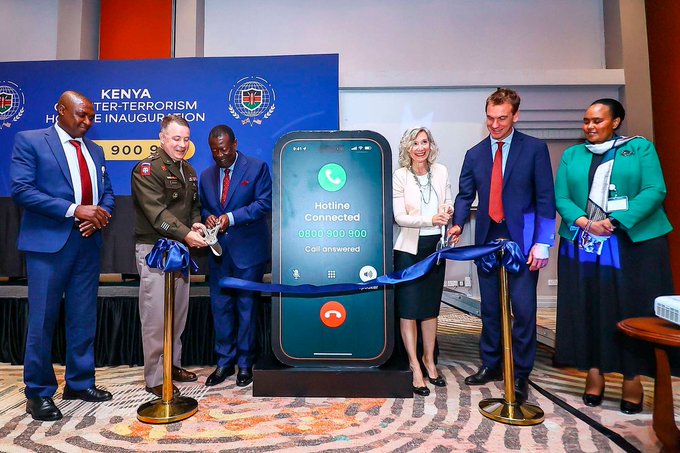
- Kenya joins US and UK to put citizens on the terrorism frontline
- Kenya’s parliament races to tame the AI frontier
- Kalonzo calls Ruto to order over Uhuru attacks
- Gachagua takes his 2027 campaign to America
About the Author