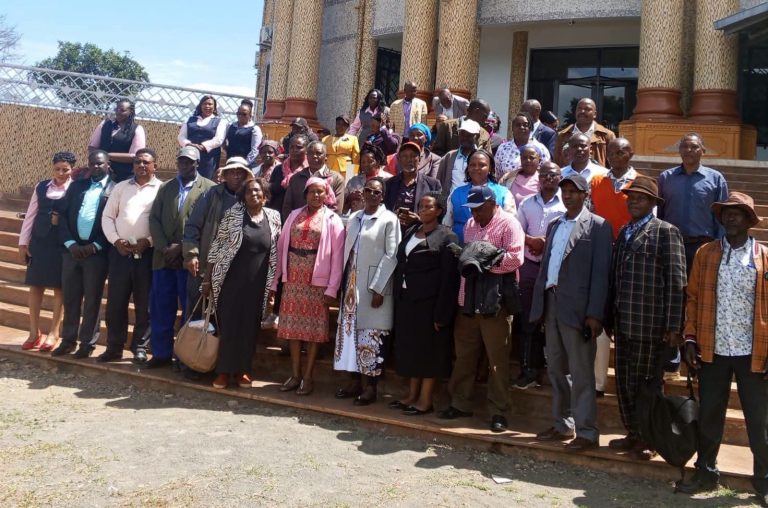
The Kiambu Senate Speaker has approved a County Impeachment Bill, which aims to remove county officials for misconduct in office.
The bill provides a direct framework for the removal of governors, their deputies, the Member County Executive Committee (MCEC), and county speakers.
The bill has received its first nod from the Senate Committee on Justice, Legal Affairs, and Human Rights, with a few recommendations and amendments.
Kiambu Senator Karungo Wa Thang’wa, who tabled the Bill, expressed excitement about the bill’s publication, urging the public to provide their input.
The bill aims to address the lack of procedural safeguards guaranteed by Articles 47 and 50 of the Constitution, ensuring fair administrative action and protecting the rights of all parties.
 Kisumu County Executive Committee Member (CECM) for Public Service, County Administration, and Participatory Development Judith Oluoch addresses participants during the launch of the second phase of the Huduma Mashinani initiative in Seme Sub-County, Kisumu County.
“Huduma Mashinani serves as both a feedback mechanism and an information and dialogue forum, ensuring continuous engagement between the government and its citizens,” Oluoch observed.
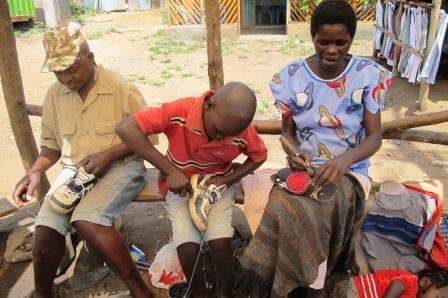 The Ministry of Labour and Social Protection is engaging with the private sector to discuss strategies for eradicating child labour.
The Deputy Labour Commissioner in charge of Field Services, Bonaya Kase, emphasised the need for the state to take the lead in reducing child labour in Kenya, with a target of ending it by 2025.
“If you don’t have that authority from the Ministry of Labour to employ children, then you are committing an offence. This has been a slow process, but where we have reached now, we are mobilising the communities so that we can now take action to eliminate child labour in totality,” he added.
Kase highlighted the Employment Act’s regulations, which require employers to obtain authorization before employing children.
Kenya plans to fight child labour through free primary school education, transition to secondary school, and vocational training.
The ILO CAPSA Project Manager, Grace Banya, commended the government’s proactive stand on child labour and human trafficking, urging the private sector to commit to labour standards.
 A teenager was fined Sh1 million or served one-year imprisonment after admitting to selling bhang to school-going children.
Joseph Mwangi, 18 was arrested by local police after locals reported him selling bhang.
Mwangi was found guilty and pleaded for leniency, stating he started peddling bhang at a young age to raise school fees.
Murang’a Chief Magistrate Peter Ndwiga ruled that Mwangi must impose the fine or serve a one-year sentence as a deterrent to others selling bhang to school-going children.
 The Samburu County Gender Sector Working Group has launched the Male Engagement and Inclusion Thematic Group to combat gender-based violence (GBV).
The group aims to empower men and boys to participate in the gender agenda, challenge outdated cultural practices, and support women in leadership, security, social economic empowerment, and anti-GBV areas.
 The Kenya Bankers Association (KBA), in partnership with the Central Bank of Kenya (CBK), rolled out the “Chora Plan” financial literacy programme to empower individuals and businesses with the necessary knowledge.
The programme provides the skills and knowledge to make informed financial decisions and enhance financial stability and economic growth in Kenya.
The programme will pave the way for a month-long sensitization drive focusing on building a saving culture in financial planning to enhance the financial health of businesses and households.
The CBK Governor, Dr. Kamau Thugge, called for stakeholders to move forward on the financial inclusion frontier as a pathway to shared prosperity for all Kenyans.
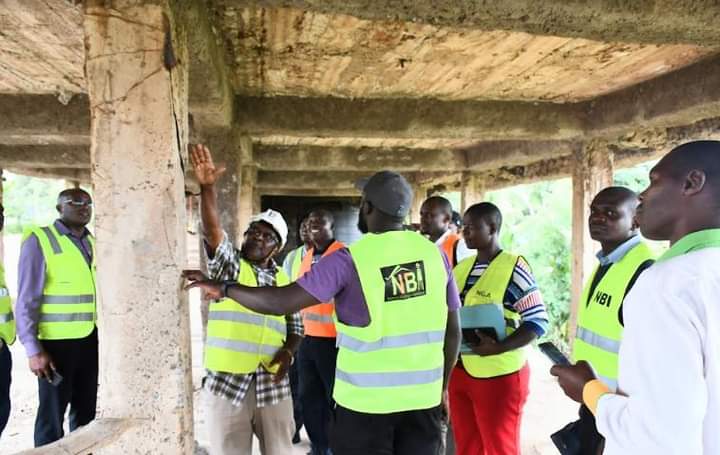 Vihiga County Commissioner Felix Watakila has urged public officers to closely monitor project progress to prevent unscrupulous contractors from doing shoddy work or failing to meet set timelines.
He criticised contractors for failing to complete projects at Ebunangwe Vocational Training College and Emululu VTC in Luanda sub-county.
Watakila called for multi-sectorial collaboration to rein in criminals and ensure projects are executed effectively and within set timelines.
 The Principal Secretary for ASALs and Regional Development, Kello Harsama, has announced measures to support herders in Marsabit County affected by climate change.
The Kenya Kwanza administration has allocated Sh1 billion to assist livestock farmers in restocking animals devastated by drought and flash floods.
The funds were captured in the fourth medium term (MTPIV) of the Vision 2030 Strategic Development Plan and will commence in the 2024–2025 financial year.
Local pastoralists lost over 80% of their livestock due to these disasters, requiring timely action to restore livelihoods and human dignity.
Monthly rations of 700 bags of beans and 400 bags of rice have been allocated to every sub-county.
Similar Posts by The Mt Kenya Times:
- Kingdom Bank charts new path for MSME growth through chamber partnership
- Mt Kenya Times ePAPER September 25, 2026
- Babu Owino’s party predates Linda Mwananchi, clarification shows
- Anglican church tells Kenyans: The country is getting worse and silence is complicity
- Sifuna set for UDP presidential unveiling as Western Kenya bids to field its own candidate
About the Author