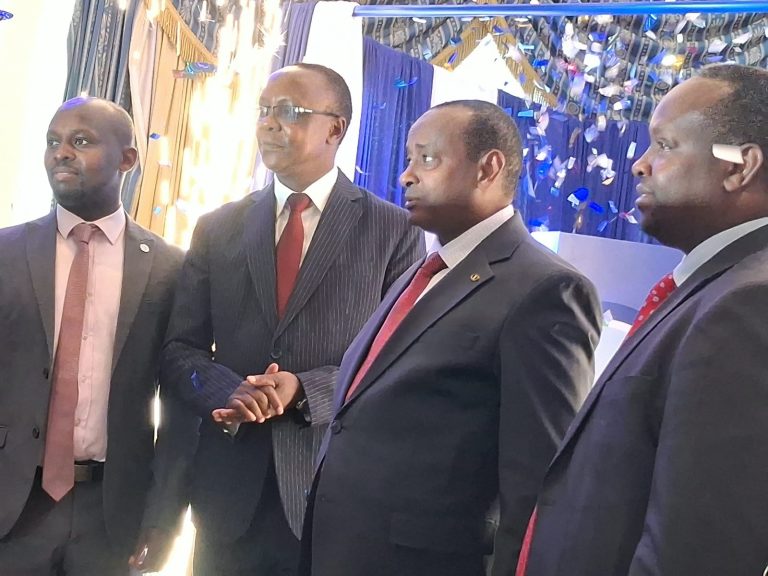
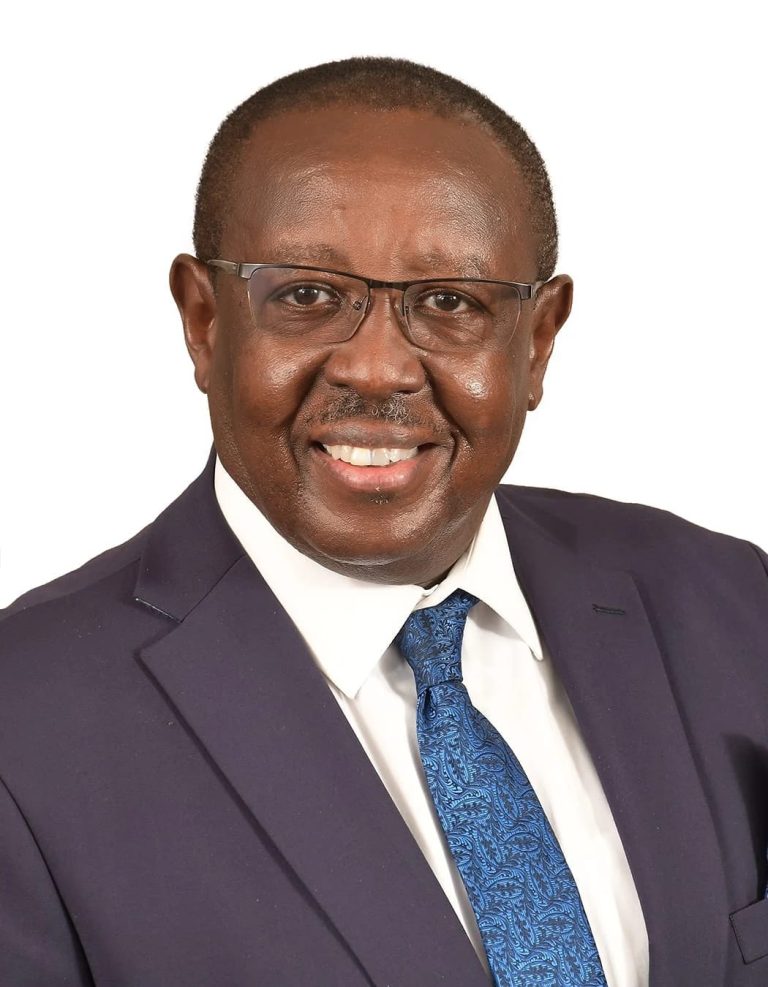
In picture, Senator Nairobi county and ODM Secretary General Edwin Sifuna, giving his remarks, on behalf of ODM party leader and survivor of past historical injustices Raila Odinga.
By Aoma Keziah,

The call for justice and reparations took center stage as victims, survivors, and human rights defenders gathered to commemorate the International Day for the Right to the Truth Concerning Gross Human Rights Violations and for the Dignity of Victims. Organized by the National Victims and Survivors Network (NVSN), the Kenya National Commission on Human Rights (KNCHR), and the Kenya Transitional Justice Network (KTJN), including Utu Wetu Trust, the event spotlighted this year’s theme: “Reparation Now!”
Bringing together key political and human rights figures, the gathering provided a platform to assess the government’s progress in addressing past injustices and ensuring accountability. The discussions revolved around the long-overdue Kshs 10 billion Restorative Justice Fund, initially proposed to support victims of historical injustices, political violence, and recent human rights violations.
In his remarks, Senator Nairobi county , Edwin Sifuna, representing the chief guest ODM party leader and survivor of past historical injustices Raila Odinga, explained that among the issues in Memorandum of Understanding signed by ODM and UDA of President William Ruto, is the question of human rights.
“The MOU is strong on respect for the right to peaceful assembly, we intend to push for an allocation of special fund for this cause in the upcoming budget. The MOU also includes agreements on matters pertaining to Protecting and promoting sovereignty of the people, the Rule of law and Constitutionalism,” he remarked.
Dr. Bernard Mogesa, CEO Kenya National Commission on Human Rights (KNCHR), noted that the Truth, Justice and Reconciliation Commission began this journey for Kenyans by documenting atrocities committed to individuals which affected wholesome communities as well.
“ it was hoped that the recommendations of the Commission would be the beginning of the nation to observe and respect human rights to avert degradation of human dignity and enhance the enjoyment of rights in Kenya. One of the key recommendations of the Commission was the establishment of a reparations fund that would restore dignity and hope to affected citizens and communities. The establishment of the ksh10 billion reparations kitty was a step in the right direction with the Commission and partners working tireless to develop regulations that would ensure the kitty and funds are utilized in the way that was envisioned,” he noted.
Busia Senator Okiya Omtatah, a survivor of past injustices, reaffirmed the need for state commitment to reparations.
“we must really come up and stand up for this country and i think, as a state, we need the law and to me, I feel there’s a really big role in the law, when I read my constitution, there’s a requirement for parliament to enact legislation providing for the protection, rights, and welfare of victims of crime. What we are dealing with is victims of crime, whether political or whatever, but there’s really no mechanism dealing with victims of crime,” he stated.
Human rights lawyer Willis Otieno, said that the state should be leading in addressing challenges of the victims of human rights violations.
“The state should be the one leading the challenge in addressing all the challenges that people are facing but it is us pushing the state. How can you push yourself to recognize your own violation? i’ve been violated and I’ve seen people who are violated, i have seen victims who are going through pain. How can the state be begged to recognize acts which has happened to them? we must have a political conversation to deal with it,” he said.
The key Outcomes of the event the government was appraisal on transitional Justice State actors provided updates on the stalled implementation of the Truth, Justice, and Reconciliation Commission (TJRC) Report and efforts to operationalize the Restorative Justice Fund, leaders engaged in discussions on the Kenya Kwanza 2022 Manifesto, the NADCO report, and the recent UDA-ODM MoU, focusing on how these agreements align with transitional justice efforts.
Also, Civil society organizations, victims’ networks, and legal experts deliberated on strengthening advocacy efforts to pressure the government into fulfilling its obligations, concluding with a renewed commitment from stakeholders to push for immediate reparations, truth-telling, and policy reforms that uphold victims’ dignity.
Similar Posts by Aoma Keziah:
- Nationwide Youth Business Drive Enters Last Lap With New Nyota Trainings
- Green Light From Washington Sets G42 On Fast Track to Build Region’s Most Powerful AI Network
- Safina Eyes Kariobangi North Seat in Intensified Push Before Poll Day
- KEBS Opens Talks With Manufacturers On New Standards Levy Order 2025
- Kenya, Uganda And South Sudan Chart Way Forward On East Africa Rail Corridor
About the Author

 The Mt Kenya Times