Ruto’s 2027 Campaign: Repackaging Uhuru’s Legacy Projects Under The Broad-Based Government
 The Mt Kenya Times
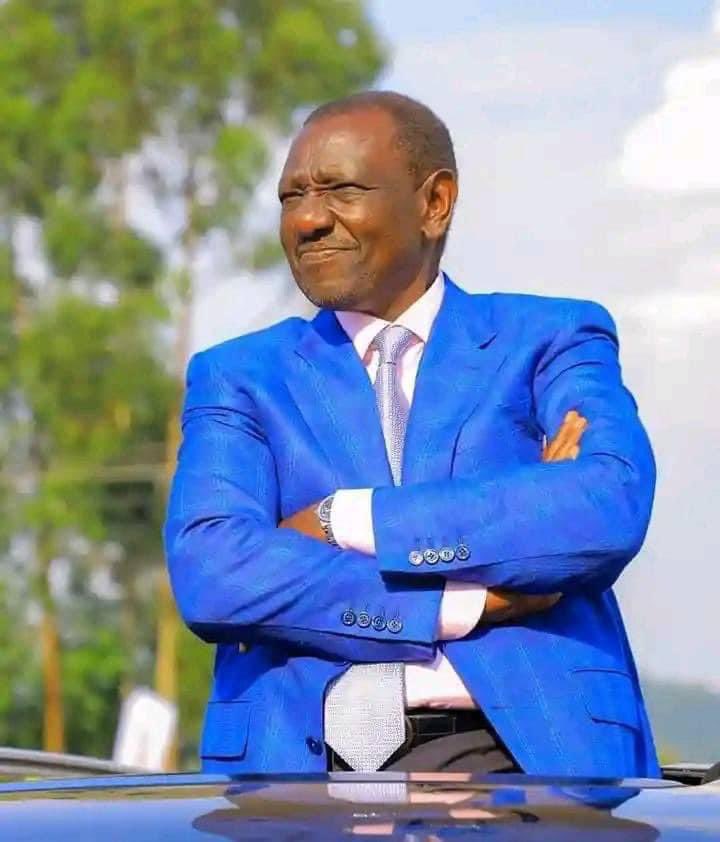
President William Ruto
By: Midmark Onsongo
Worth Noting:
- This strategy is not isolated to Kisii alone. Across the country, several other projects bear the hallmark of Ruto’s repackaging. In Nairobi, the Nairobi Expressway, one of Kenyatta’s flagship projects, has also seen Ruto claim credit for its completion and operation.
- While the expressway was completed in mid-2022, just before Kenyatta left office, Ruto has often used it as a talking point to highlight his administration’s commitment to infrastructure development. This repurposing of Kenyatta’s achievements serves to blur the lines between the two administrations, making it difficult for the public to discern where Kenyatta’s legacy ends and Ruto’s begins.
- The use of these relaunches as a political tool extends beyond mere ribbon-cutting ceremonies. Ruto has actively incorporated these projects into his broader narrative of a “broad-based government,” a term he uses to describe his administration’s inclusive approach to governance.
As Kenya heads towards the 2027 elections, President William Ruto appears to be positioning himself for a second term by leveraging infrastructure projects initiated by his predecessor, Uhuru Kenyatta. These projects, originally launched with much fanfare during Kenyatta’s administration, are now being rebranded and relaunched as part of Ruto’s broader political strategy. This approach, which he terms as part of his “broad-based government,” is not just a display of continuity but also a calculated move to solidify his political base and woo voters by showcasing tangible development. However, beneath the surface, the strategy raises questions about the originality of Ruto’s development agenda and the true intentions behind these relaunches.
One of the most notable instances of this phenomenon is the Metembe-Marani-Kegogi-Nyaore Road in Kisii County. Initially launched by President Kenyatta on August 5, 2016, the 64.6-kilometer road was intended to boost connectivity in the region, crisscrossing Kitutu Chache North and South constituencies. However, the project hit significant roadblocks, with only 27 kilometers completed by the time the contract was terminated in May 2023 due to the contractor’s non-performance. Fast forward to June 2024, and President Ruto is back in Kisii, relaunching the same project with great fanfare. The original project was re-tendered, and a new contract was awarded, allowing Ruto to frame this as a fresh start, despite the project’s troubled history.
This strategy is not isolated to Kisii alone. Across the country, several other projects bear the hallmark of Ruto’s repackaging. In Nairobi, the Nairobi Expressway, one of Kenyatta’s flagship projects, has also seen Ruto claim credit for its completion and operation. While the expressway was completed in mid-2022, just before Kenyatta left office, Ruto has often used it as a talking point to highlight his administration’s commitment to infrastructure development. This repurposing of Kenyatta’s achievements serves to blur the lines between the two administrations, making it difficult for the public to discern where Kenyatta’s legacy ends and Ruto’s begins.
The use of these relaunches as a political tool extends beyond mere ribbon-cutting ceremonies. Ruto has actively incorporated these projects into his broader narrative of a “broad-based government,” a term he uses to describe his administration’s inclusive approach to governance. This narrative is designed to appeal to a wide range of political, ethnic, and regional interests, positioning Ruto as a unifying figure who is building on the successes of his predecessor. However, critics argue that this is merely a façade, masking a lack of original initiatives and an over-reliance on Kenyatta’s groundwork.
One of the more controversial aspects of this strategy is the use of these projects as campaign tools. By relaunching infrastructure projects in key regions, Ruto is effectively using public resources to bolster his re-election bid. This approach is particularly evident in regions that are considered electoral battlegrounds, where Ruto’s presence and the relaunch of these projects are likely to sway public opinion. The optics of a president cutting ribbons and inaugurating projects are powerful, especially in areas that may not have seen significant development in the past. However, the question remains: how much of this development is truly Ruto’s doing, and how much is he simply inheriting from his predecessor?
A closer examination of the timelines reveals a pattern. For instance, the ongoing construction of the Mau Summit-Kericho-Kisumu Highway, another project initiated under Kenyatta’s tenure, has seen renewed attention under Ruto. While the project was launched in 2020 as part of Kenyatta’s broader Vision 2030 initiative, it has been repackaged under Ruto’s administration as a key element of his infrastructure development plan. The relaunch of this project in March 2024, just months after Ruto took office, is indicative of a broader trend of rebranding legacy projects to fit the current administration’s narrative.
Moreover, this repackaging strategy raises questions about the transparency and accountability of the current administration. By relaunching projects that were previously funded and initiated, there is a risk of double-dipping into public funds, where resources are allocated to projects that should have been completed during the previous administration. This not only raises concerns about the efficient use of public resources but also about the potential for corruption, as contracts are re-awarded and projects re-tendered without clear justification.
In the lead-up to the 2027 elections, it is likely that Ruto will continue to use this strategy as a cornerstone of his campaign. The relaunch of projects serves a dual purpose: it allows him to showcase tangible development while also distancing himself from any shortcomings of the previous administration. However, the success of this strategy will ultimately depend on the public’s perception of these efforts. If voters see through the repackaging and recognize these projects as merely a continuation of Kenyatta’s legacy, Ruto’s campaign may lose its momentum.
President William Ruto’s relaunch of projects initiated under Uhuru Kenyatta is a calculated move aimed at consolidating his political base and securing re-election in 2027. While this strategy of repackaging legacy projects under the guise of a broad-based government may resonate with some voters, it also raises critical questions about the originality of Ruto’s development agenda and the ethical implications of using public resources for political gain. As the election approaches, the success of Ruto’s campaign will depend on whether voters view these relaunches as genuine development efforts or merely as political theatre.
President William Ruto’s recent strategy of relaunching and rebranding various projects initiated by his predecessor, Uhuru Kenyatta, has raised significant attention, both supportive and critical. The underlying costs associated with these efforts reflect a complex combination of factors, including project delays, rebranding expenses, and additional funding required to complete unfinished initiatives.
Initial Project Costs and Relaunching Expenses.
When a project is relaunched, particularly those that had been initiated under Uhuru’s administration, there are several layers of costs to consider. Firstly, many of these projects had either stalled due to budgetary constraints or were left incomplete. For instance, the Kanyuambora Irrigation Project, originally launched by Uhuru in 2021, was re-launched by Ruto in August 2024. The initial cost of the project was KES 1.2 billion, but due to delays and re-procurement under the Kenya Kwanza government, an additional KES 300 million was allocated to complete it.
Another significant project is the Nairobi Expressway, which initially required a budget of KES 88 billion. However, for its re-launch under Ruto, modifications and updates brought an additional cost of KES 15 billion, covering the extension and enhancement of certain sections to align with Ruto’s development agenda.
Rebranding and Campaign-related Expenses
Ruto’s administration has also allocated significant funds towards rebranding these projects to align them with his “Bottom-Up Economic Transformation Agenda.” This rebranding includes new signage, marketing materials, and nationwide tours to re-launch these initiatives, all of which contribute to the overall cost. For example, the rebranding of the Affordable Housing Project, initially launched by Uhuru, has seen an additional KES 5 billion allocated to enhance the project’s visibility and align it with Ruto’s campaign narrative for 2027.
The relaunch tours themselves, including logistics, security, and media coverage, are estimated to cost around KES 1 billion per region, with Ruto having visited at least five major regions since taking office.
Total Additional Costs
In total, the additional costs associated with these relaunch efforts are substantial. For instance, relaunching the roads project in Kisii, which included the Metembe – Marani – Kegogi – Nyaore Road, required an additional KES 2 billion due to the termination of the previous contractor and re-procurement of the project. This brings the total additional costs for Ruto’s relaunch and rebranding initiatives to approximately KES 28 billion.
While the relaunching of these projects is presented as a fulfillment of Ruto’s campaign promises and a continuation of development efforts, the financial implications are considerable. These costs highlight the challenges and complexities of taking over and rebranding large-scale infrastructure projects. The relaunch efforts are as much about political positioning for the 2027 elections as they are about completing and delivering on long-standing promises to the Kenyan people.
The expenditures reflect the intricate balance between continuing development and utilizing existing projects as political capital in an evolving political landscape.
This article was scripted by;
MIDMARK ONSONGO
(Sustainable economist, Geopolitics strategized)
Similar Posts by The Mt Kenya Times:
- Mt Kenya Times ePAPER October 23, 2026
- Ruto’s parting COMESA call: Remove the barriers, honour the commitments
- Direct hospital access to KEMSA cuts drug delays, says PS
- Africa can’t wait: Continent seeks $1 trillion for climate adaptation
- Ruto passes the baton as Africa’s trade bloc faces a fragmenting world
About the Author