Strengthening Devolution: A Call For Equitable Resource Allocation In Kenya

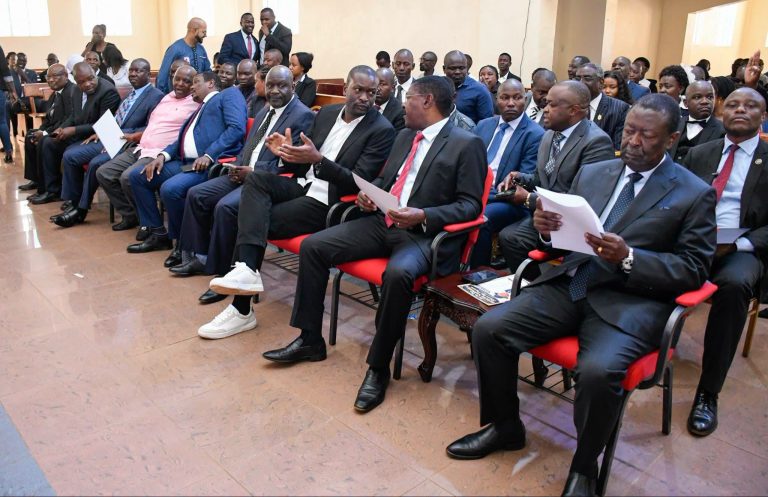
Tharaka Nithi County governor Muthomi Njuki who is also the CoG Health Committee chairperson making a point as governor Ann Waiguru looks on.

By: James Kilonzo Bwire
The ongoing 24th Ordinary Session of the Intergovernmental Budget and Economic Council (IBEC) is a pivotal moment for Kenya’s governance. As national and county leaders convene, the emphasis on cooperation highlights the importance of addressing the financial disparities that have long plagued the devolved system. With governors advocating for a significant increase in equitable shares, the session presents an opportunity to realign budgetary priorities with the pressing needs of local governments.
Governors are demanding Ksh.425 billion for the fiscal year 2023/24, a substantial increase from the current Ksh.370 billion allocated. This request reflects the growing recognition that effective governance at the county level is contingent upon adequate funding. The Council of Governors (CoG) has articulated that without sufficient resources, counties struggle to fulfill their mandates, leading to inefficiencies and unmet public needs.
Historical funding inadequacies have resulted in a backlog of pending bills and hindered the delivery of essential services. The Controller of Budget has noted that delays in disbursement and low own-source revenue collection have exacerbated these challenges. As a result, many counties are unable to meet their operational costs, which directly impacts citizens’ access to services such as healthcare and education.
Moreover, the allocation of only Ksh.380 billion to counties, representing a mere 10.4% of the national budget, raises concerns about the commitment to devolution. This figure is insufficient given the responsibilities devolved to counties, particularly in sectors like health and education, which require substantial investment to function effectively. The CoG has emphasized that “resources must follow functions,” advocating for a budget that reflects the realities of devolved governance.
The discussions at IBEC must also address the historical disparities in resource allocation. Many counties, particularly those in arid and semi-arid regions, face unique challenges that require tailored solutions and funding. A collaborative approach that considers these regional disparities is essential for fostering equitable development across the nation.
Furthermore, the role of the National Treasury and the Commission on Revenue Allocation in facilitating these discussions cannot be overstated. Their involvement is crucial in ensuring that the proposed budgets are not only feasible but also aligned with the constitutional mandate for equitable resource distribution. The establishment of a committee to advise on revenue allocation is a step in the right direction, but it must be coupled with a commitment to transparency and accountability.
As stakeholders engage in these critical conversations, the need for a shared vision for Kenya’s future becomes increasingly apparent. The success of devolution relies on the ability of national and county governments to work together, breaking down silos and fostering a culture of collaboration. This session of IBEC is a chance to reaffirm the commitment to devolution, ensuring that it serves as a vehicle for improving the lives of all Kenyans.
In conclusion, the ongoing IBEC session represents a crucial juncture for Kenya’s governance. By addressing funding disparities and fostering cooperation between national and county governments, there is potential to transform the devolved system into a robust framework for service delivery. The outcomes of these discussions will ultimately shape the future of governance in Kenya, making it imperative that all stakeholders engage constructively and with a shared commitment to the nation’s development goals.
To achieve this, it is essential for the government to prioritize transparency in budgetary processes and engage citizens in discussions about their needs and expectations. This engagement will not only enhance accountability but also empower communities to take an active role in governance. By doing so, Kenya can ensure that devolution fulfills its promise of bringing governance closer to the people, ultimately leading to improved service delivery and enhanced quality of life for all citizens.
James Kilonzo Bwire is a Media and Communication Practitioner.
Similar Posts by The Mt Kenya Times:
- Mt Kenya Times ePAPER October 22, 2026
- Ruto heads to Harare for COMESA summit on trade and regional security
- Mudavadi and Wetangula walk out as Sifuna speaks at Nabwera memorial
- Police accountability on trial as seven officers face probe over journalist’s arrest
- Learners, teachers graduate from thrive for good organic farming training
About the Author