Struggling Sunak’s tax cut sweeteners as woes mount, more MPs resign:

Under pressure.. Prime Minister Rishi Sunak makes a point during the Sky News live debate to explain Conservatiuve Party strategy for the next five years.
SUNAK SAYS SORRY, UNHAPPY TORIES TAKE A HIT, LABOUR FIGHTS ITS TROUBLES AMID PROMISES OF HAPPY DAYS
By SHAMLAL PURI in London
Senior Editor – UK and Associate Publisher
As the election bandwagon in Britain rolls on into its fourth week, a furtive game of ballot box musical chairs is underway with promises and more promises as the British polls edge towards its climax on July 4.
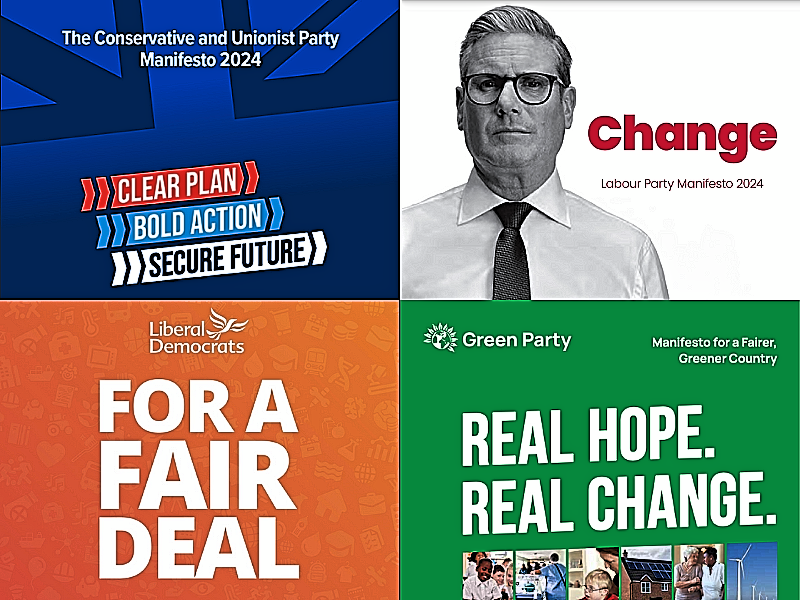
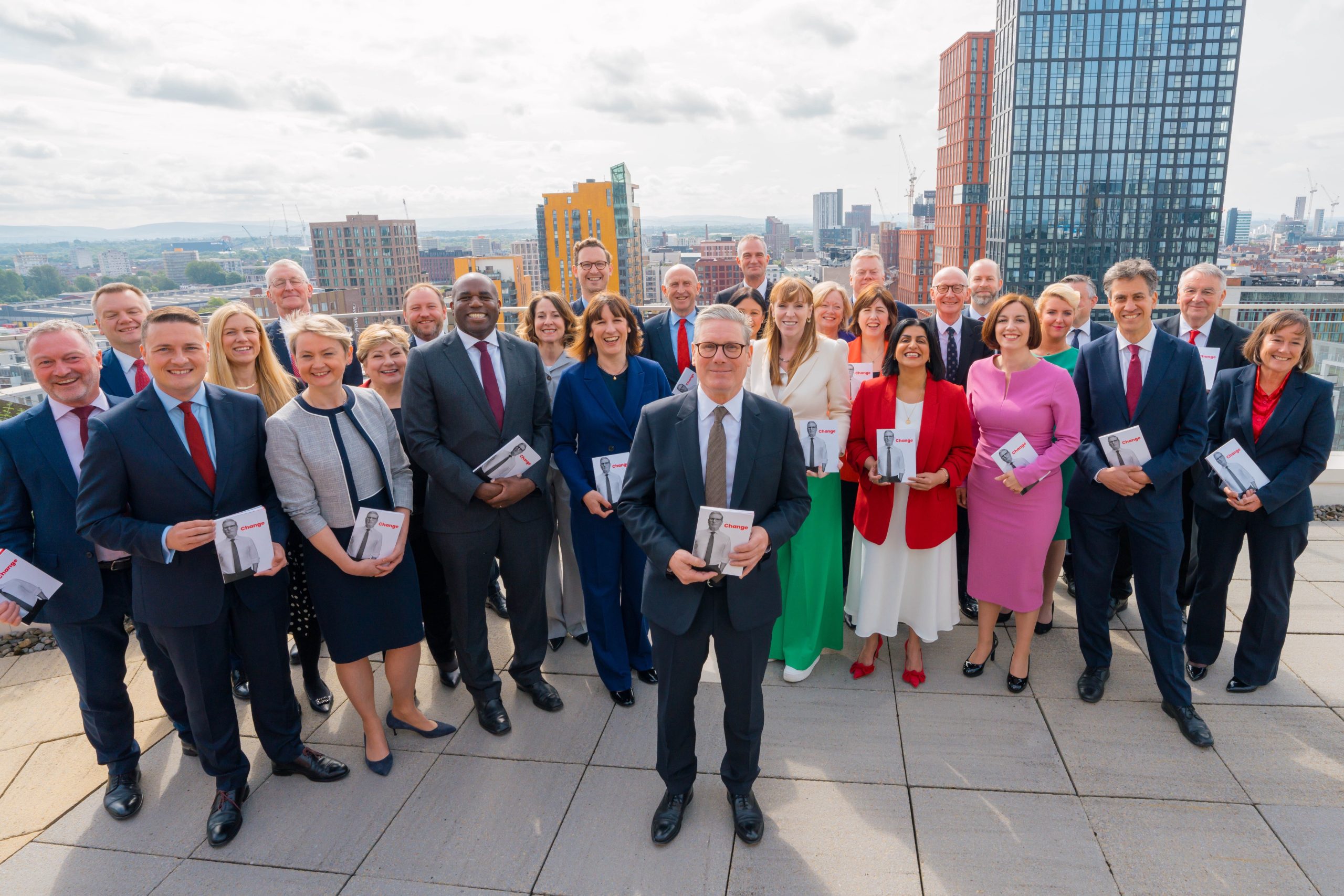
This was a week of manifestos for all the parties, promising to outdo each other and offer the best to the voters.
The British Prime Minister Rishi Sunak said a profound sorry to the nation after a major blunder in which he cut short his official visit to the D-Day celebrations at Omaha Beach in Normandy, France, on June 6 in what was viewed by British war veterans and their families as an affront to their sacrifices in the world wars.
It is a political tradition for the British Prime Minister to attend these international celebrations, regardless of the pressing engagements in their diary.
Prime Minister Rishi Sunak apologised for cutting short his attendance at the 80th anniversary in France to record an ITV interview in a political blunder that may be remembered for a long time.
The opposition jumped at him, accusing him of unforgivable insensitivity, and that too at the time of the general election, but his followers believe that either Mr Sunak’s advisers or aides failed to step in and remind him of the importance of completing his D-Day appointment or it was his personal decision.
He could have held back the interview and rescheduled it rather than cut short his visit, which has not gone well, with British voters already disenchanted with him.
They say that even though a day is long in politics, a lot has happened as we continue our election watch with yet another debate between rival party leaders on Wednesday, June 12, in Grimsby.
Great Grimsby is a port town and the administrative centre of Northeast Lincolnshire, Lincolnshire, England.
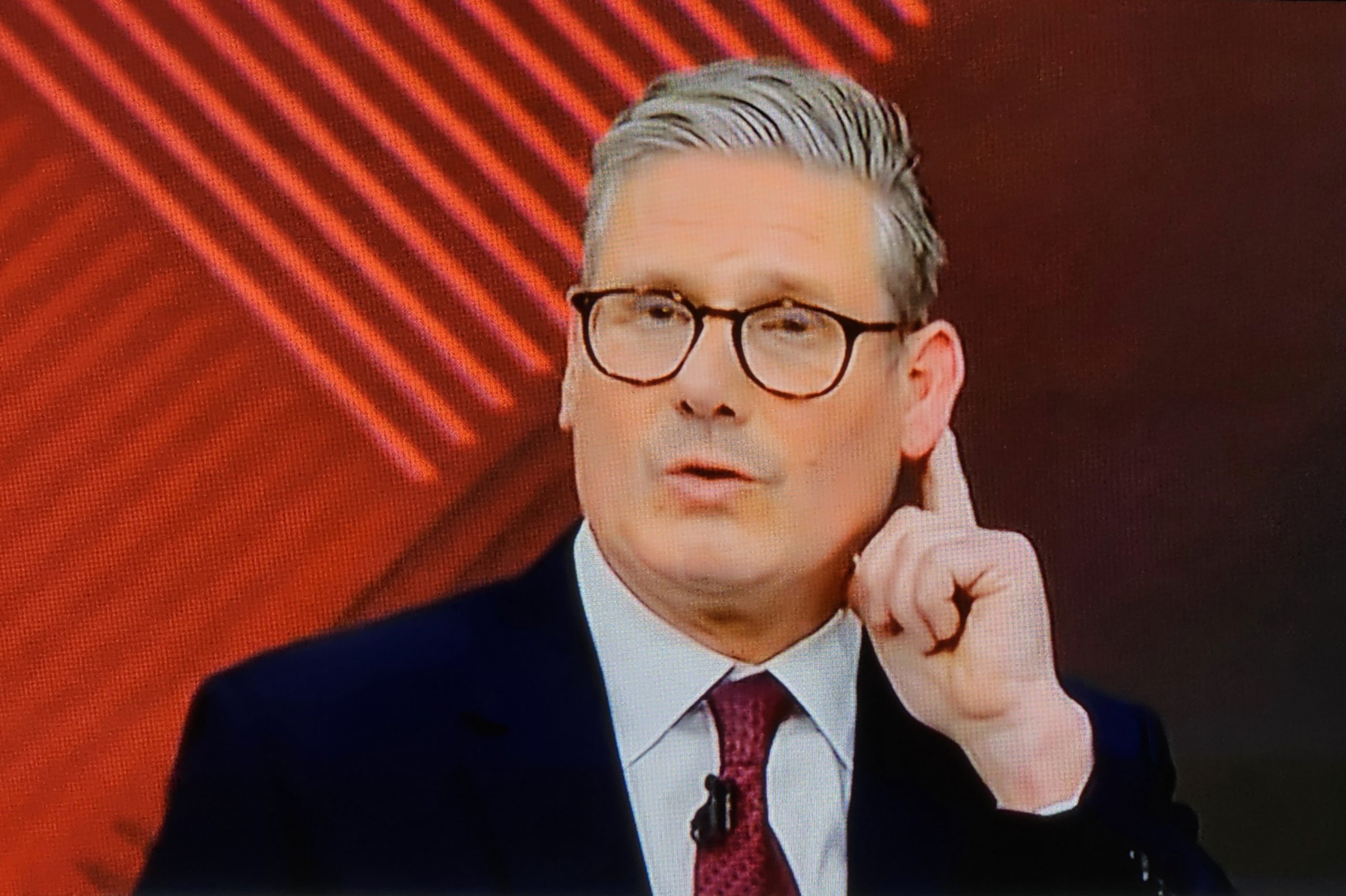
The debate, The Battle for Number 10 (Downing Street), was hosted by seasoned political presenter Beth Rigby on Sky News.
The debate was a damp squib for many election watchers expecting fireworks between the two leaders facing one another, almost akin to a school playing field brawl.
The one-hour debate took a peaceful turn from the one on ITV the previous week when the two leaders went into a war of words.
In the June 12 debate, each leader was called in turns to answer questions and put their selling point to an invited audience.
It started with the Labour Leader Sir Keir Starmer, followed by a question session from the audience in the first half.
Starmer was out through paces of tough questions, which he handled but was stumped by questions he had not expected.
The Conservative Party leader and Prime Minister Rishi Sunak led the second half, followed by a tough questions session with the audience.
Sunak looked more weakened and confused at times.
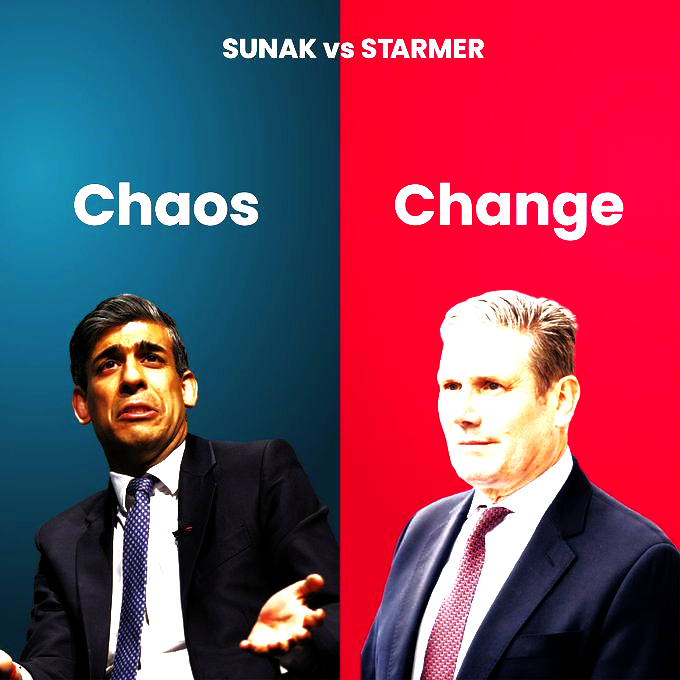
Sir Keir looked more confident and composed and managed himself in a statesman’s way, answering Rigby’s questions, but he had weak moments and was cut off mid-sentence at times.
Contesting elections in a full-throttle democracy is not a cakewalk, as the contesting parties’ leaders are experiencing.
Rishi Sunak is feeling the heat, and his loyal friends in the Party are almost giving up, showing the white flag resigned to believing that the Conservatives will be badly bruised in the elections.
The June 6 debate showed flaws in the Tories.
Sunak was booed by the audience of the night when he tried to shift the blame of rising waiting lists at the National Health Service (NHS) on the doctors going on strike, ducking the issue of budget constraints and the Government’s continued failure not only to meet the costs of pay rises for the medics but also being slow and tardy with funding the creaking health service on which the bulk of the population depends.
YouGov poll immediately after the debate showed that Starmer had the upper hand with 64% audience approval this time, while Sunak lost it at 34%.
The one point all the parties are trying to evade is the taxes.
The major parties are saying there will be no tax rises. But these claims are untrue as tax rises would finance their manifesto promises. The devil lies in the details of these promises to usher in happy days.
As they say, in the business world, there is nothing like a free lunch, so it holds in the political world.
Labour has promised growth and prosperity with almost utopian offers of rebuilding the country.
Just for the election season and in the fervent hope they could ride back to power, the Tories are offering a sweetener of a 2% tax reduction in the National Insurance and some tax benefits, but that would erode soon after they win if they do win.
Promising is one thing; delivering those promises is quite another unless there is a bottomless purse.
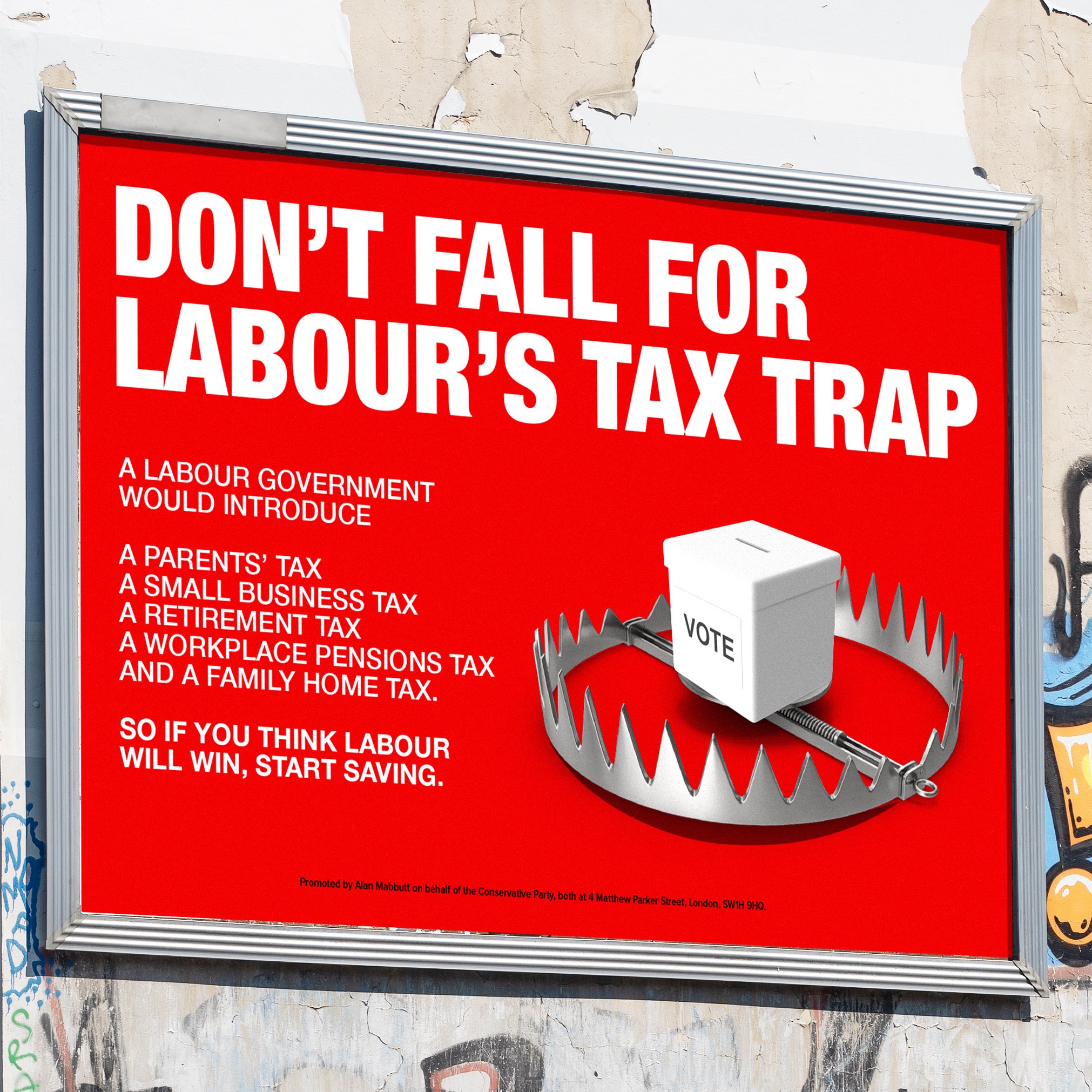
Labour critics say Sir Keir Starmer’s Party is not telling voters that it will increase taxes in what is now called a tax trap of £8.5 billion and significant cuts in public services.
This is so because there are severe doubts over how Starmer would pay for these happy days.

Labour promised that it would recruit more teachers to meet the drastic shortage in the number of teachers in UK schools, but critics dismissed this as a pipe dream.
Responding to the Labour manifesto, Tania Bowers, Global Public Policy Director at the Association of Professional Staffing Companies (APSCo), while lauding the Party’s decision, asked where they come from.
With the education sector suffering from staff shortages, the commitment to hire more teachers is undoubtedly welcome, but the critical question is where these resources will come from.
The UK needs a coordinated national strategy for skills that aligns education investment with regional economic strengths. The information currently shared by Labour does not clarify how these additional roles will be filled or how future skills development will be sustained.
It has been known for a long time that there are hundreds of unfilled teaching vacancies, and many schools suffer from severe teacher shortages, leaving the burden of daily teaching responsibilities on the teachers who feel overstretched and have been quitting the profession.
In their manifesto, the Labour Party says they will reform the planning system in the construction industry and set a goal of building 1.5 million homes in the next five years.
Construction industry experts say that while the idea is welcome, it is not short of being called a pipe dream as the UK lacks tradespeople, infrastructure, and even raw materials to deliver this promise.
Critics say many governments have promised to get Britain building again, and many have failed to deliver on this, crashing on the rocks.
Optimistic like Andrew Montlake, managing director of Coreco, welcomed such a possibility in theory and hoped the Labour Party could follow up and turn this into a reality.
Justin Moy, managing director at EHF Mortgages, is forthright when he said, “Building 1.5m new homes is a pipe dream as we lack the tradespeople, infrastructure, and raw materials to deliver it.
“These plans will take a long time to implement, and there are plenty of homes that could be regenerated quickly, combined with better mortgage rates, which would provide a quicker and more effective exit from the current mess that is the UK property market.”
Under the Tories, Britain has been buying luxury houses, but they are suited to people with deep pockets. In contrast, people at the grassroots level have difficulties buying low-cost homes.
Several sceptical critics believe that contrary to Labour’s manifesto; government bureaucracy could hit the construction industry in making planning permissions, making it an arduous process.
They believe complex planning laws, lack of complete reform, and easing of procedures would take a hit, with a strong possibility of alienating the private sector and the formidable challenges of local government coordination, which could lead to the Party struggling to achieve its declared objectives.
As for the Conservative Party, Rishi Sunak is struggling to find solutions for the five years ahead if his Party wins.
The NHS is creaking under the weight of problems; the long delays in Accident and Emergency units of hospitals to as long as 20 hours before being seen by doctors and waiting lists point to an abysmal record which is forcing many traditional Tory voters to turn their attention to the Labour in the fervent hope that what the ruling Party failed to achieve in 14 years of power can be solved by the rival Labour.
Ongoing party-political debates point to an abysmal performance by the Conservatives, with Rishi Sunak already looking like a defeated man.
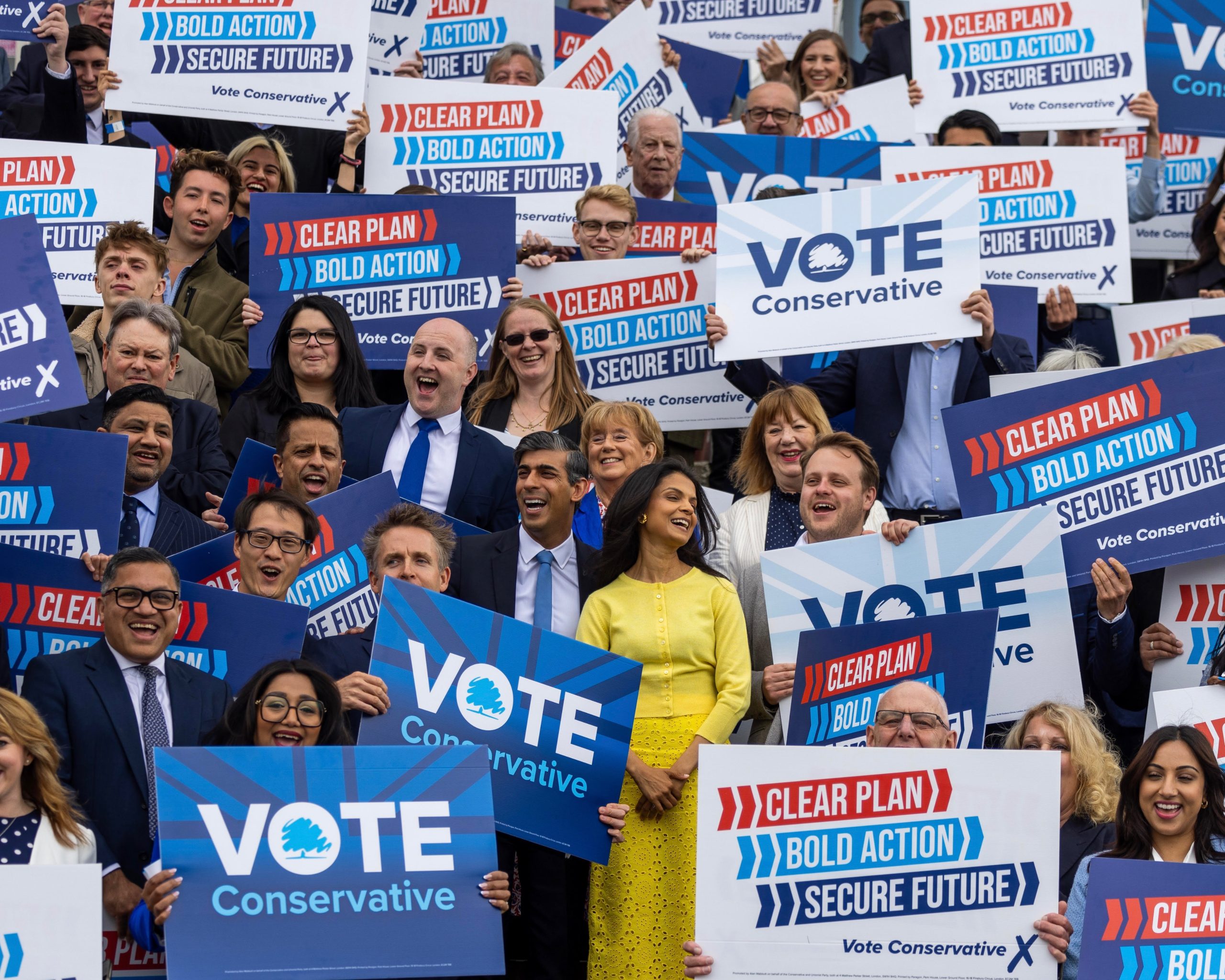
On Tuesday, June 11, the Conservative Party officially launched its 2024 election manifesto. Entitled ‘Clear plan, bold action, secure future’, the 80-page document sets out the governing Party’s pitch for re-election, with headline pledges covering tax, support for families and immigration,
Their manifesto has shortcomings as it is not fully funded and could hit its declared policies for future continuity without finding the funds to finance it. The way out would be to raise taxes and cutbacks.
Its proposal to reduce immigration via cap is likely to have a fiscal impact, which has not been costed, notes the Institute for Government in its manifesto analysis.
Despite its declared intention, the proposals will do little to address public services’ biggest problems.
As might be expected from a party in power for the past 14 years, many headline public services pledges in the manifesto restate existing government policy. This includes providing 30 hours of free childcare a week from the age of nine months to the start of school, delivering the NHS Long Term Workforce Plan published last year, combining A levels and T levels into a new Advanced British Standard qualification, and banning the use of mobile phones during the school day.
The most significant new announcement is the proposal to add 8,000 more police officers. This is a memorable proposal but increasing the number of police staff and Police Community Support Officers, rather than expensively trained officers with the power to make arrests, would be a more cost-effective way of boosting police performance. Even more problematically, the manifesto does not grapple with the reality that the already overwhelmed courts and prison systems would be unable to cope with the increased number of charges expected from increasing officer numbers, notes The Institute of Government in its analysis.
The manifesto also lacks serious plans to tackle public services’ most significant issues, including access to general practice, scores of local authorities on the edge of bankruptcy, record court backlogs, full prisons, and a broken children’s residential care market.
It also raises questions about plans to cut thousands of NHS managers, making it even harder for the Conservatives to improve their NHS productivity.
The detailed manifesto would take a long time to analyse, but it has drawbacks. It has some good points, but it has some negative points. The voters are looking more towards the negative points than placing stress on the few positive points.
My Sunak is handicapped by the number of MPs stepping down, which will rob him of any chances of a landslide victory for his Party. He suggested a hung parliament or a coalition government, which was scoffed at by political observers, believing that the time had come for the Tories to move on.
There is no doubt a lot of confusion now. Still, judging the polls and the popularity of the Labour Party, Britons are ready for a change and for Sir Kier Starmer to prove his worth at the helm and 10 Downing Street.
Similar Posts by Shamlal Puri:
- LONDON PACKAGING WEEK WITH TOP GLOBAL BRANDS ATTRACTS THOUSANDS OF VISITORS
- UK’S NATIONAL HEALTH SERVICE IN BIZARRE COLOUR BAR CRISIS
- UK’S NATIONAL HEALTH SERVICE IN BIZARRE COLOUR BAR CRISIS:
- British PM Andy Burnham’s slams dodgy deals – ending rip-off discounts and subscription traps
- Hundreds Die In Brutal 2026 Summer: Scorching Sun Strikes Britain, Causing Water Shortages And Drought
About the Author