The Mt Kenya Times
A landmark judgment on taxation forces a reckoning between the government’s revenue ambitions and the limits of the law
By Hadassah Karangu
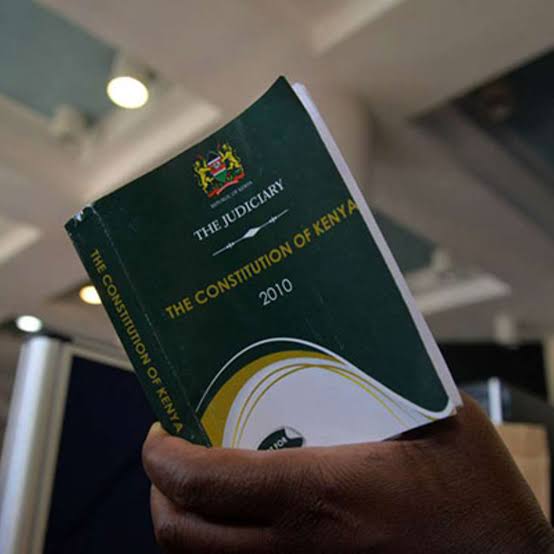
Kenya’s Supreme Court delivered a significant tax ruling yesterday that reasserts the primacy of constitutional law over government revenue policy, in a judgment with far-reaching implications for businesses, investors and the public finances.
The decision arrives at a moment of acute fiscal pressure. The government is struggling to meet ambitious revenue targets while households across the country contend with a cost of living that has shown little sign of relief. Against that backdrop, the court’s intervention carries consequences well beyond the immediate parties to the case.
At its core, the ruling turns on a principle that is fundamental to constitutional governance: that the power to tax, however necessary, is not unlimited. Government must collect revenue within the boundaries set by law. Where it exceeds those boundaries, the courts will intervene. Yesterday, they did.
The practical significance of that principle for Kenya’s business community is considerable. Investors committing large sums to the country need assurance that the tax regime they enter will be the one they operate under — that obligations will not shift through administrative reinterpretation or be resolved only after years of litigation. Legal certainty, in this respect, functions as a form of investment infrastructure. A stable, predictable framework is worth as much to a prospective investor as a competitive rate.
The ruling is therefore likely to be read carefully not only in Nairobi’s commercial district but in the boardrooms of companies weighing Kenya against other markets in the region. A judiciary that enforces the law against the Executive, including on matters of taxation, is one of the clearest signals a legal system can send that contracts and statutes will be honoured. That signal has value that is difficult to quantify but easy to lose.
Domestically, the judgment reopens a debate that the government had perhaps hoped to defer. Critics of the ruling will argue that Kenya cannot afford judicial constraints on revenue collection at a time when the country carries a substantial debt burden and faces mounting demands on public services. The Treasury will note that shortfalls in revenue have direct consequences for hospitals, roads and schools. Those arguments deserve a hearing.
But the counterargument is equally compelling. Taxation that exceeds legal authority does not merely inconvenience individual taxpayers — it corrodes the relationship between the state and those it depends upon to finance itself. Businesses that feel exposed to arbitrary or legally questionable levies do not simply absorb the cost. They factor it into their decisions about where to invest, how to structure their operations, and whether to expand. The damage to the tax base from eroded confidence is less visible than a court order but no less real.
What this ruling makes clear, perhaps most usefully, is that the government’s fiscal challenge cannot be resolved through revenue collection alone. The approach of layering new taxes onto an already pressured economy has demonstrable limits — legal, economic and political. A more durable solution requires expanding the number of people and businesses contributing to the tax base, closing the gaps through which revenue is lost to corruption and inefficiency, and building the kind of public trust that makes compliance a civic norm rather than a reluctant obligation.
Citizens pay taxes more willingly when they believe the system is fair, when they can see their money being spent with discipline, and when the institutions managing public funds are held to account. Those conditions are not currently met in full in Kenya, and no court ruling can impose them. They are built, or not built, through consistent and accountable governance over time.
The separation of powers that this ruling exemplifies — Executive proposes, Parliament legislates, courts adjudicate — is not an obstacle to good government. It is the architecture that makes good government possible. When each institution operates within its lane, the whole system functions with greater legitimacy. When any of them overreaches, the system corrects. Yesterday, it corrected.
The broader debate now falls to Parliament, the Treasury, and the business community to advance constructively. The court has drawn a line. What government does on its side of that line — whether it pursues smarter, broader-based, legally sound revenue policy or returns to court with the next contested measure — will say more about Kenya’s fiscal future than the ruling itself.
The judgment is settled. The harder work begins now.
Similar Posts by The Mt Kenya Times:
- Mt Kenya Times ePAPER September 17, 2026
- Ruto and Uhuru: The rupture at the heart of Kenya’s 2027 election
- Gakoromone traders and rights group demand closure of sewage discharge
- Retirement is not disenfranchisement: Reclaiming the constitutional rights of Kenya’s former presidents
- Kenya’s 2027 election: Can technology strengthen democracy or manipulate voters?
About the Author