Sustainable Farming Practices Offering Hope For Climate Resilience And Prosperity For Small Holder Farmers In Kenya
 The Mt Kenya Times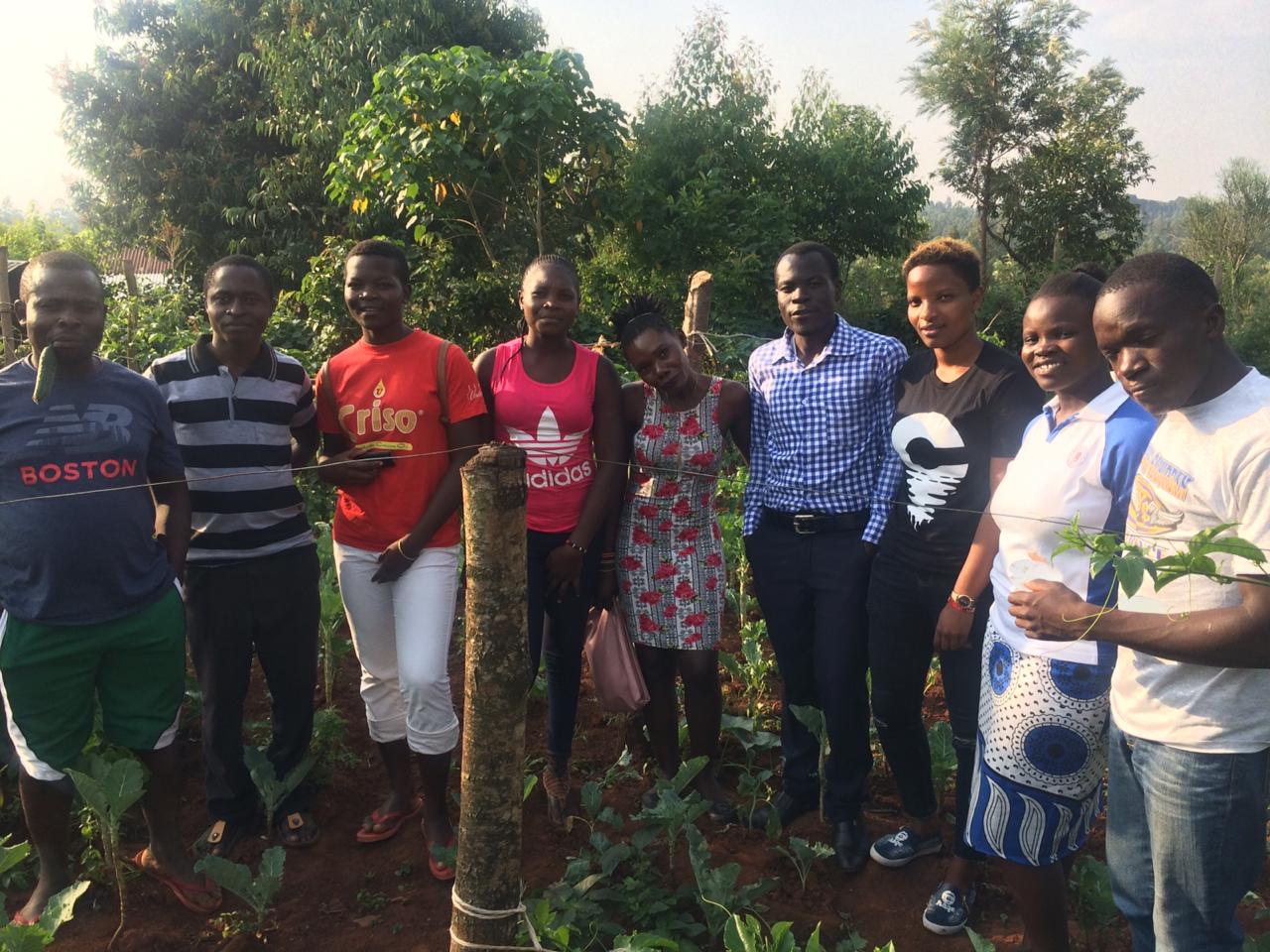
A group of young organic farmers during a visit at an agroecology model farm in Vihiga county
By Jackson Okata
Worth Noting:
- “The land is small but through proper planning and sustainable practices, I have been able to turn it into a productive venture. I have completely cut down on fertilizer costs since I solely rely on homemade manure, and I harvest more than I used to before adopting agroecology’’ he said.
- Vihiga county executive member in charge of agriculture Nicholas Ligayo notes that majority of smallholder farmers in the County cultivate maize and beans as major food crops on an average of 0.4 hectares of land with the County’s economy being predominantly agriculture which supports approximately 85 % of the population’s livelihood. Subsistence farmers account for 90% of agricultural production in the county.

On a cold morning in a tiny village on the slopes of Ebuhando hills in Vihiga county, Western Kenya, 54-year-old Stephene Olaka, marches purposefully towards his one-acre farm to begin the day’s work. He wears sturdy rubber soled gumboots to easily navigate the muddy loamy soil in his farm. With a jembe in one hand and a small radio in the other, Olaka leads us to a small stream on the edge of his farm which he says is his source of irrigation water. The rough surface of his wooden handled flat blade designed jembe is a clear indication of years of sweat and hard work
“My farm is a vital source of sustenance for my family and this jembe is a symbol of my connection to this land. This small piece of land is what feeds my family and has enabled me to fund my children’s education,” Olaka said.
On his farm, Olaka, a father of three, practices mixed farming. He plants maize and beans, African vegetables, sweet potatoes, cassava, pumpkin and fruit trees. Olaka also rears poultry, a few goats and three dairy cows.
“The land is small but through proper planning and sustainable practices, I have been able to turn it into a productive venture. I have completely cut down on fertilizer costs since I solely rely on homemade manure, and I harvest more than I used to before adopting agroecology’’ he said.
He added “From my acre piece of land I now harvest 25 bags of maize up from the 10 I used to get while practicing conventional farming. I have vegetables and fruits all-round the year and this has become a sure source of income. Additionally, my cows and goats have enough supply of pasture from the same farm’’.
Just like Olaka, many families in Vihiga county own small pieces of land where they practice small scale subsistence farming through organic means. In a bid to combat the challenges of climate change and soil degradation, many smallholder farmers in Vihiga county are increasingly shifting to agroecology, a holistic and sustainable approach to farming. According to Olaka who also chairs the Vihiga organic farmers forum, the shift to agroecology is not only boosting food production but also enhancing the incomes of farmers across the nation.
“With the unpredictable weather patterns, increased soil acidity and high cost of farming inputs, farmers are finding agroecology more accommodative and sustainable,’ Olaka observed.
The group Olaka heads has a membership of 50 farmers from his village who are fully practicing agroecology after receiving training on sustainable farming practices from the county government
There are a total of 100 agroecology farmer groups spread across Vihiga county with each group bringing together between 50- 70 farmers.
Empowering farmers

Vihiga county executive member in charge of agriculture Nicholas Ligayo notes that majority of smallholder farmers in the County cultivate maize and beans as major food crops on an average of 0.4 hectares of land with the County’s economy being predominantly agriculture which supports approximately 85 % of the population’s livelihood. Subsistence farmers account for 90% of agricultural production in the county.
“Vihiga has very tiny pieces of land and with poor farming practices, farmers rarely harvest enough to feed their families. The unpredictable weather patterns that come with climate change make things worse and that is why we are capacity building our farmers so that we can help them transition to sustainable and environment friendly farming practices that do not only enhance production but also shields them from the shocks of climate change’’ explained Ligayo.
Joseck Mukuna, 60, a smallholder farmer in Essunza village says for many years he battled with poor harvest and food insecurity despite investing a lot in his 2-acre piece of land.
“Initially we were made to believe that it was only maize and beans that we could plant as the main cash crops. Mixed sustainable crop farming is rewarding and less costly because of minimal pests as well as farm inputs’’ said Mukuna
From 30 bags of maize from his 2-acre piece of land, Mukuna says he now harvests 50 bags enough to feed his family of five and surplus for the market thanks to agroecology practices.
“Food crops that I grow organically and through intercropping hardly attract pests and can withstand harsh post harvesting weather conditions and this leads to very minimal post-harvest losses’’ said Mukuna
Ligayo adds that agroecology promotes diversification, encouraging farmers to intercrop maize with legumes like beans and cowpeas. This not only reduces risks but also improves soil fertility, leading to increased yields.
“Agroecology is greatly helping our farmers remedy the problem of soil degradation through sustainable practices like agroecology which encourages cover cropping, crop rotation, and reduced tillage. When we reduce the use of synthetic inputs, we do not only guarantee soil but also food safety” said Ligayo.
Climate Resilience
Mary Nambute, 45, has been practicing conservation farming, a form of agroecology that minimizes soil disturbance and encourages permanent soil cover, which conserves moisture, reduces the need for irrigation, and cuts labor and fuel costs. As a result, it enhances soil health, leading to increased yields and incomes for farmers.
“I don’t have to cut trees to create space for food crops. My farm has space for all crops, trees and pasture for my animals. The best thing about conservation farming is the no tillage and synthetic inputs costs. Through conservation farming, I have been able to create a contusive space for my crops, animals and trees’’ said Nambute.
David Leilei, a soil biologist at the World Agroforestry Centre says that the rising demand for organic produce in the global market presents an opportunity for Kenyan smallholder farmers to shift to more sustainable farming practices that will not only enhance their incomes but also help in protecting the biodiversity.
“Kenya is highly vulnerable to climate change effects including erratic rainfall patterns and prolonged droughts. Practices like agroecology promote climate-resilient farming techniques such as rainwater harvesting, agroforestry, and the use of drought-resistant crop varieties. These practices help farmers adapt to changing weather conditions and reduce the risk of crop failure’’ Lelei explained.
He added “Sustainable farming practices guarantee farmers with increased yields, improved soil fertility, and enhanced food security’.
Patricia Nying’uro, a climate scientist at the Kenya Meteorological Department describes agroecology as farming practices that reconcile agriculture and local communities with natural processes for the common benefit of nature and livelihoods.
“Agroecological practices provide a sustainable solution for family farms by giving them power to manage and use their farms in the most effective ways while at the same time ensuring that nature benefits from what they are doing in the farms. These elements, amongst others, allow family farms to diversify their diet, increase food security and sell surplus products on the local market. At the same time, it enables them to apply better water and soil management practices, maintain biodiversity and increase resilience to climate change’, she said.
According to the Food and Agriculture Organization (FAO) of the UN, diversification under agroecology practices is one sure path towards food security and nutrition, while protecting and enhancing natural resources.
Similar Posts by The Mt Kenya Times:
- Mt Kenya Times ePAPER September 24, 2026
- The kingmaker’s last move: Uhuru’s 2027 gambit
- Kalonzo warns IEBC over 2027 poll
- Kenya leads Africa’s clean cooking push with $600M investment drive
- Kenya takes its case to the world: Ruto at the UN
About the Author