The Mt Kenya Times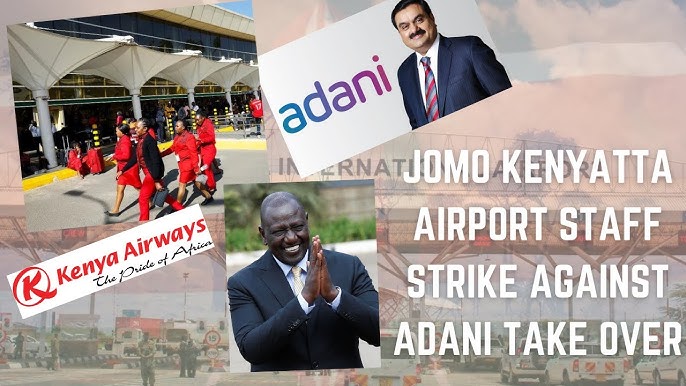
By: Midmark Onsongo
Worth Noting:
- Adani Group’s entry into Kenya’s aviation industry has been controversial from the start, given its questionable track record in India. The company has been mired in allegations of corruption, particularly in the energy and infrastructure sectors, with critics accusing it of using political connections to secure lucrative government contracts. This history has cast a long shadow over the JKIA deal, fueling speculation that certain individuals within the Kenyan government may have facilitated the agreement for personal gain.
- As aviation workers continued their strike, the ripple effects were felt across the country. Flights were delayed or canceled, with long queues of frustrated passengers at the airport.
In recent weeks, the proposed lease of Jomo Kenyatta International Airport (JKIA) to the Indian conglomerate Adani Group has ignited widespread public uproar and resistance from various sectors, revealing a deeper tale of corruption, mismanagement, and national sovereignty concerns. The situation hit a boiling point with aviation workers going on strike, paralyzing operations at JKIA and stranding thousands of travelers, all in opposition to the Adani deal, which many believe threatens not only jobs but also Kenya’s control over a strategic national asset.
The deal, valued at KES 246 billion, was initially presented as a solution to modernize JKIA, with promises of constructing a new passenger terminal and a second runway under a 30-year build-operate-transfer contract. However, as the details emerged, it became clear that the agreement lacked transparency and was pushed forward without adequate consultation, leaving workers, legal institutions, and civil society in a state of alarm.
The Kenya Aviation Workers Union (KAWU) has been at the forefront of this battle, opposing the deal on the grounds that it would lead to mass layoffs, introduce foreign labor, and diminish working conditions. The union’s Secretary General, Moss Ndiema, has been vocal about the need for the resignation of key Kenya Airports Authority (KAA) board members, whom they accuse of mismanaging the deal and failing to prioritize the interests of Kenyans. Ndiema has said, “He who eats alone, chokes alone.” This proverb captures the frustration of workers who feel betrayed by the closed-door negotiations that led to the agreement.
Tensions escalated further when the Law Society of Kenya (LSK) and the Kenya Human Rights Commission (KHRC) filed a legal petition, successfully obtaining a court order to halt the lease temporarily. The High Court in Nairobi ruled that the deal could not proceed pending a full judicial review, stating that it raised significant concerns about good governance, transparency, and the responsible use of public resources. The case is set for further hearings in October, but the damage to the public trust has already been done.
Adani Group’s entry into Kenya’s aviation industry has been controversial from the start, given its questionable track record in India. The company has been mired in allegations of corruption, particularly in the energy and infrastructure sectors, with critics accusing it of using political connections to secure lucrative government contracts. This history has cast a long shadow over the JKIA deal, fueling speculation that certain individuals within the Kenyan government may have facilitated the agreement for personal gain.
As aviation workers continued their strike, the ripple effects were felt across the country. Flights were delayed or canceled, with long queues of frustrated passengers at the airport. Travelers like one who spoke to The Star remarked that the situation was unbearable, saying, “I had to go by road because they are not checking in travelers.” The strike underscored the broader public resistance to the deal, with workers stating that their protest would only end once the deal was scrapped and senior KAA officials were held accountable.
Adding to the scandal, the National Assembly’s Transport Committee has launched an investigation into the leasing arrangement. Several legislators have expressed their opposition to the deal, with one member commenting, “A bird that flies off the earth and lands on an anthill is still on the ground.” This proverb reflects the sentiment that even though the deal may appear to elevate Kenya’s aviation infrastructure, it ultimately risks leaving the country vulnerable to exploitation by foreign interests.
At the heart of this controversy are several key figures within the KAA who are believed to have played pivotal roles in advancing the deal. While their names have not been publicly disclosed due to ongoing investigations, there are growing calls for full accountability and transparency. Critics argue that the individuals involved must face consequences, as their actions have put the livelihoods of thousands of workers at risk and compromised the nation’s strategic assets.
The Adani deal is not just an isolated incident. It speaks to a broader pattern of opaque dealings and questionable foreign investments in Kenya. The rush to privatize national infrastructure without considering the long-term consequences has become a recurring theme, one that undermines public trust in government institutions. A tongue twister often said in jest, “She sells sea shells on the seashore, but the shells she sells aren’t hers,” aptly captures the frustration of many Kenyans who feel that their country’s resources are being sold off to the highest bidder without their consent.
Ultimately, the fate of JKIA now lies in the hands of the judiciary, but the public discourse surrounding the deal has already revealed significant cracks in Kenya’s governance framework. The opposition to the Adani lease has brought together unions, civil society, and the legal community in a rare display of solidarity, all united by the belief that Kenya’s national assets must be protected from predatory foreign deals.
As the case unfolds in court and the investigations by Parliament continue, one thing remains clear: the Adani deal at JKIA has exposed deep-seated issues of corruption, lack of accountability, and mismanagement that must be addressed. If left unchecked, the consequences could extend far beyond the aviation industry, setting a dangerous precedent for future deals involving Kenya’s public assets.
The Kenyan proverb, “A hyena cannot smell its own stench,” serves as a fitting reminder of the dangers of unchecked power. Those who pushed for this deal may have underestimated the public’s resolve to fight back, but the ongoing protests and legal challenges indicate that the fight to protect JKIA is far from over.
This article was scripted by;
MIDMARK ONSONGO
(Sustainable economist, Geopolitics strategizer)
Similar Posts by The Mt Kenya Times:
- Diaspora Times Global Sep 26 – Oct 2, 2026
- RS South Africa supports next-generation edge AI with NVIDIA Jetson Orin Nano 2
- AFRICLOUD opens Lagos region and local-currency payments across African markets
- Fine Spinners targets Kenya’s US apparel supply chain with $5m investment
- Nuclear energy debate must begin with public trust and shared responsibility
About the Author