The Emperor With No Clothes: President Ruto’s Two Years Of Travel, Talk, And Triviality
 The Mt Kenya Times
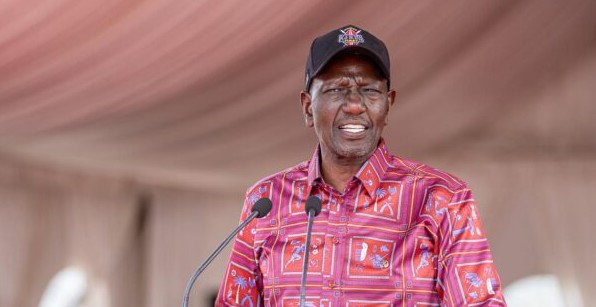
President William Ruto
By: Midmark Onsongo
Worth Noting:
- It is estimated that Ruto’s international escapades have cost Kenyan taxpayers over KSh 2 billion in travel expenses alone. This includes hefty allowances for his entourage, luxury accommodations, and chartered flights that could make even the most frugal of leaders blush.
- A man cannot hide behind a shadow forever, and Ruto’s lavish spending abroad is casting a long one. “The sun that shines on a rich man’s house also shines on the poor,” but in this case, it seems the poor have been left in the cold while the sun of luxury shines on Ruto’s government.
- What’s more, these trips have yielded little to no meaningful returns. The so-called “trade agreements” and “bilateral deals” that Ruto often boasts about remain vague, nebulous ideas that have yet to be concretized.
In a country where the cock crows at dawn, Kenyans are left wondering if the rooster even knows what time it is. President William Ruto, our self-proclaimed “hustler-in-chief,” has crisscrossed the globe like a hummingbird on a sugar high, while the very people he swore to uplift are being trampled underfoot by a tidal wave of broken promises. A proverb comes to mind: “The person who dances with a hyena should be ready to lose their flesh.” It seems that Ruto has been dancing not with one, but with many hyenas—gluttonous international trips, half-hearted policies, and hollow rhetoric. Is the king pranking around naked.
When Ruto campaigned in 2022, he promised the moon. He vowed to end poverty, tackle unemployment, stabilize the economy, and fight corruption. But two years down the line, his achievements have been like a tongue twister—tricky to comprehend, impossible to articulate, and utterly confusing. “Peter Piper picked a peck of pickled promises, but where, oh where, are the pickled promises Peter Piper picked?” The answer lies in the scattered ruins of unfulfilled agendas and a government preoccupied with foreign travels that do little to address the Kenyan people’s struggles.
Let us begin with the issue of Ruto’s unrelenting globe-trotting. “He who chases two rabbits catches none,” and Ruto, in his zeal to bolster Kenya’s international standing, seems to have forgotten the rabbits at home. His first two years in office have seen him visit over 50 countries, from Europe to the Americas, Asia to the Middle East. But ask the ordinary mwananchi about the tangible benefits of these trips, and you’ll hear silence as deafening as a drumbeat in an empty hall. If travel miles were achievements, perhaps Ruto would have a chest full of medals by now. Instead, what we are left with is a ballooning government expenditure on travel costs, reported to be in the billions of Kenyan shillings.
It is estimated that Ruto’s international escapades have cost Kenyan taxpayers over KSh 2 billion in travel expenses alone. This includes hefty allowances for his entourage, luxury accommodations, and chartered flights that could make even the most frugal of leaders blush. A man cannot hide behind a shadow forever, and Ruto’s lavish spending abroad is casting a long one. “The sun that shines on a rich man’s house also shines on the poor,” but in this case, it seems the poor have been left in the cold while the sun of luxury shines on Ruto’s government.
What’s more, these trips have yielded little to no meaningful returns. The so-called “trade agreements” and “bilateral deals” that Ruto often boasts about remain vague, nebulous ideas that have yet to be concretized. One could say Ruto is “selling air at the market.” For instance, his much-touted Africa Climate Summit in 2023 was meant to galvanize Africa into action against climate change. But ask any Kenyan farmer whose crops have withered under the scorching sun if they’ve seen the fruits of that summit. The rain has not fallen, and neither have the promises.
Perhaps the most glaring failure of Ruto’s presidency is his lack of action on the economy. When he took office, he promised to lower the cost of living. “A promise is a cloud, fulfillment is rain,” and Ruto’s clouds seem to have drifted far away from the Kenyan soil. Inflation has skyrocketed, with the price of essential goods such as maize flour, cooking oil, and fuel spiraling out of control. A bag of maize flour, which Ruto had promised would drop to KSh 70, now costs close to KSh 200. The cost of fuel has surged beyond the KSh 200 mark, and Kenyans are left wondering, “If the shepherd cannot protect the sheep from wolves, who will?”
Ruto’s grandstanding on the economy is akin to the fable of the emperor with no clothes. He speaks of “bottom-up economics,” but the only thing that seems to be bottoming out is the people’s faith in his leadership. Unemployment remains a cancer that gnaws at the youth, and instead of creating jobs, Ruto has been busy constructing castles in the air. “A man who builds his house on sand should not be surprised when the walls come tumbling down.” His government has introduced new taxes—like the controversial Finance Bill of 2023—further strangling the very people he claimed to support.
The Finance Bill, particularly the Housing Levy, drew sharp criticism from across the country. It was presented as a solution to Kenya’s housing crisis but has instead become a “pungent thorn in the foot of the common man.” Ruto’s administration argues that the levy will create jobs, but critics rightly ask, “What jobs?” As unemployment figures hover dangerously close to 40%, even the most patient Kenyans are losing hope. “A tree with no fruits invites the axe,” and the patience of the Kenyan people is wearing thin.
When it comes to fighting corruption, Ruto has also fallen short. During his campaign, he boldly declared that no one, including his allies, would be spared in the war against graft. But two years in, what do we see? More empty speeches and minimal action. The infamous sugar scandal, the KEMSA COVID-19 heist, and questionable appointments of cronies to government positions are just a few examples of corruption that has continued unabated. “A goat does not bleat in the absence of grass,” and the Kenyan people are acutely aware that Ruto’s silence on corruption speaks volumes.
The president’s cabinet appointments have also been a cause for concern. The government has been filled with old faces and recycled politicians who seem more interested in lining their pockets than serving the public. “A hungry hyena cannot guard meat,” and it is clear that many of Ruto’s appointees have been busy guarding the proverbial meat for themselves. His pledge to bring new faces into leadership has been nothing more than smoke and mirrors.
On the international stage, Ruto talks a big game about positioning Kenya as a regional leader, but at home, his administration seems paralyzed by indecision and incompetence. He has focused on making Kenya a hub for foreign investment, but this strategy has overlooked the basic needs of Kenyans. Foreign investors may come with promises, but they are unlikely to stick around if the country’s economy remains in tatters. “You cannot eat foreign promises while your own house is on fire.”
Ruto’s presidency thus far has been a riddle wrapped in a conundrum and presented with a bow of ambiguity. “The man who blows his trumpet too loudly may not hear the warning cries of his people,” and it appears that Ruto is deaf to the cries of the suffering masses. Instead of focusing on grand international summits and expensive foreign deals, he should be paying attention to the local issues that are crippling his nation.
In conclusion, the first two years of Ruto’s presidency have been marked by high-flying rhetoric, endless travel, and a dearth of concrete achievements. His promises have been like dust in the wind—“a tale full of sound and fury, signifying nothing.” If Ruto wants to salvage the remainder of his presidency, he must come back down to earth and start addressing the real issues that Kenyans face: the economy, unemployment, corruption, and the skyrocketing cost of living. Only then can he hope to escape the fate of the emperor who had no clothes. As the saying goes, “A leader who ignores the cries of his people will eventually find himself alone.”
MIDMARK ONSONGO
(Sustainable economist, Geopolitics strategizer)
Similar Posts by The Mt Kenya Times:
- Diaspora Times Global Sep 26 – Oct 2, 2026
- RS South Africa supports next-generation edge AI with NVIDIA Jetson Orin Nano 2
- AFRICLOUD opens Lagos region and local-currency payments across African markets
- Fine Spinners targets Kenya’s US apparel supply chain with $5m investment
- Nuclear energy debate must begin with public trust and shared responsibility
About the Author