The Mt Kenya Times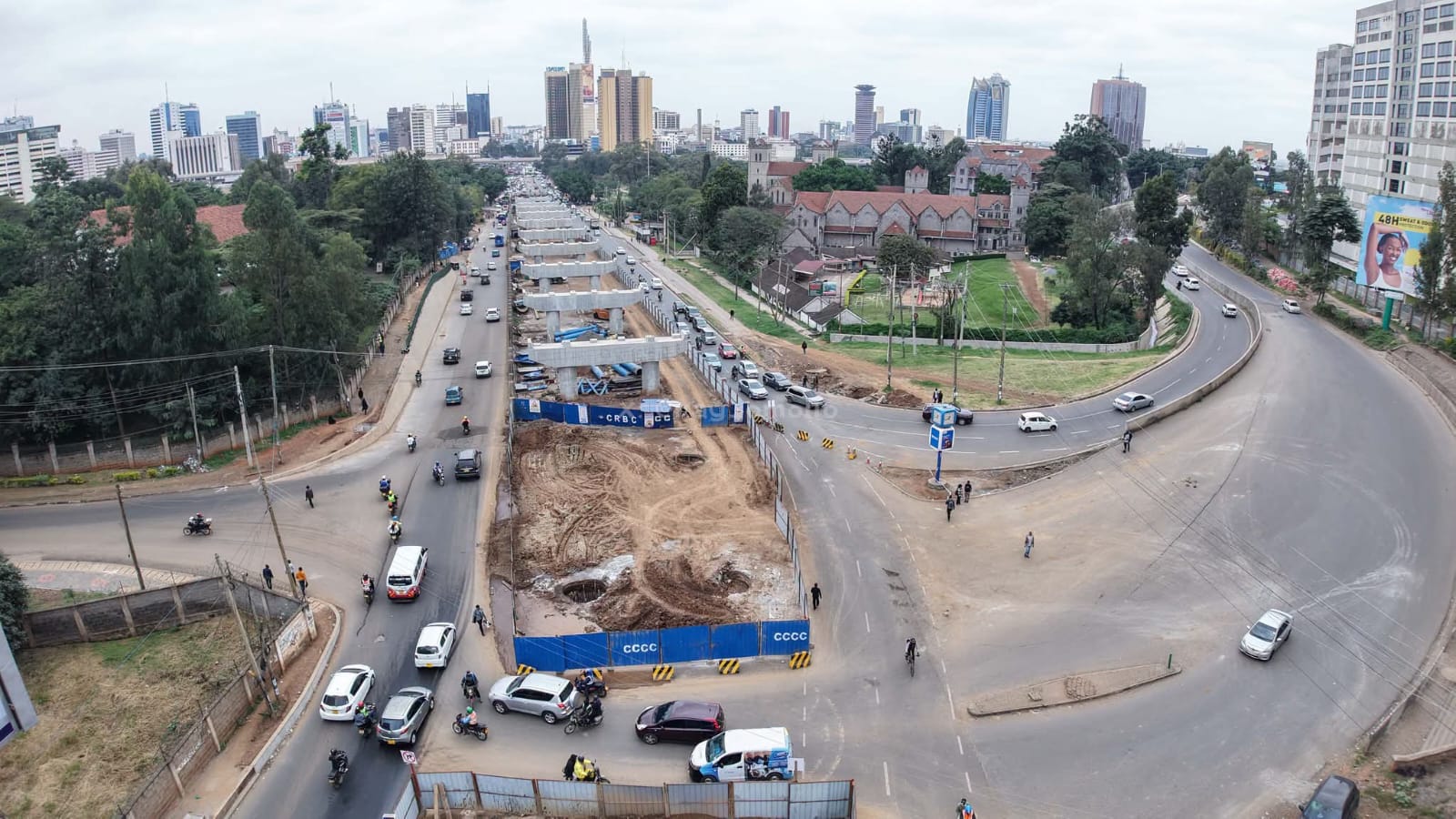
Road network in Nairobi
How Silas Kinoti’s tenure at KURA is rewriting the story of the capital’s traffic
By John Kariuki
There was a time when Nairobi’s traffic was more than an inconvenience — it was a way of life. It dictated waking hours, determined business fortunes, tested the patience of motorists and robbed families of valuable time. City dwellers had a common saying: if you had an important interview at 8:00 a.m., you had to wake by 4:00 a.m. and board a matatu by 4:30 a.m. just to stand a chance of arriving on time. Even then, there were no guarantees.
For decades, Nairobi’s traffic congestion appeared impossible to solve. Every morning, endless queues stretched for kilometres, costing the economy billions of shillings in lost productivity while frustrating commuters and businesses alike.
Then came an engineer with a vision.
When Engineer Silas Kinoti took the helm at the Kenya Urban Roads Authority (KURA), he inherited one of the country’s most daunting urban challenges. Rather than simply managing congestion, he set out to defeat it through modern engineering, strategic planning and infrastructure built to serve both present and future generations. He rolled up his sleeves and embarked on an ambitious mission to cure Nairobi’s perennial traffic nightmare.
Under his stewardship, KURA has accelerated the delivery of game-changing road infrastructure, including dual carriageways, grade-separated junctions, missing links, pedestrian facilities, overpasses and viaducts that have fundamentally transformed mobility across the capital.
Among Kinoti’s most celebrated achievements is the Ngong Road–Naivasha Road Flyover, one of Nairobi’s most significant road engineering projects in recent years. Commissioned by President William Ruto last week, the flyover has transformed one of the city’s busiest intersections, drastically reducing travel time and improving traffic flow for thousands of motorists every day. What was once a notorious bottleneck has become a symbol of how engineering excellence can solve long-standing urban challenges.
Yet perhaps an even bigger testament to Kinoti’s vision is rising in the heart of Nairobi. The Kenyatta Avenue–Upper Hill Viaduct, currently about 60 per cent complete, promises to redefine movement between the Central Business District and Upper Hill, Kenya’s premier commercial and financial district. Expected to be commissioned in December, the viaduct will significantly ease congestion, shorten travel times and provide a seamless connection for thousands of daily commuters. Once complete, it will stand as another landmark project showcasing KURA’s commitment to building infrastructure that keeps pace with Nairobi’s rapid growth.
These flagship developments are only part of a much broader transformation. Numerous junction improvements have eliminated notorious bottlenecks, while strategically constructed missing links have opened alternative routes that distribute traffic more efficiently across the city. Roads that once struggled to accommodate growing traffic volumes have been expanded into modern dual carriageways, enhancing connectivity between residential estates, industrial zones and commercial centres.
Kinoti’s administration has equally prioritised pedestrians, investing in safer walkways, footbridges and non-motorised transport facilities in recognition that a world-class city must serve every road user, not just motorists. Beyond easing congestion, these projects have stimulated economic growth by improving access to businesses, reducing transport costs, increasing property values and making Nairobi a more attractive destination for investment.
Perhaps the greatest beneficiaries are ordinary Kenyans — the office worker who now spends less time in traffic, the entrepreneur whose deliveries arrive on schedule, the ambulance that reaches patients more quickly, and the parent who gets home early enough to spend quality time with family. These are the everyday victories that rarely make headlines but define the true value of transformative infrastructure.
Kinoti’s leadership demonstrates that engineering is not simply about constructing roads. It is about connecting people to opportunity, restoring productivity, supporting economic growth and improving quality of life.
Nairobi’s traffic challenges have not disappeared completely, and as the city continues to expand, new demands will inevitably emerge. But unlike in years past, the capital is no longer standing still. It is evolving through deliberate planning, modern engineering and bold infrastructure investment.
Years from now, Nairobians may not remember every project by name, but they will remember that the city gradually became easier to navigate, that they spent less time in gridlock, and that the capital slowly reclaimed its rhythm. And when the story of Nairobi’s modern road transformation is told, Silas Kinoti will undoubtedly be remembered as one of the engineers whose vision, determination and execution helped reshape the city’s future — one flyover, one junction and one viaduct at a time.
Similar Posts by The Mt Kenya Times:
- The Day Washington Sanctioned a Court
- Mt Kenya Times ePAPER October 10-11, 2026
- Cabinet clears path for pending bills payout in relief for Kenya’s struggling suppliers
- Karanja quits UDA and targets Nakuru governorship on Gachagua’s DCP ticket
- Gachagua’s team plants DCP flag in Kiambu as 2027 battle lines harden
About the Author