By: Bekmurodova Ruxshona
Abstract: This article briefly discusses the limitations of intellect in Sufi doctrine and explains the true place and function of reason within the framework of Sufism.
Keywords: Sufism, intellect, reasoning, spirituality, divine truth, heart, knowledge.
Sufism (Arabic: Tasawwuf) is a spiritual and ethical doctrine in Islam that guides human beings toward moral and spiritual perfection. Scholars have expressed various opinions concerning the origin and meaning of the word Tasawwuf. Among these views, the explanation of Ibn Khaldun has been widely accepted. In his famous work Muqaddimah, he states that the word Tasawwuf is derived from the Arabic word suf (wool), because early ascetics wore garments made of wool as a symbol of their simple lifestyle and detachment from worldly pleasures. In this way, they distinguished themselves from those who were attached to worldly life.
Historically, Sufism emerged within Islamic civilization as a movement emphasizing spiritual devotion and asceticism. The representatives of Sufism strictly observed Islamic law (Sharia) and belonged to different schools of Islamic jurisprudence and theology. It is also known that the term Sufism was introduced into European languages during the eighteenth century by Orientalist scholars.
Now let us turn to the central topic of this article. What is intellect in its true essence? Is it knowledge, wisdom, or ignorance? The honor and value of intellect increase through knowledge. It is distinguished through Sharia and human perception. Regarding the significance of intellect, the Prophet Muhammad (peace be upon him) said: “After Allah created the intellect, He said to it, ‘Come forward,’ and it came forward. Then He said, ‘Go back,’ and it went back.” Then Allah declared: “By My Power and Majesty, I have not created anything more honored than you. Through you I take, through you I give, through you I reward, and through you I punish.”
The intellect through which human beings perceive reality originates from the First Intellect (al-‘Aql al-Awwal), which Allah created as light, just as He created the sun with its radiance. This is the universal intellect, independent of material limitations. The honor of intellect lies in the fact that without it, human beings cannot attain happiness either in this world or in the Hereafter. Through intellect, mankind becomes Allah’s vicegerent (khalifah) on earth, faith reaches perfection, and believers draw closer to Allah. Allah compares His light with divine illumination in the Qur’an: “Allah is the Light of the heavens and the earth.” (Surah An-Nur, 24:35)
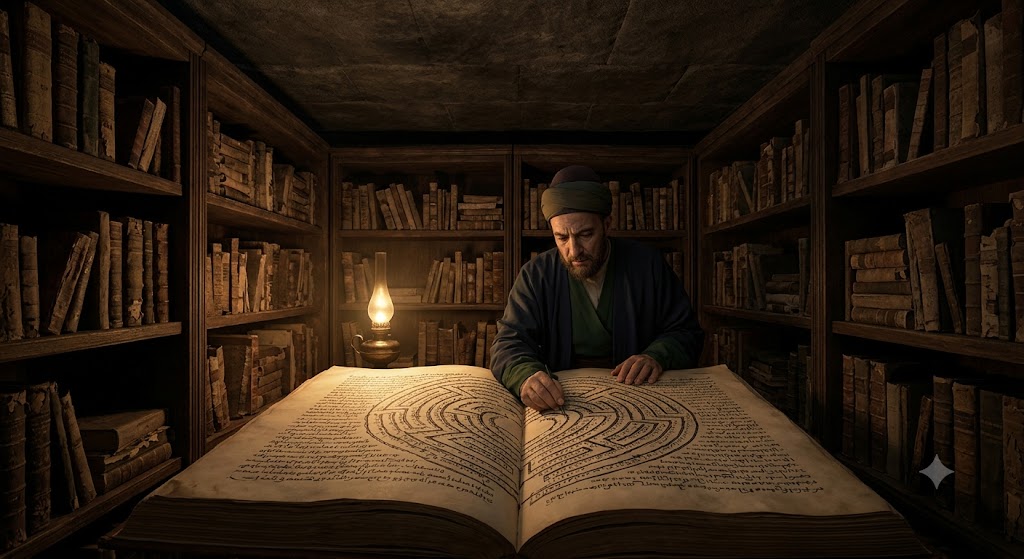
In ancient Western thought, many arguments were presented against the use of reason in the search for spiritual truth. However, Sufism emphasizes that ultimate reality cannot be attained solely through intellect but through spiritual experience (hal), purification of the soul, and closeness to Allah. Imam Al-Ghazali, in his famous work Kimya al-Sa’adah (The Alchemy of Happiness), explains both the significance and the limitations of human intellect. According to him, intellect is an invaluable gift that enables human beings to distinguish between right and wrong, yet it cannot, by itself, fully comprehend divine realities. True knowledge is attained when intellect is illuminated by the light of faith and supported by the purity of the heart.
Similarly, Alisher Navoi presents the relationship between intellect and spiritual truth in his masterpiece Lison ut-Tayr (The Language of the Birds), which was inspired by Farid al-Din Attar’s Mantiq al-Tayr (The Conference of the Birds). In this symbolic work, the spiritual journey toward divine truth is described through artistic and philosophical imagery. Navoi demonstrates that although intellect guides human beings toward knowledge, it alone is insufficient to attain the highest level of spiritual realization. Only sincere love for Allah and the purification of the heart enable a person to reach ultimate truth.
Jalal al-Din Rumi illustrates the same concept in his Masnavi through the famous story of the elephant in a dark room. Several people touch different parts of the elephant, and each believes that the part he touches represents the whole reality. One thinks the elephant is like a wall, another believes it resembles a rope, while another compares it to a pillar. Each description is based on limited perception. According to Rumi, the elephant symbolizes the absolute truth, whereas the people’s hands represent the limited capacity of human intellect. The darkness symbolizes ignorance. If they had possessed a lamp—that is, the divine light of guidance and the enlightenment of the heart—they would have perceived the complete reality. Therefore, intellect is like a small lamp that provides limited illumination, but when the sun of divine truth rises, the lamp is no longer sufficient.
At this point, an important question arises: why are intellect and reasoning regarded as limited in Sufism? Based on the available sources, two main explanations can be identified. First, human intellect is connected to the material world. It functions through experience, observation, and logical reasoning. However, divine realities transcend the boundaries of ordinary logic and therefore cannot be completely understood through rational thinking alone. Second, human intellect is itself limited because human beings are limited. People are born, grow, change, and eventually die. Their intellectual abilities also develop gradually and remain imperfect. Absolute and unlimited knowledge belongs only to Allah.
Sufism distinguishes between two forms of intellect. The first is the partial intellect (al-‘Aql al-Juz’i), which is concerned with calculation, worldly benefit, and practical affairs. The second is the universal intellect (al-‘Aql al-Kulli), which is illuminated through divine inspiration, spiritual unveiling (kashf), and the light of the heart. Through this higher form of intellect, human beings become capable of approaching divine truth.
The heart occupies the highest position in Sufi thought because it is regarded as the mirror upon which the light of Allah is reflected. Divine love (ishq) is considered the force that enables human beings to perceive spiritual truth beyond the limits of ordinary reasoning. Therefore, Sufism does not reject intellect or deny its importance. On the contrary, it recognizes intellect as one of the greatest blessings granted by Allah. However, it teaches that intellect alone cannot reveal the complete reality of the Divine. When intellect is combined with sincere faith, spiritual discipline, remembrance of Allah (dhikr), and the purification of the heart, it becomes a means of approaching the truth. In matters concerning the material world, intellect serves as an essential guide, but in matters of spiritual realization, the heart occupies a higher position because it receives divine illumination.
As Alisher Navoi beautifully expressed, “Intellect opens many paths, but only love opens the path to the Truth.” This statement reflects one of the central principles of Sufism: reason is valuable and necessary, yet it reaches its perfection only when it is guided by divine love and spiritual enlightenment. In this way, Sufism establishes a balance between intellect and the heart rather than placing them in opposition.
In conclusion, Sufism acknowledges the greatness and honor of human intellect while emphasizing its limitations in understanding the infinite reality of Allah. Reason enables people to distinguish right from wrong, to acquire knowledge, and to fulfill their responsibilities in this world. Nevertheless, the deepest spiritual truths cannot be attained through rational thinking alone. They require faith, purification of the soul, divine inspiration, and the enlightenment of the heart. Therefore, according to Sufi doctrine, the intellect is not rejected but complemented by the heart, which serves as the primary means of experiencing divine reality. The ultimate goal of Sufism is to guide human beings toward spiritual perfection by harmonizing intellect, knowledge, faith, and divine love.
Similar Posts by The Mt Kenya Times:
- Mt Kenya Times ePAPER September 19-20, 2026
- Kenya joins US and UK to put citizens on the terrorism frontline
- Kenya’s parliament races to tame the AI frontier
- Kalonzo calls Ruto to order over Uhuru attacks
- Gachagua takes his 2027 campaign to America
About the Author