The Nexus Between Data Centres and Environmental Degradation: An Infrastructure Crisis in the Digital Age
 The Mt Kenya Times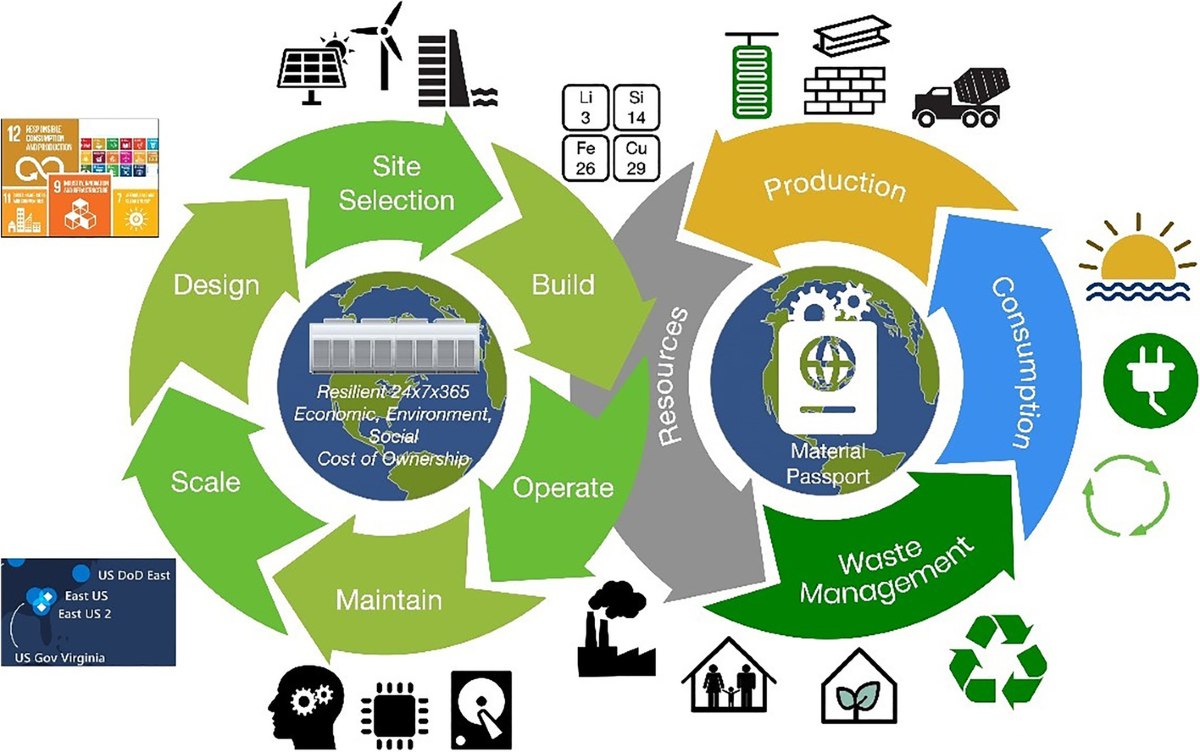
By Jerameel Kevins Owuor Odhiambo
The modern digital economy rests upon a physical foundation that is increasingly incompatible with planetary boundaries. Data centres, the physical facilities that house the computer systems, telecommunications equipment, and storage infrastructure powering our cloud-based services, social media platforms, streaming entertainment, and artificial intelligence applications represent the material backbone of the internet. These facilities operate continuously, processing, storing, and transmitting the exponential volumes of data generated by billions of connected devices worldwide. Environmental degradation, conversely, refers to the deterioration of the environment through depletion of natural resources, destruction of ecosystems, and pollution of air, water, and soil. This encompasses climate change driven by greenhouse gas emissions, biodiversity loss from habitat destruction, freshwater scarcity from over-extraction, and contamination from hazardous waste. The nexus between these two phenomena data centres as engines of digital progress and environmental degradation as the cumulative harm to Earth’s ecological systems represents one of the most pressing yet underappreciated sustainability challenges of our time, wherein the invisible infrastructure of our digital lives exacts a profound and measurable toll on the natural world.
The energy consumption profile of data centres constitutes their most significant environmental impact, driven by the dual demands of computational processing and thermal management. Modern data centres operate thousands to millions of servers simultaneously, running workloads that range from email storage to complex machine learning algorithms, all requiring continuous electrical power. The Information Technology equipment itself servers, storage arrays, network switches accounts for approximately half of total energy consumption, while cooling systems designed to dissipate the enormous heat generated by densely packed computing equipment consume the remainder. According to recent estimates, global data centres consumed approximately 460 terawatt-hours of electricity in 2022, roughly equivalent to the entire electricity consumption of the United Kingdom, and this figure continues to grow as data generation accelerates. The International Energy Agency projects that data centre electricity demand could double by 2026, driven particularly by the computational intensity of artificial intelligence training and inference. When this electricity is generated from fossil fuel sources which still account for approximately sixty percent of global electricity generation the carbon emissions are substantial, with the data centre industry estimated to contribute between 2.5% and 3.7% of global greenhouse gas emissions, rivaling the aviation industry’s climate footprint.
The climate impact extends beyond direct operational emissions to encompass the entire energy infrastructure supporting these facilities. Data centres typically require uninterruptible power supplies to maintain continuous operation, relying on backup diesel generators that engage during grid failures or maintenance periods. These generators, while essential for service reliability, burn fossil fuels and emit nitrogen oxides, sulfur dioxide, and particulate matter pollutants that contribute to respiratory diseases, acid rain, and photochemical smog. Even during normal operations, these generators undergo mandatory monthly testing, releasing emissions into local communities that often already bear disproportionate pollution burdens. The carbon intensity of data centre operations varies dramatically based on regional electricity grids: a facility in Iceland powered by geothermal and hydroelectric sources has a vastly different climate impact than an identical facility in Poland or India where coal-fired generation dominates. This geographic variation has created “carbon arbitrage,” where companies strategically locate facilities in regions with cleaner electricity grids, though this practice raises equity concerns about which communities bear the infrastructure burden versus which enjoy the economic benefits.
Water consumption represents the second critical dimension of data centre environmental impact, with facilities withdrawing billions of gallons annually from municipal systems and natural sources. Evaporative cooling systems, employed in many facilities to maintain optimal operating temperatures for IT equipment, work by evaporating water to remove heat, a process that is thermodynamically efficient for cooling but consumes substantial freshwater volumes. A single large data centre can consume between one to five million gallons of water daily, equivalent to the water consumption of a small city. Google’s data centres, for instance, consumed approximately 4.3 billion gallons of freshwater in 2019 alone. This water withdrawal occurs regardless of local water availability, creating particular tension in arid or water-stressed regions where data centres compete with agricultural, industrial, and residential users for finite supplies. In areas experiencing prolonged drought such as parts of the American Southwest or regions in India, the arrival of water-intensive data centres has sparked community opposition and raised fundamental questions about resource allocation priorities in an era of increasing climate volatility and water scarcity.
 The water-energy nexus further complicates this picture, as cooling system choices involve trade-offs between water consumption and energy consumption. Air-cooled systems use less water but require significantly more energy to achieve comparable cooling effectiveness, potentially increasing greenhouse gas emissions. Evaporative systems minimize energy consumption but maximize water use. Some facilities employ hybrid approaches or advanced techniques like direct liquid cooling, which involves circulating coolant directly to server components rather than cooling entire rooms, thereby reducing both water and energy requirements. However, these advanced systems require higher capital investment and more complex engineering, limiting their adoption particularly in cost-sensitive markets or among smaller operators. The absence of comprehensive water reporting requirements in many jurisdictions means the full scope of data centre water consumption remains poorly documented, hindering effective resource management and policy development. Recent droughts in critical technology hubs have prompted some companies to commit to “water positive” goals, pledging to replenish more water than they consume, though the effectiveness and credibility of these commitments depend heavily on implementation details and third-party verification.
Electronic waste generation constitutes a third major environmental concern, driven by the rapid obsolescence cycle inherent to information technology hardware. To maintain competitive performance, security standards, and energy efficiency, data centre operators typically replace servers every three to five years, storage equipment every four to six years, and networking gear on similar schedules. This replacement cycle generates enormous volumes of retired equipment containing valuable materials like gold, silver, copper, and rare earth elements, but also hazardous substances including lead in solder, mercury in switches, cadmium in batteries, and brominated flame retardants in plastics. When improperly disposed of in landfills, these toxic materials can leach into soil and groundwater, contaminating ecosystems and entering food chains. The Basel Convention estimates that globally, approximately 50 million metric tons of electronic waste is generated annually, with data centres contributing a significant proportion. While many jurisdictions now mandate responsible e-waste recycling, enforcement varies widely, and a substantial percentage of retired equipment still ends up in informal recycling operations in developing nations, where workers often including children dismantle electronics without adequate safety protections, suffering exposure to neurotoxins and carcinogens.
The challenges surrounding e-waste extend beyond disposal to encompass the entire lifecycle of data centre hardware, from raw material extraction through manufacturing to end-of-life management. The production of semiconductor chips, printed circuit boards, and storage devices requires mining operations that disrupt landscapes, consume energy and water, and generate tailings containing heavy metals and processing chemicals. Manufacturing facilities, concentrated primarily in East Asia, consume vast quantities of ultrapure water and energy while producing hazardous byproducts. The embodied carbon and environmental impact of hardware manufacturing often equals or exceeds the operational impact over the equipment’s useful life, meaning that even a data centre powered entirely by renewable electricity still carries a substantial environmental footprint. Emerging approaches like circular economy principles, designing equipment for longevity, repairability, and recyclability offer potential pathways to mitigate e-waste impacts, as do refurbishment programs that extend hardware lifecycles and component-level recycling that recovers valuable materials for remanufacturing. However, these practices remain nascent, and economic incentives currently favor rapid replacement cycles that prioritize performance over sustainability.
Land use and the physical infrastructure required for data centre construction represent additional environmental considerations often overlooked in discussions focused primarily on operational impacts. Hyperscale data centres facilities exceeding 10,000 square feet and containing thousands of servers can occupy sites spanning hundreds of acres when accounting for buildings, electrical infrastructure, cooling systems, and security perimeters. The construction of these facilities requires massive quantities of concrete and steel, both carbon-intensive materials whose production collectively accounts for approximately 15% of global carbon emissions. The embodied carbon in construction materials represents a significant upfront environmental cost that persists regardless of operational efficiency improvements or renewable energy procurement. Site selection for data centres often targets relatively inexpensive land at the urban periphery or in rural areas, potentially displacing agricultural activities, fragmenting wildlife habitat, or consuming greenfield sites that could otherwise provide ecosystem services like carbon sequestration, storm water management, and biodiversity support. The concentration of multiple facilities in particular regions driven by factors like electricity prices, fiber optic connectivity, tax incentives, and proximity to users can create cumulative impacts that exceed the capacity of local ecosystems and infrastructure to absorb.
Despite these substantial environmental challenges, the data centre industry has begun implementing mitigation strategies, driven by regulatory pressure, corporate sustainability commitments, investor demands, and genuine recognition of long-term risks. Major operators including Google, Microsoft, Amazon, and Meta have committed to ambitious goals around carbon neutrality, renewable energy procurement, and water stewardship. Power Purchase Agreements for wind and solar generation have proliferated, with data centre operators becoming among the largest corporate purchasers of renewable electricity globally. Innovations in cooling technology, including free air cooling in temperate climates, immersion cooling where servers operate submerged in non-conductive liquids, and artificial intelligence-optimized thermal management, have reduced cooling energy intensity in newer facilities. The adoption of more efficient server designs, improved virtualization that increases hardware utilization rates, and migration of workloads to more efficient infrastructure have moderated energy consumption growth relative to computational output. Some operators have committed to water stewardship goals, implementing rainwater harvesting, greywater recycling, and strategic site selection to avoid water-stressed regions. Yet these improvements, while meaningful, have not offset the absolute growth in environmental impact driven by exponential increases in data generation, storage, and processing demands, particularly as artificial intelligence applications multiply.
The nexus between data centres and environmental degradation ultimately reflects a fundamental tension in contemporary society: the growing dependence on digital infrastructure for economic activity, social connection, and knowledge access exists in direct conflict with the urgent necessity to reduce resource consumption and environmental harm to maintain planetary habitability. Resolving this tension requires systemic changes extending beyond incremental efficiency improvements to encompass demand-side interventions, circular economy principles, equitable resource governance, and honest accounting of digital technology’s material costs. Policymakers must establish comprehensive environmental reporting requirements, enforce strict efficiency standards, and create incentives for sustainable design while ensuring that communities hosting data infrastructure receive meaningful benefits and protections rather than simply bearing environmental burdens. Technology companies must extend responsibility beyond operational facilities to encompass supply chain impacts, prioritize longevity over planned obsolescence, and acknowledge that not all data storage or processing demands justify their environmental costs. Users and society broadly must cultivate digital literacy that recognizes the material substrates of supposedly virtual activities, questioning whether every email needs indefinite storage, every video requires maximum resolution, or every application demands continuous cloud synchronization. Only through this multi-stakeholder recognition that the digital economy remains inextricably embedded within physical and ecological systems can we hope to align technological advancement with environmental sustainability, ensuring that progress in one domain does not precipitate collapse in the other.
The writer is a legal researcher and writer
Similar Posts by The Mt Kenya Times:
- Mt Kenya Times ePAPER September 17, 2026
- Ruto and Uhuru: The rupture at the heart of Kenya’s 2027 election
- Gakoromone traders and rights group demand closure of sewage discharge
- Retirement is not disenfranchisement: Reclaiming the constitutional rights of Kenya’s former presidents
- Kenya’s 2027 election: Can technology strengthen democracy or manipulate voters?
About the Author