The Paradox Of Constitutional Promise: Democracy, Leadership, And The Cyclical Nature Of Political Choice In Post-2010 Kenya
 The Mt Kenya Times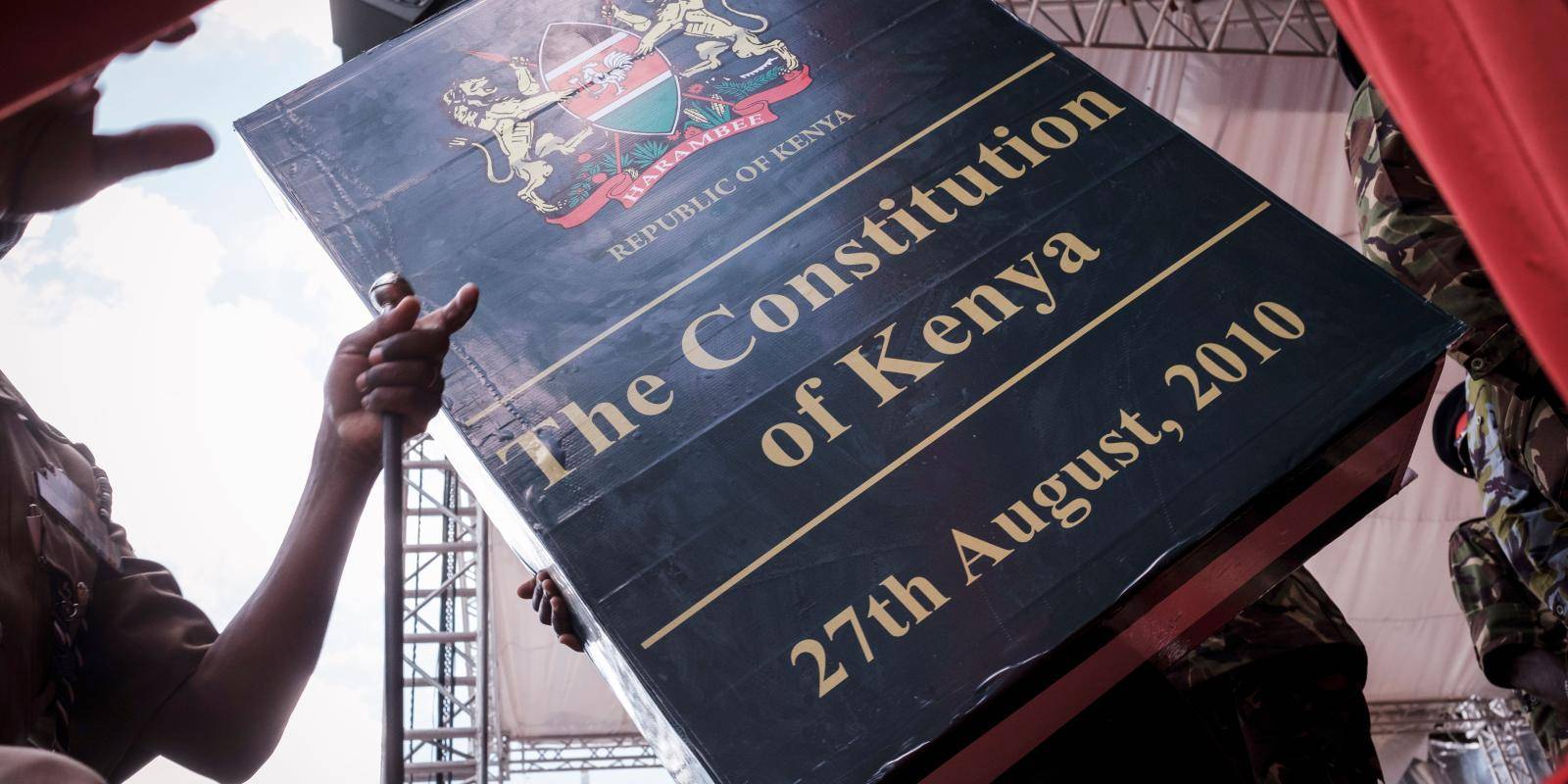
By Jerameel Kevins Owuor Odhiambo
In August 2010, a constitutional referendum promised to mark a watershed moment in Kenya, with over 67% of voters endorsing a new supreme law designed to address decades of accumulated institutional failures, ethnic tensions, and leadership deficits. The document enshrined principles of integrity, transparency, and accountability in public service, articulating a vision of governance that would transcend the patronage networks and personality cults that had characterized post-independence politics. Yet fifteen years later, the gulf between constitutional aspiration and political reality remains a chasm that swallows the hopes of ordinary citizens with each electoral cycle. This paradox between formal institutional change and persistent informal practices raises fundamental questions about the relationship between legal frameworks and political culture, between voter agency and structural constraint, between democratic ritual and democratic substance.
The phenomenon of electorate behavior that systematically produces leadership incongruent with stated public values represents more than mere political disappointment; it reflects deeper pathologies in how democratic choice operates within specific historical and social contexts. Political scientists have long observed what might be termed “preference inconsistency” in electoral systems; the tendency for voters to select candidates whose qualifications, character, or policy positions contradict the electorate’s own expressed priorities. As the scholar Michael Bratton noted in his seminal work on African democracies, “voters may demand good governance in the abstract while simultaneously engaging in clientelistic exchanges that undermine it in practice.” This cognitive dissonance is not unique to any single nation, but it takes particular forms where colonial legacies have left fractured institutional landscapes, where ethnic arithmetic often trumps programmatic politics, and where poverty creates dependencies that political entrepreneurs eagerly exploit.
The constitutional framework adopted in 2010 represented a sophisticated attempt to engineer virtue through institutional design. Chapter Six, which details the leadership and integrity requirements for public officers, stands as perhaps the most ambitious effort to codify ethical governance in the continent’s recent constitutional history. It establishes principles that would seem uncontroversial in their moral clarity: financial probity, selfless service, accountability, transparency, and adherence to the rule of law. Article 10 complements this by enshrining national values and principles of governance including patriotism, equity, human dignity, and social justice. These provisions were not merely aspirational rhetoric; they included enforcement mechanisms, vetting procedures, and disqualification criteria designed to screen out the morally compromised before they could assume office. Yet the implementation of these provisions has been sporadic at best, with political will evaporating when enforcement threatens powerful interests or disrupts carefully calibrated ethnic coalitions.
The recycling of political figures whose records suggest ethical deficits or governance failures speaks to what sociologists term “institutional memory loss” though in this case, the memory persists even as the lessons fail to translate into changed behavior. Voters who have witnessed corruption, incompetence, or abuse of office often return the same actors to power, or elevate their protégés and associates, creating dynasties of dysfunction. This pattern suggests that electoral choice operates according to logics that transcend simple assessments of past performance. Patronage networks create dependencies where communities feel they need “their own” in positions of power, regardless of that individual’s track record, to ensure access to state resources. As political anthropologist Jean-François Bayart observed in his analysis of African state formation, politics becomes “the politics of the belly” a zero-sum competition for state resources where the primary concern is ensuring one’s ethnic or regional group has representatives positioned to channel benefits downward, rather than selecting leaders capable of building functional systems that benefit all.
The concept of merit-based leadership selection presupposes a political marketplace where information flows freely, where past performance creates reputational consequences, and where voters can reasonably expect that choosing competent administrators will yield better outcomes. Yet several structural factors distort this marketplace. First, information asymmetries remain profound, despite the proliferation of media and digital communications. Misinformation, propaganda, and the sheer complexity of evaluating governance records mean that voters often make decisions based on incomplete or misleading information. Second, the temporal mismatch between electoral cycles and development outcomes means voters rarely experience clear cause-and-effect relationships between their choices and their material conditions. Roads that remain unpaved, schools that lack teachers, hospitals that lack medicine, these failures can be attributed to multiple actors across multiple levels of government, diffusing accountability to the point of meaninglessness. Third, and perhaps most importantly, the transaction costs of coordinating around competent but unknown candidates are substantially higher than rallying around familiar figures, however flawed, who have already built recognition and organizational capacity.
The constitutional moment of 2010 emerged from a specific historical conjuncture post-election violence that claimed over 1,100 lives and displaced hundreds of thousands, creating a consensus that institutional reform could no longer be deferred. This trauma-induced constitutional bargain created a window for ambitious reforms that might have been impossible under normal political conditions. Yet as James Madison observed in Federalist No. 51, “If men were angels, no government would be necessary. If angels were to govern men, neither external nor internal controls on government would be necessary.” The constitution could establish controls, but it could not create angels nor could it guarantee that voters would select even ordinarily conscientious public servants over charismatic charlatans. The framers understood that parchment barriers alone would not constrain power or elevate virtue; implementation would require sustained vigilance, robust civil society institutions, an independent judiciary, and above all, an electorate willing to enforce constitutional standards through their votes.
The invocation of the biblical metaphor of a dog returning to its vomit drawn from Proverbs 26:11 and repeated in 2 Peter 2:22 carries particular resonance in understanding cyclical political pathology. The image captures not just repetition but a kind of compulsive self-degradation, a return to what has already proven toxic. Political scientists studying democratic backsliding have documented how electorates in various contexts repeatedly empower leaders who undermine democratic institutions, often in the very name of democracy.
This seemingly irrational behavior becomes more comprehensible when viewed through the lens of collective action problems and rational ignorance. Individual voters may recognize that the political class as a whole is extractive and self-serving, yet still rationally vote for “their” extractive politician who might channel some benefits to their community, rather than risk supporting a reformer who might lose and leave them with no access to patronage. The tragedy of the commons plays out in the electoral arena: what is individually rational produces collectively disastrous outcomes.
The tension between wealth-based political appeal and merit-based leadership selection reveals fundamental contradictions in how democracy operates in contexts of profound inequality. In societies where large portions of the population live in conditions of economic precarity, the immediate material resources a politician can deploy harambee contributions, funeral attendance with cash donations, employment for youth groups, development projects in constituencies often matter more to voters than abstract qualifications or policy proposals.
This creates a perverse selection mechanism where access to wealth, regardless of its origin, becomes the primary qualification for political office. As political economist Hernando de Soto has argued, in contexts where formal economic opportunity is restricted to small elites, informal economies and patron-client relationships become the primary means by which resources circulate to the masses. Politicians who have accumulated wealth, even through corruption, demonstrate their ability to navigate systems and extract resources precisely the skill constituents want applied on their behalf.
The failure of constitutional provisions to reshape political practice reflects a broader theoretical debate about the relationship between formal institutions and informal norms. Institutionalist scholars from Douglass North to Daron Acemoglu have demonstrated that written rules matter less than the equilibrium behaviors they either reinforce or contradict. When formal institutions conflict sharply with deeply embedded informal practices ethnic loyalty, clientelism, big-man politics; the formal institutions typically adjust to accommodate reality rather than reality conforming to institutional design. This is not to counsel fatalism, but rather to recognize that constitutional engineering alone cannot substitute for the slow, difficult work of norm change, civic education, and building constituencies for reform. The constitution can create opportunities and tools for accountability, but only organized civil society and an informed electorate can wield those tools effectively over time.

Looking forward, the question is not whether Kenyan electorates will suddenly embrace a purely rationalist, merit-based approach to leadership selection; history and social science suggest such transformations occur incrementally, if at all. Rather, the relevant question is what combination of institutional incentives, information infrastructure, civil society mobilization, and generational change might gradually shift the equilibrium toward greater accountability. Some evidence suggests that younger, more educated, and more digitally connected voters exhibit different political preferences and voting behaviors than older generations socialized in patron-client systems.
The growth of issue-based civil society organizations, independent media, and anti-corruption advocacy groups creates constituencies that can sustain pressure for accountability between elections. Incremental reforms strengthening the autonomy and resources of constitutional commissions, enhancing transparency in campaign finance, improving civic education, supporting investigative journalism may cumulatively create conditions where Chapter Six of the Constitution and Article 10 transition from aspirational text to lived practice. The constitutional promise may yet be realized, but only through the patient, unglamorous work of building the civic infrastructure and political culture that formal institutions presuppose but cannot themselves create. The code to be cracked is not primarily legal or institutional, but fundamentally social and cultural and such codes yield only to sustained collective effort across generations.
The writer is a legal researcher and writer.
Similar Posts by The Mt Kenya Times:
- Mt Kenya Times ePAPER September 19-20, 2026
- Kenya joins US and UK to put citizens on the terrorism frontline
- Kenya’s parliament races to tame the AI frontier
- Kalonzo calls Ruto to order over Uhuru attacks
- Gachagua takes his 2027 campaign to America
About the Author