The Silent War Of Visas: Global North vs Global South – Namibia’s Experience In The Age Of Travel Inequality
 The Mt Kenya Times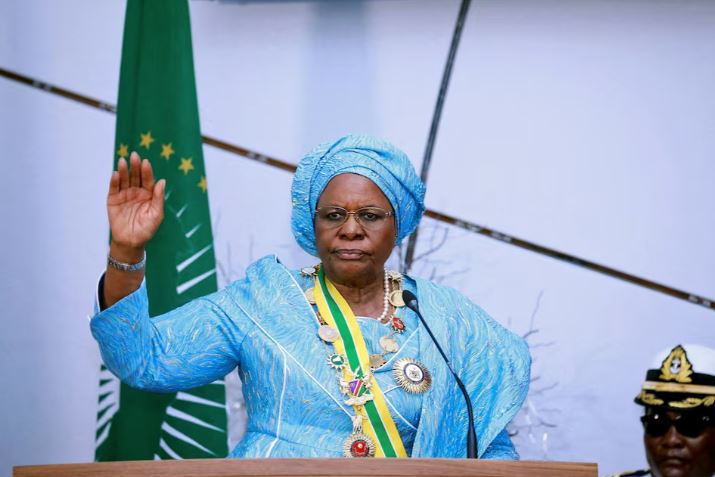
Namibia President Netumbo Nandi-Ndaitwah
By: Silas Mwaudasheni Nande
Introduction: The Unspoken Battlefield
When a Namibian cabinet minister recently applied for a visa to attend a diplomatic summit in Germany, the process should have been a routine exercise between two sovereign governments. Instead, the experience was an administrative labyrinth laced with subtle indignities. Documents were scrutinized excessively; personal finances questioned; travel histories interrogated. After weeks of uncertainty, the visa was finally granted – just days before the event. This story, while alarming, is neither rare nor exceptional. For most Global South citizens, visa applications to the Global North represent more than just administrative formalities. They are miniature battlegrounds where power dynamics between nations quietly unfold.
While citizens and diplomats from the Global North breeze through short, inexpensive visa processes – or often no visas at all – when visiting the Global South, the reverse is a painful, costly, and sometimes humiliating ordeal. In this article, we dive deep into this ‘visa war’ – examining its historical roots, real-life implications, legal frameworks, and its broader impact on international relations and dignity.
Historical Roots: Colonial Legacies in Modern Passports
The concept of requiring travel documents has ancient roots, but the modern international visa regime is a direct descendant of colonial power structures. In the 19th and early 20th centuries, colonial powers devised elaborate systems of identity verification, labor permits, and internal passports designed to control the movement of colonized people.
The Global North – composed largely of former colonial powers – continues to exercise a form of control over mobility. While colonial administrations used physical barriers and racial categorizations, today’s systems use complex visa regimes that effectively serve the same function: determining who may enter, who may stay, and under what conditions.
For many Africans, including Namibians, the echoes of colonialism resonate every time they approach a visa application center. The very fact that African passports are ranked among the world’s weakest in terms of visa-free access is not coincidental but the result of historical power imbalances perpetuated into the present.
Comparative Costs & Waiting Times: An Uneven Playing Field
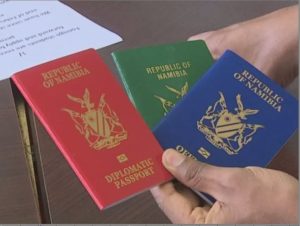 The differences between how visa systems operate for Global North and Global South applicants are stark.
Visa Fees: A Namibian applying for a Schengen visa (to visit Germany, France, or other European Union states) typically pays around €80 (approx. N$1,500) just for the application. This does not include additional costs such as travel insurance, biometric data collection, courier services, and agency fees if the appointment is outsourced. A German visiting Namibia pays only N$1,080 for a tourist visa, often processed electronically within a few hours.
Processing Times: Namibians applying for Schengen visas often face waiting times of 15 to 45 working days, even for short visits. Germans applying for Namibian visas often receive approvals within 24 to 48 hours, frequently without interviews or documentation beyond a simple online form.
Application Complexity: Namibians must submit extensive supporting documentation: proof of income, employment letters, bank statements, travel insurance, proof of accommodation, and a letter of invitation. German citizens usually require only a valid passport and basic travel information.
Non-Refundable Losses: When a Namibian application is rejected, all fees and costs are forfeited. In many cases, the loss amounts to several thousand Namibian dollars. Conversely, Global North applicants rarely face visa denials unless serious security concerns are flagged.
These discrepancies illustrate how the Global North maintains de facto barriers against citizens from developing nations under the guise of ‘border security’ and ‘immigration control.’
Diplomatic Double Standards: Humiliation as Policy
While the situation is frustrating for ordinary citizens, it becomes especially egregious when even senior government officials and diplomats face unnecessary delays and indignities.
Several Namibian ministers, government officials, and high-ranking business leaders have recounted experiences where they were subjected to demeaning interrogations, invasive questioning, or prolonged waiting times despite holding diplomatic or service passports. In one notable instance, a Namibian diplomat traveling to attend a high-level UN conference in Geneva was made to reschedule his travel twice due to visa delays, damaging Namibia’s representation at the meeting.
Contrast this with European diplomats visiting Namibia: often they arrive visa-free or with expedited processing, receive protocol privileges, and are warmly welcomed at Hosea Kutako International Airport. The Global South, despite its weaker global positioning, largely upholds principles of diplomatic courtesy and mutual respect.
This asymmetry sends a silent but powerful message: while the Global North expects dignified treatment for its emissaries, it does not consistently reciprocate that respect toward Global South representatives.
Human Impact: Personal Stories of Frustration and Financial Loss
For ordinary Namibians, the financial and emotional toll of visa applications can be crippling.
Maria, a young scholar from Windhoek, was invited to present her research at a prestigious academic conference in Berlin. Despite having a full scholarship and a formal invitation, her visa application was delayed for seven weeks. She missed the conference entirely. The plane ticket was non-refundable, and her sponsors were unable to recoup the financial loss.
 Joseph, a businessman from Ondangwa, applied for a UK business visa to attend a mining convention. He provided all necessary documentation, including invitation letters, financial statements, and tax returns. His application was rejected without explanation. “They treat you like a potential criminal,’ he lamented.
Selma, a nurse seeking advanced training in Switzerland, spent nearly N$25,000 in fees, insurance, courier costs, and travel to Windhoek for visa interviews. Her visa was eventually approved, but the financial burden was immense – representing almost a year’s worth of savings.
These individual stories expose the human cost behind statistics. Families are separated; careers are delayed; financial burdens mount – all because of visa regimes that disproportionately target citizens of the Global South.
Economic and Development Implications
Beyond the individual suffering, the visa imbalance has macroeconomic consequences.
Restricted Trade and Investment: Many Global South entrepreneurs are denied opportunities to attend trade fairs, expos, and international business forums in Europe or North America due to visa denials or delays. This blocks access to partnerships that could promote economic development.
Limited Academic Exchange: Scholars and students from Namibia often struggle to attend conferences, workshops, or research programs. Education and research collaborations suffer as a result.
Tourism Imbalance: While tourists from the Global North easily visit African destinations, African tourists face extensive hurdles when trying to visit Europe or North America, limiting reciprocal tourism revenues.
Cultural Diplomacy: Artists, performers, and cultural ambassadors frequently miss international events due to visa issues, diminishing the Global South’s cultural presence on world stages.
The cumulative effect is a stunted flow of people, ideas, and capital that perpetuates the global inequality that the Global North claims to oppose rhetorically.
Legal Frameworks and Diplomatic Constraints
While visa issuance technically remains a sovereign right, international treaties such as the Vienna Convention on Diplomatic Relations (1961) obligate states to facilitate travel for accredited diplomats. Unfortunately, even these legal safeguards are often undermined through administrative technicalities.
Bilateral agreements that promote mutual visa waivers exist between Namibia and a few countries, but rarely include major Global North players. Negotiations for broader mutual visa exemption agreements have stalled due to security concerns and political posturing from wealthier nations.
The European Union’s Common Visa Policy centralizes decisions that affect individual member states’ relations with Namibia, further complicating negotiations. Despite regular diplomatic efforts by Namibia’s Ministry of International Relations and Cooperation, the entrenched asymmetry remains firmly in place.
Geopolitics and Mobility Justice
The Global North frequently justifies its restrictive visa policies on grounds of:
Security Threats: Concerns over illegal immigration, terrorism, or organized crime.
Economic Protection: Fear of job-seekers exploiting welfare systems.
Document Fraud: Concerns about forged documents or false applications.
While these issues are real in isolated cases, they are often exaggerated and applied broadly to entire populations. Citizens of entire nations – regardless of individual credentials, purpose of travel, or diplomatic status – are penalized based on nationality alone.
Scholars like Harsha Walia have described this as ‘mobility apartheid’ – where freedom of movement becomes a privilege reserved for the wealthiest and most powerful nations, rather than a basic human right.
This unequal mobility mirrors broader power structures in global governance, trade, and diplomacy – where the Global North holds disproportionate influence over rules that affect the entire world.
Southern Pushbacks: Building Alternative Pathways
In recent years, several Global South countries have begun pushing back against this structural inequality.
The African Union’s Agenda 2063 envisions a continent with free movement of people and goods across national borders. The African Continental Free Trade Area (AfCFTA) has also called for easing intra-African travel.
Namibia has signed multiple bilateral visa waiver agreements with African and Asian countries, promoting south-south cooperation.
India and China have created special e-visa programs for Global South partners, bypassing cumbersome embassy processes.
BRICS (Brazil, Russia, India, China, South Africa) has also discussed the possibility of creating a BRICS mobility framework to facilitate easier travel within emerging economies.
Some African nations have started applying reciprocal visa requirements for Global North visitors, sending a clear message that respect must be mutual.
While these moves have yet to fundamentally alter the global visa regime, they reflect growing Global South assertiveness on the international stage.
Conclusion: Toward a More Just Visa Regime
The global visa system is a modern form of soft power – an invisible border that reinforces old hierarchies while punishing ordinary citizens for circumstances they did not create. For Namibians, and much of the Global South, every visa application becomes a microcosm of global inequality.
The Global North must confront the ethical contradictions embedded in its current policies. If equality, partnership, and mutual respect are to mean anything in global diplomacy, mobility must no longer be a privilege of the few.
Practical reforms could include:
Standardized processing times
- Transparent rejection criteria
- Refundable fees for rejected applications
- Expanded bilateral visa waiver agreements
- Mutual respect for diplomatic protocols
Ultimately, addressing the visa war requires confronting the larger political, economic, and historical forces that sustain it. Until that happens, citizens of the Global South will continue to navigate a global mobility system that remains deeply – and often intentionally – stacked against them.
Similar Posts by The Mt Kenya Times:
- Diaspora Times Global Oct 17 – Oct 23, 2026
- Is social media a blessing or a curse for university students?
- Light at last: How electricity is reshaping Nandi and Uasin Gishu
- The triple squeeze: how EPRA’s fuel price hike is reshaping the survival equation for the common mwananchi
- Zelenskyy accuses Trump of rewarding Putin as Pope pleads for peace from a hospital bed
About the Author