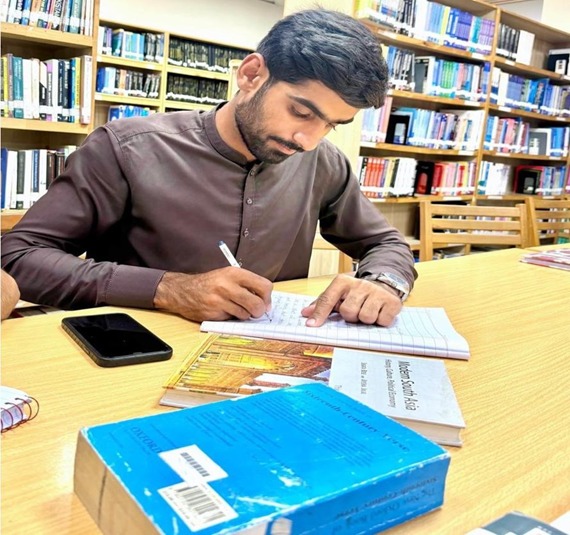
Tursunov Ahliddin Davlatjon

By: Tursunov Ahliddin Davlatjon
Worth Noting:
- In connection with the tragic death of Alloma Sadriddin Ainiy, he wrote: “The name of the brave poet Behbudi is mentioned with respect in the Muslim East, because for 20 years he called all beings who knew the value of their consciousness and human value to fight for free life, light and enlightenment. “.
- The city of Karshi was called Behbudi in 1920-1930. The name of Behbudi was suppressed by 1937 and was acquitted in 1956.
- Today, the rich and colorful literary, cultural and educational heritage left by the poet is serving the independence of his people.
- 1977 Behbudi’s “Tanlangan asarlar” was published. This collection included textbooks and study guides, and today streets and schools are named after him.
Torches are also different. There are those who get bored of radiating within seconds, minutes, hours. But there are those who believe that as long as humanity exists, its light is eternal. One of such torchbearers of Uzbek society is Mahmudhoja Behbudi. Mahmudhoja Behbudi is the founder and bright figure of the Jadidist movement in Turkestan (now Uzbekistan). Jadid is an Arabic word meaning new. In those days, the rule of Tsarist Russia in Turkestan and the ills that followed the illiteracy of the people deeply saddened Makhmudhoja Behbudi and motivated him to fight against it.
Mahmudhoja Behbudi was born on January 20, 1875 in the city of Samarkand in the family of muftis. The environment in which he grew up had no influence on his world view.
Mahmudhoja’s father was a major specialist in Islam and wrote a number of articles on the religion and conducted scientific work, so this important environment had an impact on the boy’s worldview.
He studied politics along with literature and history. He got acquainted with the news happening in the world through newspapers and magazines. His travels to Mecca, Egypt and Istanbul completely changed his outlook. He established cooperation with newspapers and magazines and began to publish his articles, in which he raised the issues of school and art improvement.
Behbudi was the founder of “Oyna” newspaper, editor I.Gasprinsky, a regular contributor to “Tarjumon” newspaper. Mahmudkhoja is the author of more than 200 publications in Uzbek and Tajik languages. In particular, “Muntakhabi general geography” – “Kiskacha general geography” (1903), “Kitab-ul-atfol” – “Children’s book” (1904) and others. The foundation point of Bekhbudi’s writing is the drama “Padarkush” written in Samarkand in 1911. It states that the young generation should be educated and cultured. The drama was first published in “Turon” newspaper in 1912, and in 1913 it was published as a separate book.
Behbudi’s play was a great success and was staged in the theaters of Samarkand, Bukhara and Tashkent. From the compositional point of view, the work looks simple, but the idea is very complex and can meet all the requirements of the drama genre. He was the first swallow of Uzbek dramaturgy and inspired the creation of A. Qadiri’s “Bakhtsiz Kuyov”, Mirmukhsina-Fikriya’s “Childless Ochildiboy” and a number of works by Hamza.
In 1919, Behbudi was captured during his travels in Karshi and executed by order of Said Alijon.
In connection with the tragic death of Alloma Sadriddin Ainiy, he wrote: “The name of the brave poet Behbudi is mentioned with respect in the Muslim East, because for 20 years he called all beings who knew the value of their consciousness and human value to fight for free life, light and enlightenment. “.
The city of Karshi was called Behbudi in 1920-1930. The name of Behbudi was suppressed by 1937 and was acquitted in 1956.
Today, the rich and colorful literary, cultural and educational heritage left by the poet is serving the independence of his people.
1977 Behbudi’s “Tanlangan asarlar” was published. This collection included textbooks and study guides, and today streets and schools are named after him.
He went on pilgrimage in 1899 and returned with the title of mufti. Behbudi wrote more than two hundred articles and works in Uzbek and Persian-Tajik languages. The city of Karshi was called Behbudi in 1920-1930.
Behbudi wrote more than two hundred articles and works in Uzbek and Persian-Tajik languages. For example, “Muntakhabi jugrofiai umumi” (“Brief general geography” 1903), “Kitab-ul-atfol” (“Book for children”, 1904), “Mukhtasari tarikhi islam” (“Brief history of Islam”, 1904), wrote textbooks and books such as “Practice of Islam” (1905), “Brief Geography of Russia” (1908).
Since 1901, he has published “Turkistan Regional Gazette”, “Taraqqi”, “Khurshid”, “Shuhrat”, “Tujjor”, “Asiyo”, “Hurriyat”, “Turon”, “Sadoi Turkistan”, “Ulug’ Turkistan”, ” His articles published in newspapers and magazines such as “Samarkand”, “Samarqand”, “Oyna”, “Samarqand”, “Samarkand” has gained the attention of people and especially young people.
At the same time, he became the founder and propagator of new schools, the first author of new textbooks. So, Mahmudhoja Behbudi has a strong place in the history of our national culture as a great enlightener and leading fighter.
Tursunov is the son of Ahliddin Davlatjon
Graduate student of the University of Journalism and Mass Communications of Uzbekistan
Rishton District, Fergana Region
Similar Posts by The Mt Kenya Times:
- Mt Kenya Times ePAPER September 19-20, 2026
- Kenya joins US and UK to put citizens on the terrorism frontline
- Kenya’s parliament races to tame the AI frontier
- Kalonzo calls Ruto to order over Uhuru attacks
- Gachagua takes his 2027 campaign to America
About the Author